How to Winterize a Shipping Container: A Pre-Freeze Checklist
How to winterize a shipping container before the first freeze: drainage, snow, door seals, condensation, what to remove, and heating it safely.
 Editorial TeamEditorial Team8 min read
On this page
- 01What winter does to a storage container
- 02Start at the ground: drainage and frost heave
- 03Snow on the roof
- 04Doors, seals, and locks
- 05Condensation: the problem that ruins contents
- 06What to take out before the freeze
- 07Heating a container safely
- 08A pre-freeze checklist
- 09Mid-winter and spring checks
- 10Frequently asked questions
What winter does to a storage container
Cold on its own does not hurt a steel container. The problems come from water in 4 forms: condensation that drips from the roof, ice that seals the doors shut, snow that sits on the roof, and frozen ground that heaves under the base. Add contents that cannot survive a freeze, and you have the whole winter checklist.
Knowing how to winterize a shipping container means dealing with each of those before the first hard freeze, then checking on the box a few times until spring. None of it is expensive. Most of it is an afternoon of work in October that saves you from opening a wet, frozen box in January.
This guide is for storage containers, the kind that holds tools, equipment, inventory, or household goods. A container used as living or working space is a heated building, and it needs insulation, ventilation, and code-compliant heating designed together.
Start at the ground: drainage and frost heave
Look at where water goes when snow melts. If it pools at the door end, it will refreeze there overnight and lock the bottom of the doors in ice. Grade the ground so meltwater runs away from the doors, and keep the box sitting level, as our guide to leveling a shipping container explains.
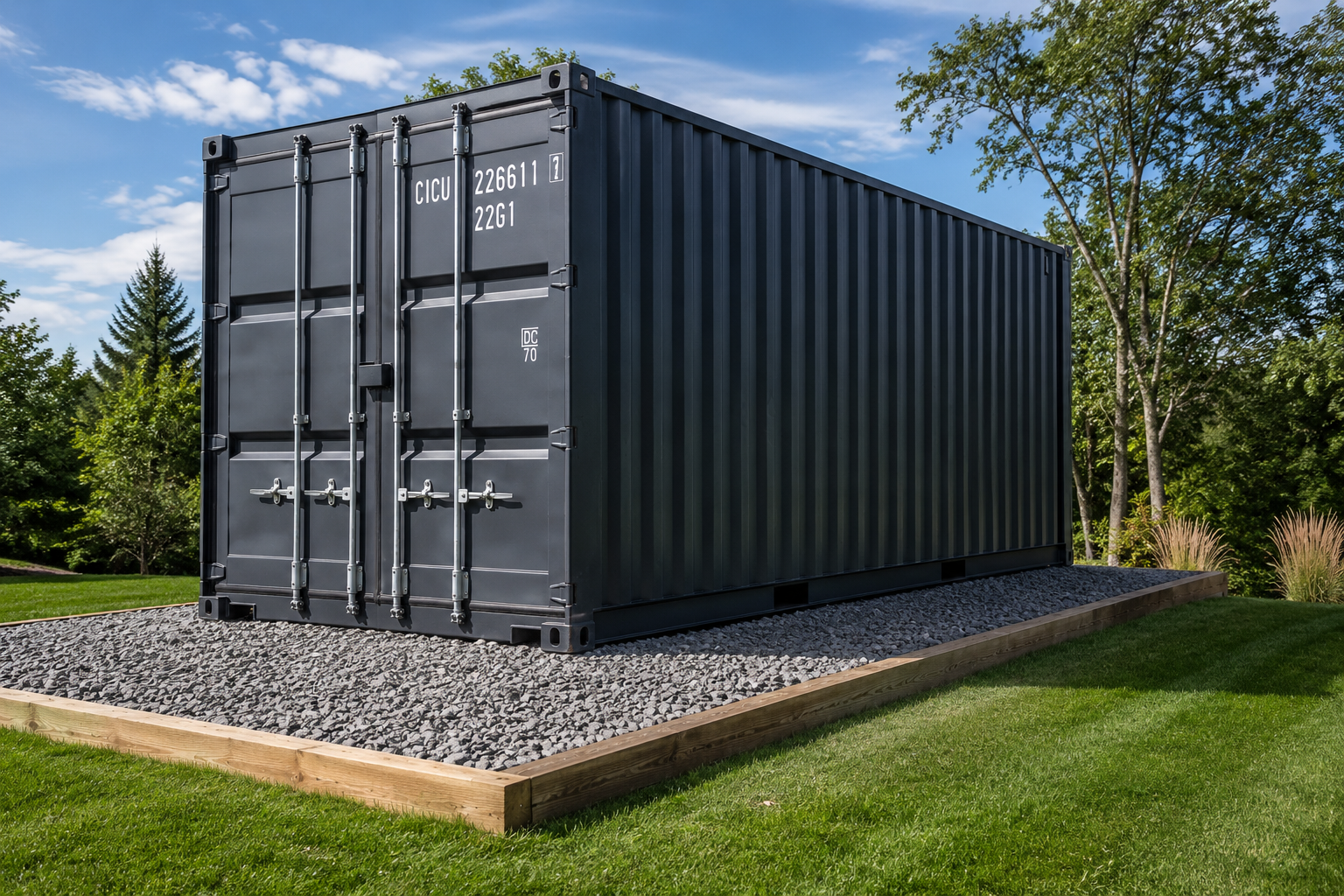
Frost heave is the slower problem. When wet soil freezes, it expands and can lift 1 corner of a container more than the others. The frame racks slightly out of square, and the first sign is usually doors that bind or will not line up with the lock rods. A container on bare soil is the most exposed. A well-drained gravel pad for a shipping container reduces the risk, and in cold climates a base that reaches below the local frost line reduces it further. Our guide to shipping container foundations compares the options. If you are not rebuilding the base this year, just check the doors after the first hard freeze and again after the first thaw.
Snow on the roof
A container's strength is in its frame: the corner posts, the top and bottom rails, and the corner castings. The roof panel between them is thin corrugated steel. It sheds rain well, but it is not designed to carry a building-code snow load the way a rated roof is.
Heavy wet snow, drifts that build up against a wall or a second container, and ice from repeated melt and freeze all load the middle of that panel. Clear it before it builds up. Use a long-handled roof rake with a plastic head from the ground, and do not climb onto a snowy container roof. After the snow clears, look for dents that hold water. A dent becomes a pond, and a pond becomes rust.
If you have built a roof over or between containers, such as a carport span, that roof is a structure in its own right. It needs its own snow load design and often a permit. See our overview of container permits and zoning. This is general guidance, not legal advice, and rules vary by city, county, and HOA.
Doors, seals, and locks
Most winter access problems are doors that will not open. 4 steps before the freeze prevent most of them:
- Treat the gaskets. Wipe the rubber door seals clean and apply a silicone spray. It keeps the rubber flexible and helps it release from the steel when frost forms. Avoid petroleum-based products, which can soften and degrade rubber.
- Grease the moving parts. Lubricate the hinge pins, the lock rods, and the cam keepers that the rods turn into. Then open and close the doors a few times to work it in.
- Replace cracked seals now. A torn gasket lets in drifting snow, which melts inside and refreezes at the door sill.
- Protect the lock. Fit a lockbox or a cover so the padlock does not fill with water and freeze. If it does freeze, use lock de-icer. Hot water works once and then refreezes deeper in the mechanism.
Container doors swing outward, so a snowbank in front of them blocks them as well as ice would. Keep the full door swing clear, and do not plow or shovel snow into a pile in front of the door end. For lock choice and theft protection, see our guide to securing a shipping container.
Condensation: the problem that ruins contents
Condensation, sometimes called container rain, does more damage to stored goods than cold does. On a sunny winter day, the air inside a closed box warms up. At night the steel cools fast, drops below the dew point of that air, and the moisture condenses on the underside of the roof. Then it drips onto whatever is below. Winter makes this worse because the swings between day and night are large and because damp items often go into storage in the fall.
What helps:
- Vents. Passive vents let moist air out. Check that snow or ice is not blocking them. Venting does let in some cold air, which is fine for most storage.
- Desiccants. Moisture absorbers or hanging desiccant bags help in a box that stays closed for weeks. Check and replace them through the winter, because they fill up.
- Dry contents only. Anything that goes in wet, such as a tarp, a mower, or a cardboard box from a damp garage, adds water the box then has to deal with.
- Airflow around the load. Keep goods on pallets off the floor and a few inches off the walls. Use breathable covers. Tightly wrapped plastic sheeting traps moisture against what it is supposed to protect.
Our guide to container ventilation and condensation covers vent types and how many a box needs. If condensation is a year-round problem, insulating the container is the lasting fix.
What to take out before the freeze
Some things should not spend a winter in an unheated steel box:
- Anything water-based. Latex paint, stains, adhesives, caulk, cleaning products, and drinks can freeze, split their containers, and be ruined.
- Batteries. Lead-acid batteries, especially partly discharged ones, can freeze and crack. Lithium batteries should not be charged below freezing. Bring them in or follow the manufacturer's storage guidance.
- Electronics and paper. Cold electronics collect condensation when brought into warm air, and paper, fabric, and upholstery absorb moisture over a long winter.
- Small engines and fuel. Prepare mowers, generators, and similar equipment for storage following their manuals. Check your local fire code before storing fuel cans in a container.
- Anything that cannot handle a freeze. Medications, food, plants, and some finishes and chemicals fall into this group. When in doubt, read the label.
If you store a vehicle for the season, our guide to shipping container car storage covers battery care, ventilation, and fire safety.
Heating a container safely
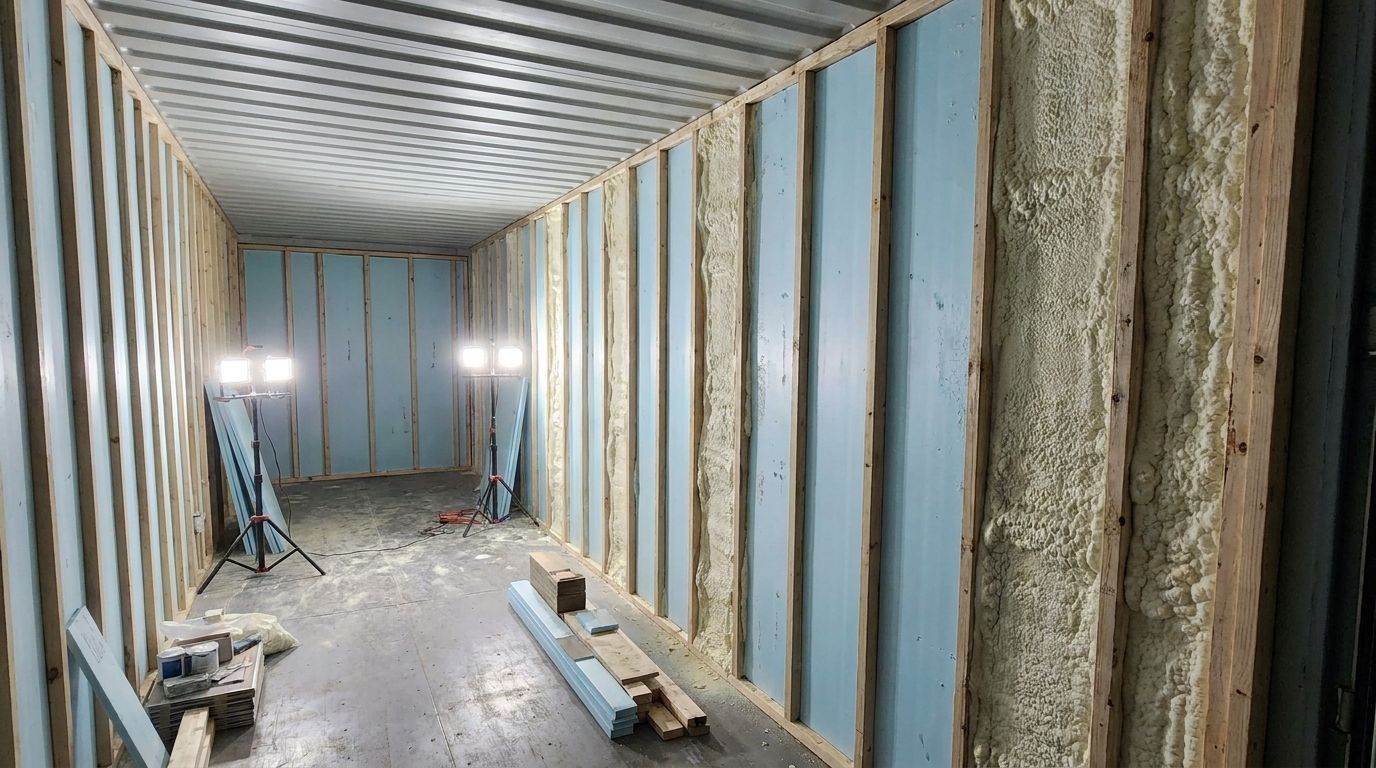
Most storage containers do not need heat. If you do need to keep the inside above freezing, insulate first. Heating an uninsulated steel box wastes most of the energy through the walls and can make condensation worse, not better.
Never run an unvented combustion heater, such as a propane or kerosene space heater, in a closed container. It creates a carbon monoxide hazard, uses up oxygen, and puts an open flame next to stored goods. Use an electric heater rated for the space, with a thermostat and automatic overheat and tip-over shutoff, on a circuit installed by a licensed electrician. Do not run an extension cord through the door seal, where the closed doors can crush the cord.
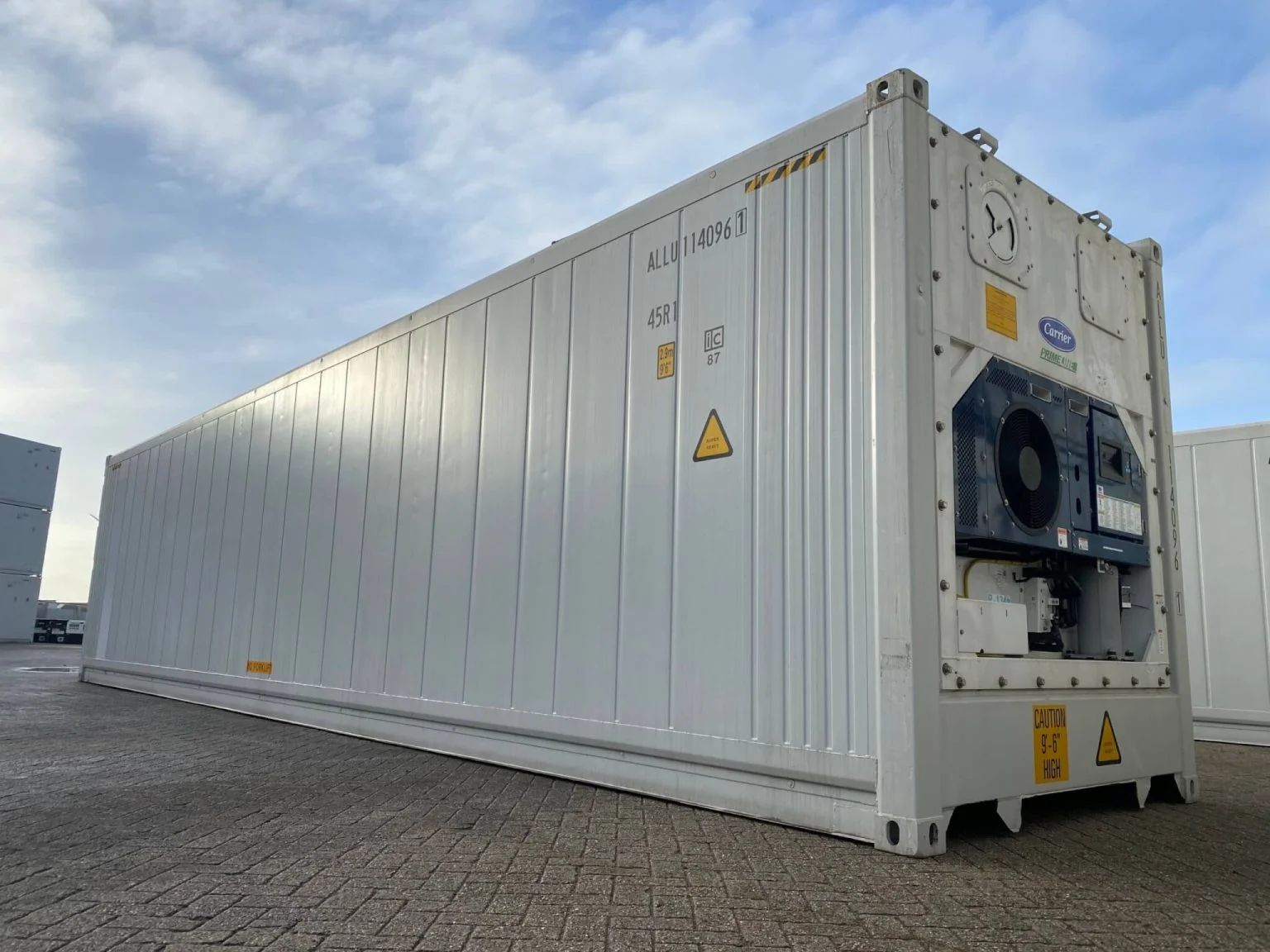
For stock that has to stay at a set temperature, a reefer (refrigerated container) is often the better tool. A reefer's refrigeration unit can heat as well as cool, so it can hold goods above freezing through a cold spell. A new 40ft high cube reefer or a used 40ft high cube reefer needs a suitable power supply and costs more to run than a dry box, so it only pays off when the contents are worth protecting. Our page on refrigerated containers for cold storage covers power and siting.
A pre-freeze checklist
Work through this in the fall, before the first hard freeze:
- Clear leaves and debris from the roof and around the base.
- Grade or ditch the ground so meltwater runs away from the door end.
- Check the box is level and the doors open and close cleanly.
- Clean the door gaskets, treat them with silicone spray, and replace any cracked sections.
- Grease the hinges, lock rods, and cam keepers.
- Fit a lockbox or lock cover.
- Check that vents are open and add fresh desiccants.
- Remove anything water-based, batteries, and anything that cannot freeze.
- Put goods on pallets, away from the walls, under breathable covers.
- Touch up chips and bare steel on the roof and door bottoms while the weather still allows. Our guide on how to paint a shipping container covers the weather window.
Mid-winter and spring checks
After a heavy snowfall, rake the roof and clear the door swing. After the first real thaw, open the doors and look for drips, damp patches, and doors that bind, which can point to frost heave. Swap out full desiccants.
In spring, pick a dry day, open the doors wide, and let the box air out for a few hours. Look for rust at the roof, the door bottoms, and the lower rails, and treat it before summer. A container that gets this routine each year lasts longer, as our guide to how long shipping containers last explains.
Frequently asked questions
Do things freeze inside a shipping container?
Yes. An unheated, uninsulated container follows the outside temperature closely, and a closed steel box does not hold heat through a cold night. Plan as if the inside will reach the same low as the outside.
Should I leave a heater running in a container all winter?
Only if the contents need it, the box is insulated, and the heater is an electric unit with a thermostat and safety shutoffs on a properly installed circuit. Never leave a propane or kerosene heater running in a closed container.
Can I use my container through the winter, or should I close it up?
You can use it all winter. Keep the door swing clear of snow, keep the gaskets treated, and close the doors fully each time so snow does not drift in. Regular opening also lets you spot condensation early.
If you need a box in place before winter, ask us for a free, itemized quote on a 20ft used cargo-worthy container (cargo-worthy means certified fit for ocean shipping) or a storage container for your home. Every unit is inspected and graded before delivery. A tilt-bed (roll-off) truck slides the container off at ground level with no crane or forklift, and we check site access before delivery, which matters when the ground is soft or frozen. We reply within 1 business day.