How to Secure a Shipping Container Against Theft
To secure a shipping container, start at the doors: a lockbox, a high-security puck lock, and a crossbar beat a bare padlock. Here is the full layering.
 Editorial TeamEditorial Team6 min read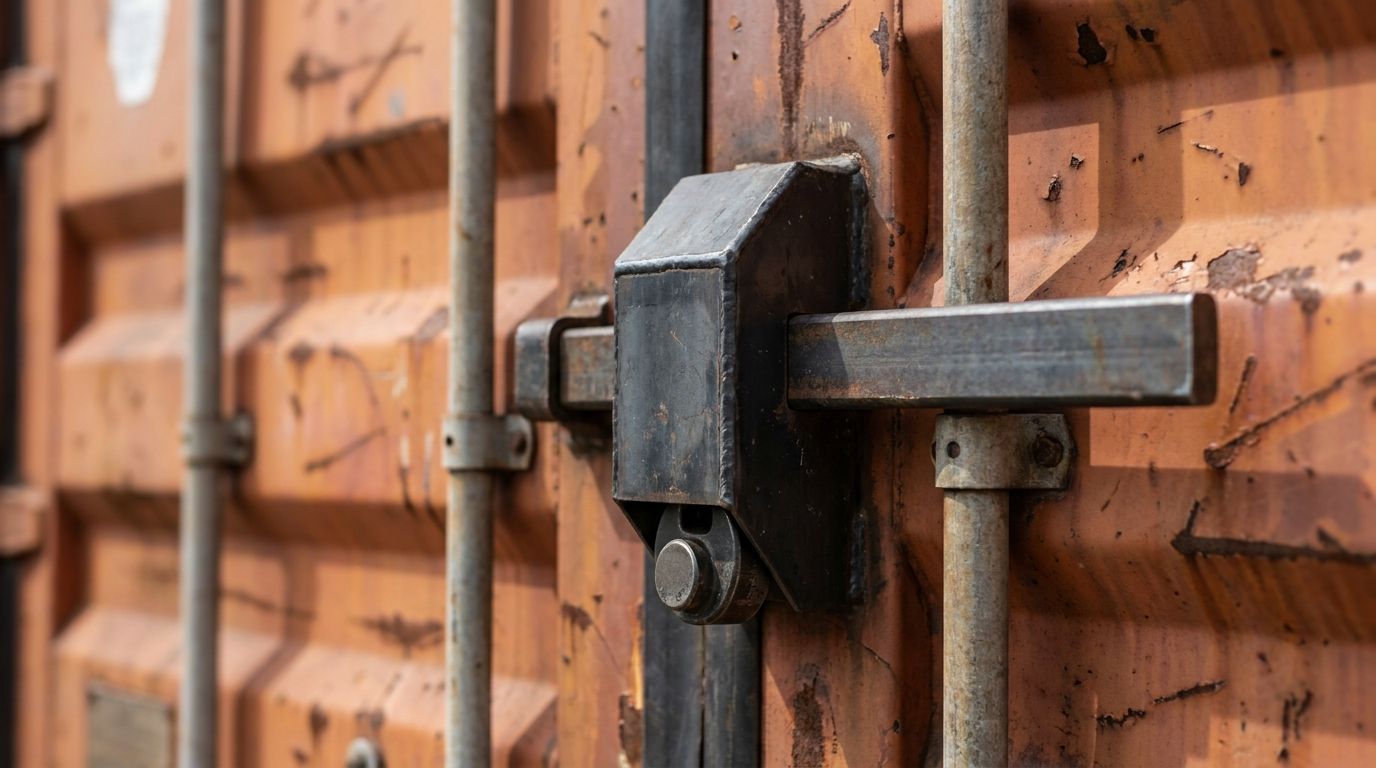
On this page
- 01How to secure a shipping container against theft
- 02The weak point: the door and the padlock
- 03A lockbox: the single best upgrade
- 04High-security puck and disc locks
- 05Crossbar and slide-bolt locks
- 06Siting the container for security
- 07A man door for frequent access
- 08Alarms and cameras as add-ons
- 09The tradeoff: security versus easy access
- 10Frequently asked questions
- 11Get a free quote
How to secure a shipping container against theft
A shipping container is a steel box, so the walls and roof are rarely the problem. The weak point is the doors, and specifically whatever lock holds them shut. Almost every container break-in targets the locking hardware, not the steel itself, which is good news: it means you can make a unit far harder to crack with a handful of focused upgrades at one spot. This guide works from that weak point outward, covering the lock hardware, where you place the container, and the add-ons that round out a setup.
The weak point: the door and the padlock
A standard container closes with four vertical locking bars and a pair of lock handles. Most people secure it with a single padlock through the handle hasps. The trouble is that an exposed padlock is the easiest target on the whole box: bolt cutters, a grinder, or a pry bar get at the shackle in seconds because it sits out in the open. So the goal of container security is not a bigger padlock; it is to take that padlock out of reach and add backups that do not depend on it. Everything below is a way to do exactly that.
A lockbox: the single best upgrade
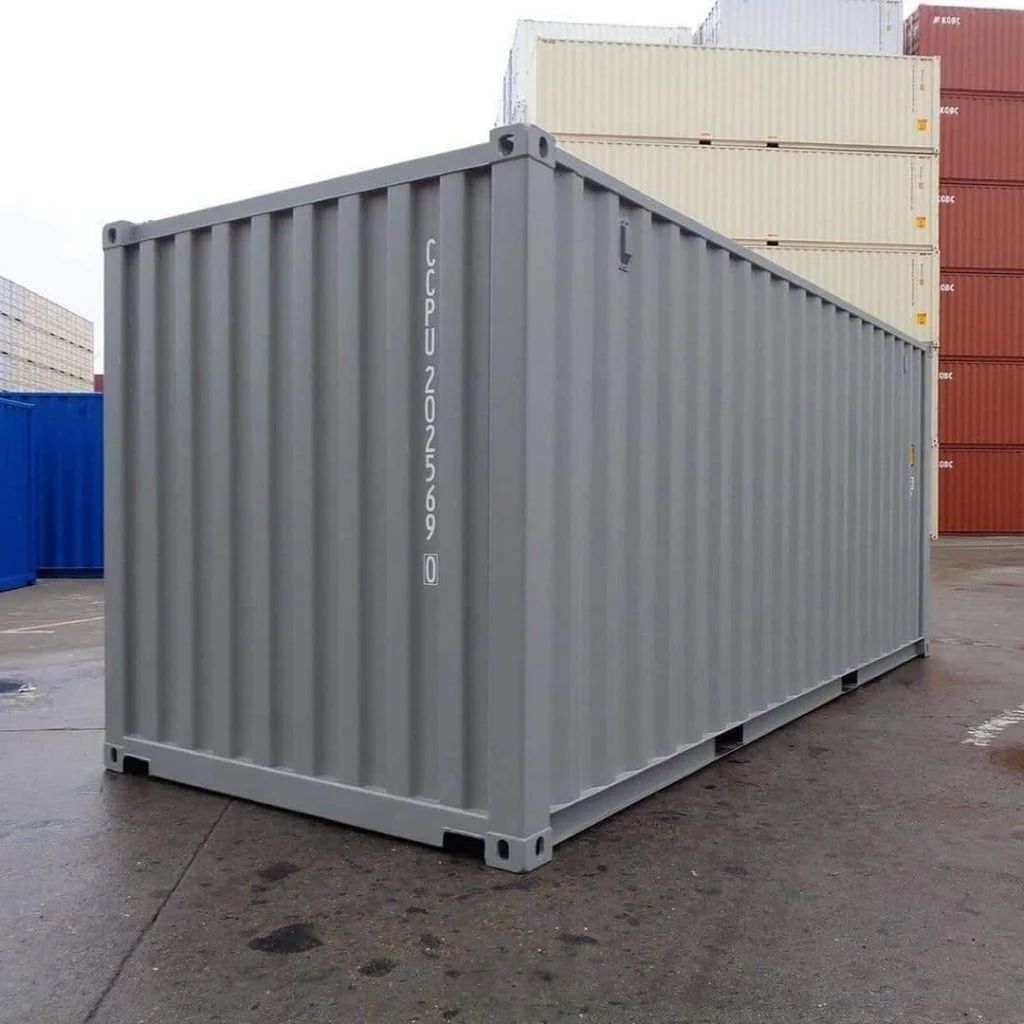
A lockbox is a steel shroud welded over the right-hand door handle that encloses the padlock so only the keyhole is reachable. With a lockbox fitted, bolt cutters and grinders cannot get an angle on the shackle, because the shackle is hidden inside the steel housing. For the money, this is the single most effective security upgrade you can make to a container, and many units come with one already fitted. If you buy a sound used box for storage, like this 30ft used container, confirm whether a lockbox is included or ask to have one added.
High-security puck and disc locks
The padlock that goes inside the lockbox should be a puck lock (also called a disc lock) rather than a conventional padlock. A puck lock is a round, hardened steel disc with no exposed shackle for bolt cutters to bite, which is why it pairs so well with a lockbox: together they leave almost nothing to attack. On a man door, a similar hidden-shackle hasp lock does the same job. Look for a hardened or boron steel body, since a cheap pot-metal lock defeats the purpose no matter how good the lockbox around it is.
Crossbar and slide-bolt locks
A crossbar lock (sometimes a slide-bolt or "container lock") clamps across both door handles and locks in the center, holding the doors shut even if someone defeats the padlock. It is a second, independent layer: a thief now has to beat two different mechanisms instead of one. The tradeoff is convenience, since a crossbar takes a few extra seconds to remove and refit every time you open the doors, but for a unit you access only occasionally it is a strong addition.
Siting the container for security
Where you put the box matters as much as what you lock it with:
- Doors against a wall or another container. Park the unit so the cargo doors face a wall, a fence, or a second container with only a foot or two of gap. If the doors cannot be swung open, the locks cannot be reached, which is a free and effective layer.
- Light it. A lit container is a deterrent; thieves prefer the dark. Motion-activated lights on the approach are inexpensive and draw attention to anyone at the doors.
- Keep it visible. Counterintuitively, a container in the open and overlooked by a road, a building, or cameras is often safer than one tucked out of sight where someone can work on it undisturbed.
- Mind the approach. Position the box so a vehicle cannot back straight up to the doors to haul off contents quickly.
A man door for frequent access
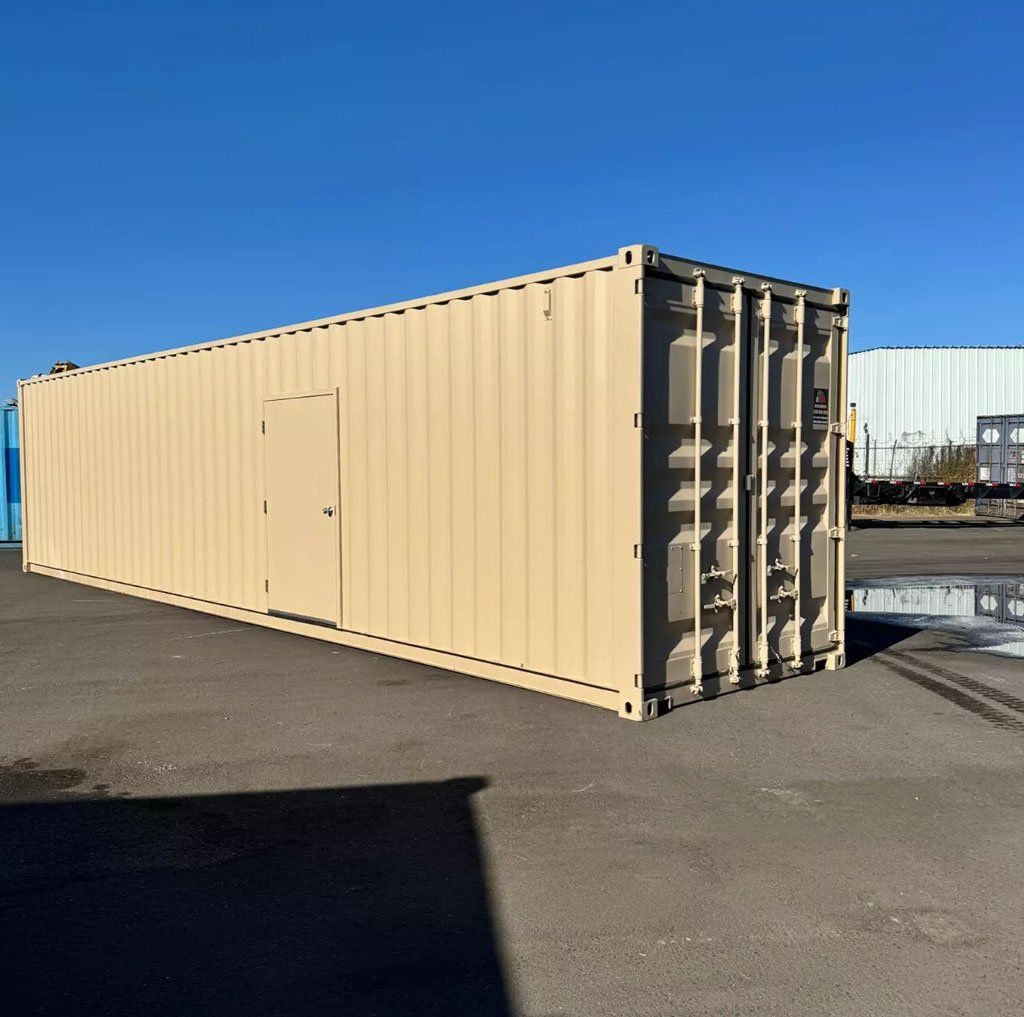
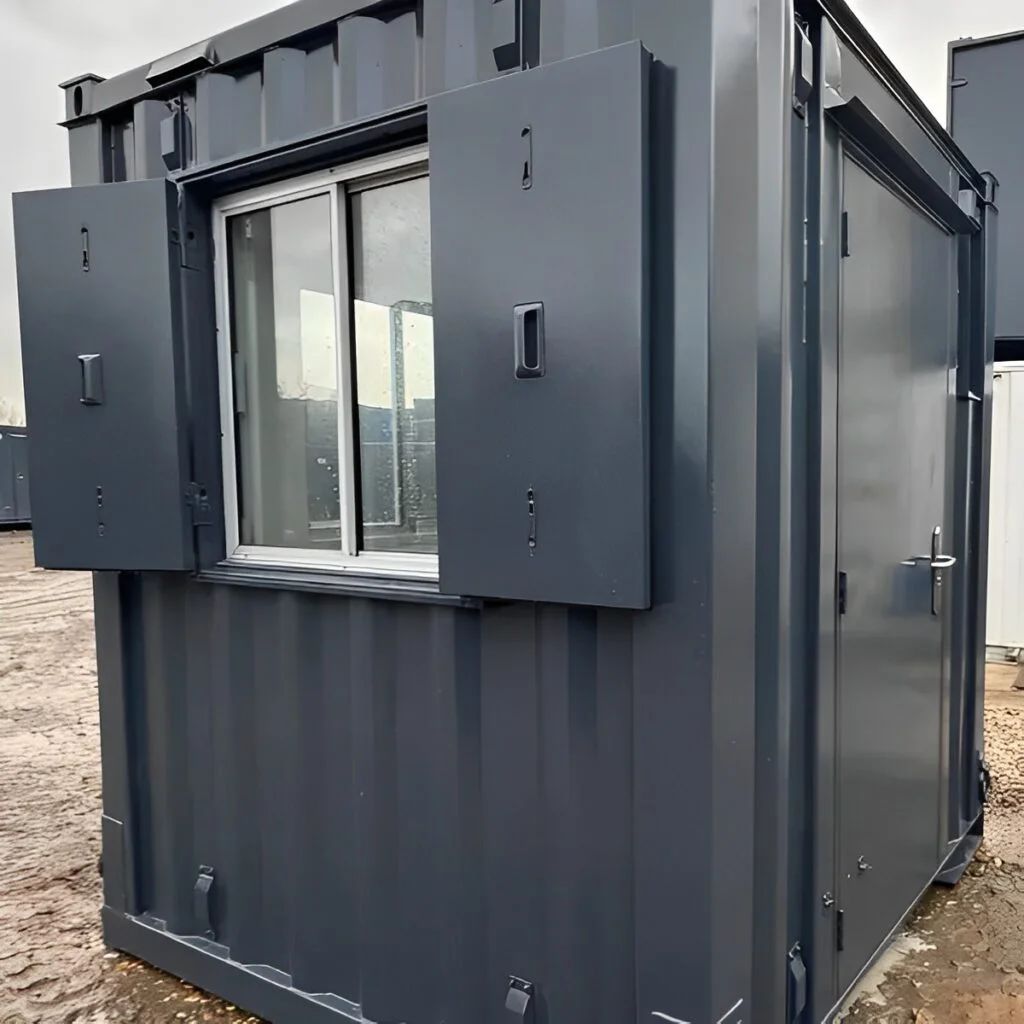
If you are in and out of the container daily, repeatedly removing a crossbar and unlocking a lockbox becomes a chore, and a chore is something people skip. The cleaner answer is a personnel (man) door fitted with a quality deadbolt, used for everyday entry, while the main cargo doors stay locked down hard and are opened only when you need the full width. A unit like this 40ft container with man door is set up for that pattern. A small office-style unit such as a 7ft x 7ft anti-vandal container office (anti-vandal meaning reinforced doors and steel-shuttered windows) takes the same approach for a manned, frequently used space.
Alarms and cameras as add-ons
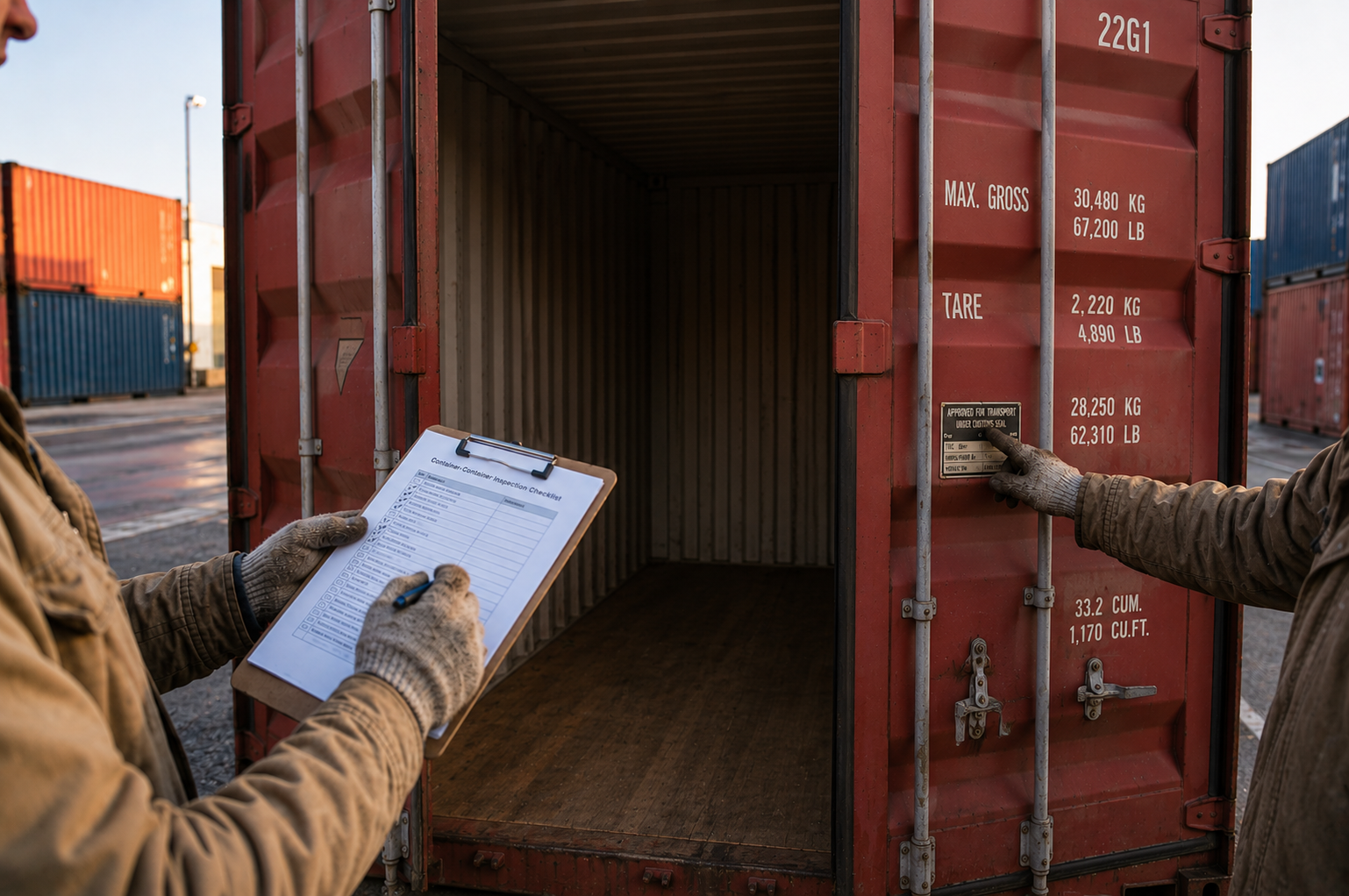
Hardware stops entry; alarms and cameras catch what gets past it and deter the attempt. A motion or door-contact alarm, a visible camera, or a cellular GPS tracker inside high-value contents all add a layer that physical locks cannot: notice and evidence. These are genuine add-ons rather than substitutes; a camera does not stop a grinder, but it raises the cost of trying and helps afterward. For storage of moisture-sensitive valuables, remember that a high cube (9 feet 6 inches tall, a foot taller than standard) like this 20ft high cube gives more room to shelve and organize what you are protecting.
The tradeoff: security versus easy access
Every layer you add makes the container a little less convenient to open. A lockbox, a crossbar, a man-door deadbolt, and an alarm together are very hard to beat, but they also mean more steps each time you visit. The right setup balances the value of what is inside against how often you need in: lock a rarely opened long-term store down to the maximum, and lean on a man door and lighter daily hardware for a unit you use every day. There is no setup that is both maximally secure and maximally convenient, so choose the point on that scale that fits the contents.
Frequently asked questions
What is the best lock for a shipping container?
A puck lock (disc lock) inside a welded lockbox is the most effective combination for the cargo doors. The lockbox hides the shackle from bolt cutters and grinders, and the puck lock has no exposed shackle to begin with. Adding a crossbar lock gives you a second independent layer.
Can thieves cut through a shipping container wall?
It is possible with the right tools, but it is loud, slow, and obvious, so it is rare. The doors and their locks are a far easier target, which is why securing the locking hardware and siting the doors against a wall does most of the work.
How do I secure a container I access every day?
Fit a personnel (man) door with a good deadbolt and use it for daily entry, while keeping the cargo doors locked down with a lockbox and crossbar that you only open when you need the full width. That keeps strong security on the main doors without the daily hassle of removing heavy hardware.
Get a free quote
Tell us what the container will hold and how often you need access, and we will help you spec the right security hardware (a lockbox, a man door, reinforced openings) and send a free, itemized quote with no hidden fees, so what we quote is what you pay. Every unit is inspected and graded before delivery, and we reply within 1 business day. Send us your use case and site details, and we will match the unit and the locking setup to it.