

How to Prepare Your Property for a Container Delivery
From access and ground conditions to clearance and permits, here's how to get your site ready for a smooth shipping container delivery.
 Editorial TeamEditorial Team4 min read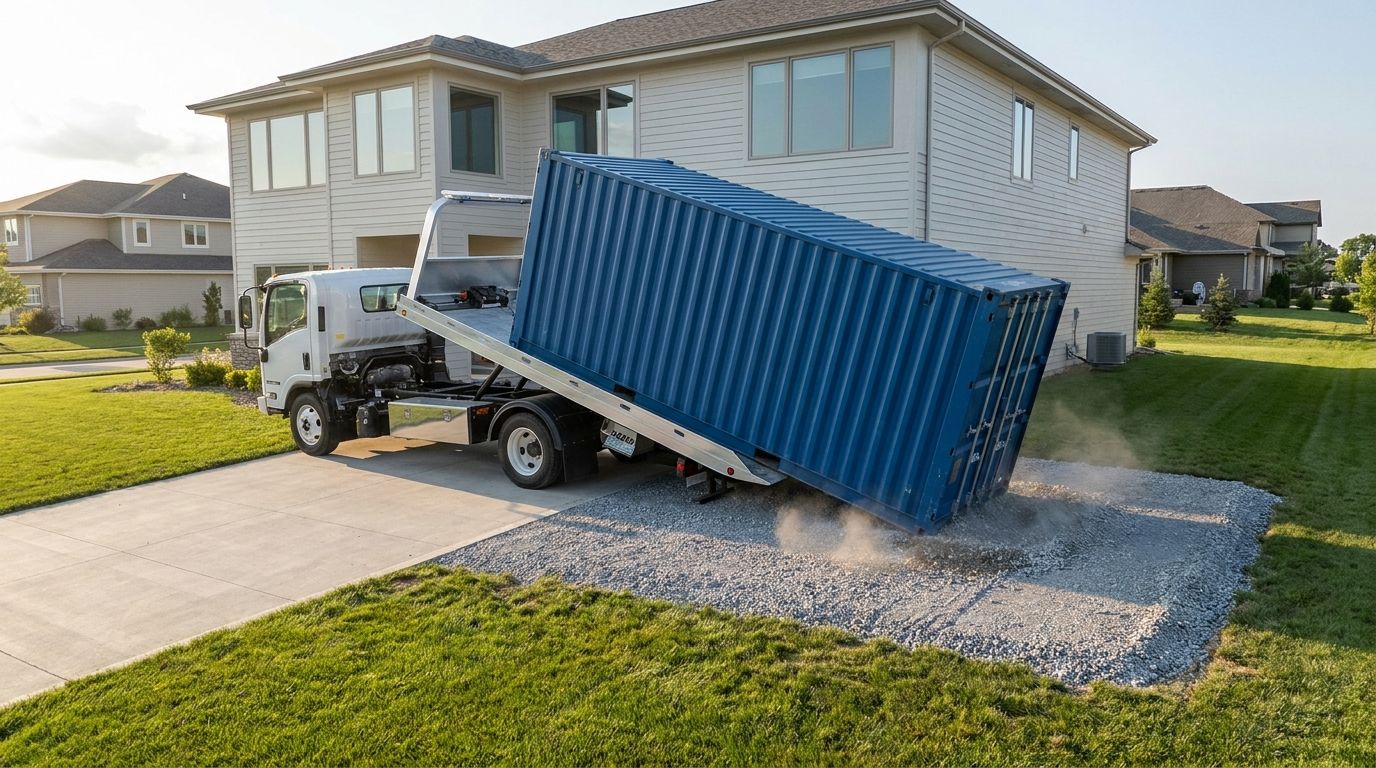
On this page
A container delivery goes exactly as well as the site is prepared — the truck does the same thing every time; the variable is what it finds when it arrives. Get the ground, the approach, and the placement decided before delivery day and the drop takes minutes. Miss one and you're paying a redelivery fee to learn it.
How tilt-bed delivery works
Containers arrive on a tilt-bed truck (also called a roll-off): the bed tilts, and the container slides off at ground level — no crane, no forklift, no dock. That's what makes container delivery affordable and fast, and it's also why the truck's geometry dictates your site prep: the truck plus the container need room to line up straight and pull forward as the box comes down. If your site can't host a tilt-bed run at all, say so in the quote request — tight urban drops sometimes need different equipment, and that's a conversation to have before pricing, not on delivery day.
Ground conditions: level, compacted, dry
A loaded delivery truck is heavy, and soft ground is how trucks get stuck and lawns get destroyed. Gravel, concrete, asphalt, or well-compacted dirt all work. Avoid fresh fill, saturated ground, and anything that pools after rain — check the route the morning of delivery, not the week before. The pad itself should be level and firm so the container sits square; a unit dropped on uneven ground twists, and twisted boxes are why doors stick.
The approach: clearance the truck needs
Provide a straight, firm approach at least 100 feet long and as wide as a standard lane. Remove low branches and watch for overhead wires — the bed tilts up well above trailer height while unloading. Gates, tight turns, and parked cars are the usual surprises; walk the route as if you were driving it.
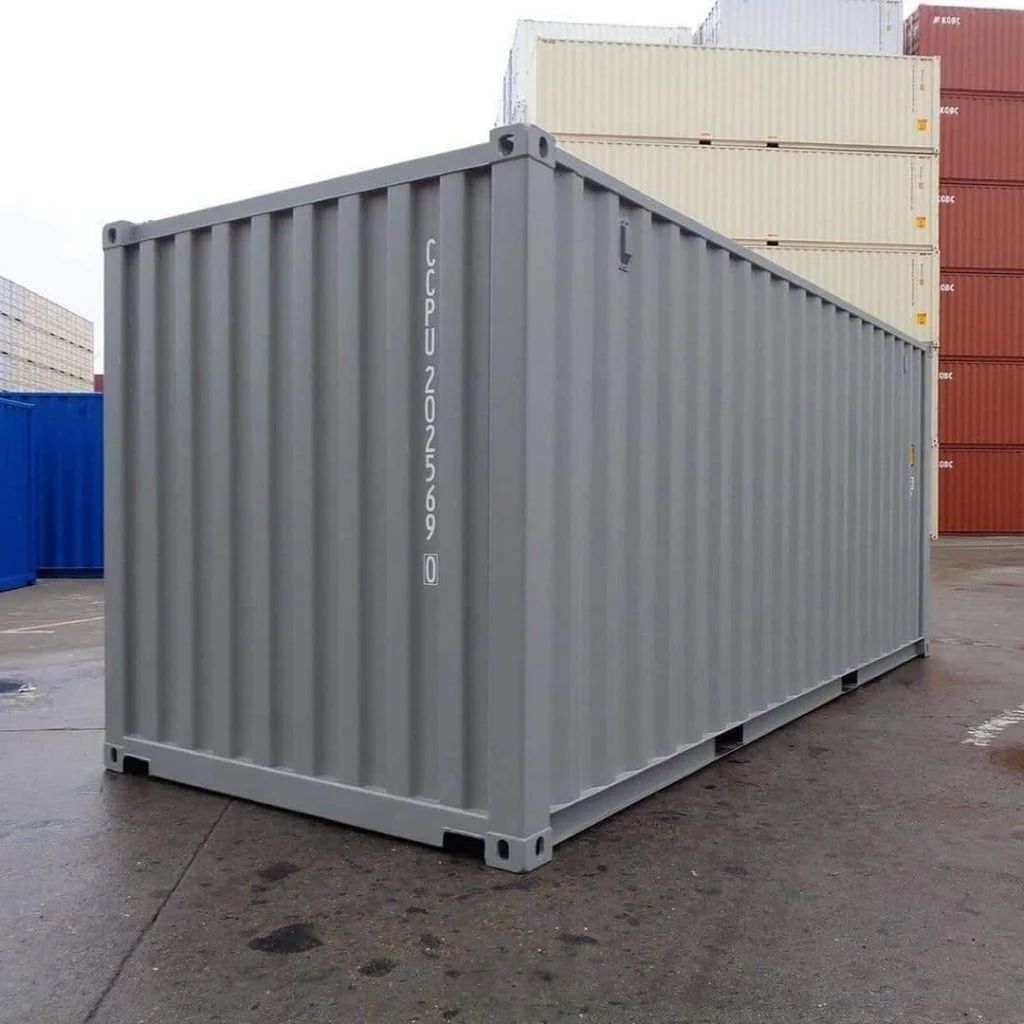
Mark exactly where you want the doors to face. A 20ft unit such as our 20ft one-trip standard dry container needs roughly 60 feet of straight clearance to off-load; a 40ft needs more. Leave space for the truck to lift and lower the bed.
Placement and door orientation
Decide the door orientation — which way the doors face — before the truck arrives, because the answer determines the truck's approach direction and it's expensive to change once the box is on the ground. Doors toward your laydown area or loading path; hinge side clear of walls and fences so both doors swing fully. Think about the second container now too: if one might become two, place the first so the truck can still reach the second pad.
Special cases: slopes, tight lots, and shared access
Some sites need one extra decision before the truck is booked. On a slope, level a pad first — a container set across a grade twists, and railroad ties or gravel are cheaper than fighting stuck doors for years. On a tight urban lot, measure the run honestly and flag it in the quote request; careful positioning takes longer, and the driver should know before arrival. On shared drives and alleys, coordinate the window with the neighbors so the run is clear when the truck backs in. And in gated communities, confirm the gate width and the HOA's delivery rules in the same call — the truck only gets one first attempt.
Permits and HOA rules
Some municipalities require a permit for an on-site container; some HOAs restrict them outright or cap how long one can sit. Rules vary block by block, so make the call before delivery day — a permitted container is a boring container, and boring is what you want from storage. If you rent the property, get the landowner's sign-off in writing as well.
The week before, and the day before
A week out: confirm the delivery window, walk the route after the next rain to see where water sits, trim anything hanging over the run, and tell the neighbors if the truck will block a shared drive. The day before: move vehicles off the approach, unlock gates, and re-mark the pad if weather erased it. 10 minutes of checklist beats an hour of negotiating a stuck truck.
Delivery day, step by step
Be there, or have someone there who can make decisions. The driver will walk the approach, confirm the pad, and position for the drop; the container slides off at ground level and gets a final square-up. Have the placement marked — chalk, stakes, or paint — and keep vehicles, pets, and bystanders clear of the run. If access fails on arrival — a soft lawn, a locked gate, a car in the run — the truck leaves, and the redelivery fee is the cost of the failed attempt. Every item above exists to make that fee impossible.
Every unit and site pairing is a little different. Request a free quote with your ZIP code and a photo of the site if you have one — we'll confirm the access your specific unit requires before we schedule the truck.