How to Level a Shipping Container: Corners, Shims and the Door Test
How to level a shipping container the right way: support the corner castings, shim with the right materials, and use the cargo doors as your true test of level.
 Editorial TeamEditorial Team10 min read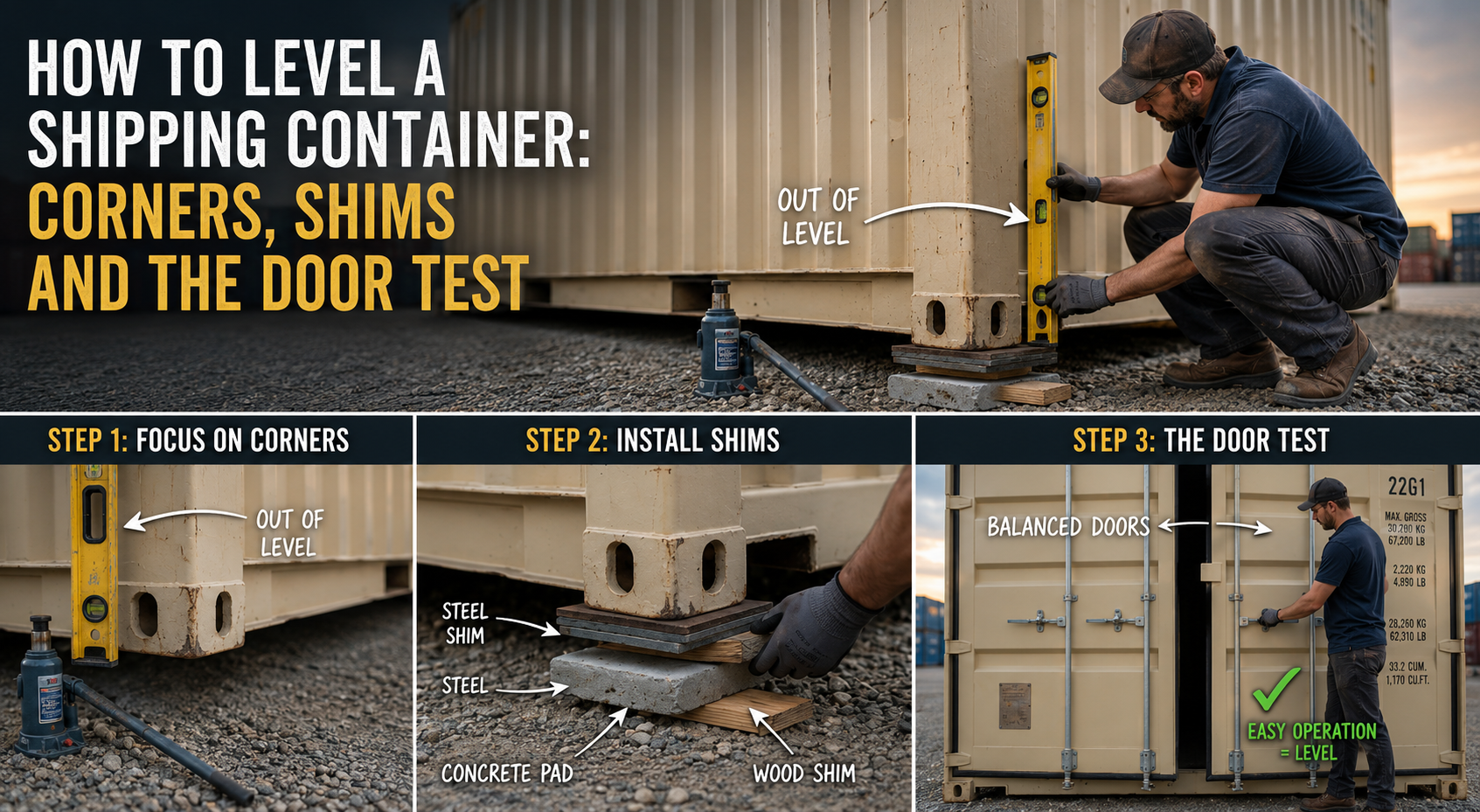
On this page
- 01Quick answer: how level does it need to be?
- 02Why leveling matters: doors, racking, and water
- 03How level is "level enough": the tolerance and the door-square test
- 04What goes under the corners: materials and the corner-casting rule
- 05How to level it, step by step
- 06Tools you need
- 07Common mistakes
- 08Re-checking over time
- 09Frequently asked questions
A shipping container that sits even a little out of level does not just look crooked. It stops working as a sealed steel box. The cargo doors stop closing square, the frame slowly twists, and rainwater finds the low corner and pools there. The good news is that leveling a container is a mechanical problem with a mechanical answer, and you do not need precision instruments to get it right.
Most guides hand you a 10-step block-and-shim routine and stop there. They skip the 2 things that actually decide whether the job holds: how level is level enough, and where the container is allowed to carry its weight. A container is engineered to transfer load through its 4 corner castings (the reinforced steel corner fittings used for lifting, stacking, and tie-down) and along the bottom side rails. Shim those, and the box stays square. Shim the middle of a rail, and you fight the engineering instead of working with it.
This guide leads with the tolerance and the test, then walks the materials, the step-by-step, the tools, and the mistakes that send people back to redo it.
Quick answer: how level does it need to be?
A shipping container should sit level within roughly a quarter to a half inch across the whole unit — front to back, side to side, and corner to corner. That is the working target, not a lab spec. The real test is functional: the cargo doors should swing freely and the locking bars should latch square and stay shut on their own. If the doors close cleanly and the box does not rock, the container is level enough. Support the weight under the 4 corner castings (and at the mid-points on a 40ft unit), never under the middle of the side rails, and re-check after the ground has had time to settle.
Why leveling matters: doors, racking, and water
Leveling is not cosmetic. 3 specific failures trace back to an out-of-level container, and all 3 get worse over time rather than better.
The doors stop working. A container's doors are heavy steel slabs hung on a rigid frame. The frame holds them in alignment only as long as it stays square. Tip 1 corner low and the door opening goes from a rectangle to a slight parallelogram. The doors then bind, the locking bars no longer seat, and you end up forcing a latch that should close on its own. Doors that will not latch square are the single clearest sign a container is sitting wrong.
The frame racks. Racking is the diagonal twist a steel frame takes on when its 4 corners are not in the same plane. A racked container carries its load through a frame that is permanently distorted, which can show up as oil-canning — the visible flexing or rippling of the large flat wall and roof panels. The longer the unit sits racked, the more that distortion sets, and the harder the doors get to square up again.
Water pools and rusts the low corner. A container roof and floor are designed to shed water toward the ends and off the sides. Tilt the box and rain runs to the low corner instead, sits on the roof seam, and works on the steel from the outside while trapped condensation works from within. The low corner is where rust starts, and it starts where you cannot easily see it.
How level is "level enough": the tolerance and the door-square test
You do not need a surveyor. 2 checks, done together, tell you everything.
The numeric check. Aim for the unit to sit within about a quarter to a half inch of level across its full length and width. Read it with a 4-foot level or a long straightedge with a level on top, and confirm the long runs rather than trusting a single spot. Check 3 ways: lengthwise along each side rail, widthwise across both ends, and diagonally from corner casting to corner casting. The diagonal check is the one most people skip, and it is the one that catches a twisted, racked condition that the lengthwise and widthwise reads can both miss.
The door-square test. This is the test that matters most, because it measures the thing you actually care about. With the container roughly leveled, open and close both cargo doors. They should swing without dragging, the locking bars should rotate into their keepers without a fight, and a closed door should stay shut without a shoulder against it. If a door sags or the bars will not seat, the frame is still out of square — keep adjusting the corner supports until the doors close clean. A container that passes the door test is level enough for storage, an office conversion, or anything else you will do with it.
What goes under the corners: materials and the corner-casting rule
The single rule that governs everything under a container: support the corner castings, and on a 40ft unit the mid-points of the bottom rails too — never shim the unsupported middle of a rail. Load the corners and the box behaves like the bridge it is engineered to be. Jack up the middle of a rail and you push the frame toward the same racking and oil-canning you are trying to avoid.
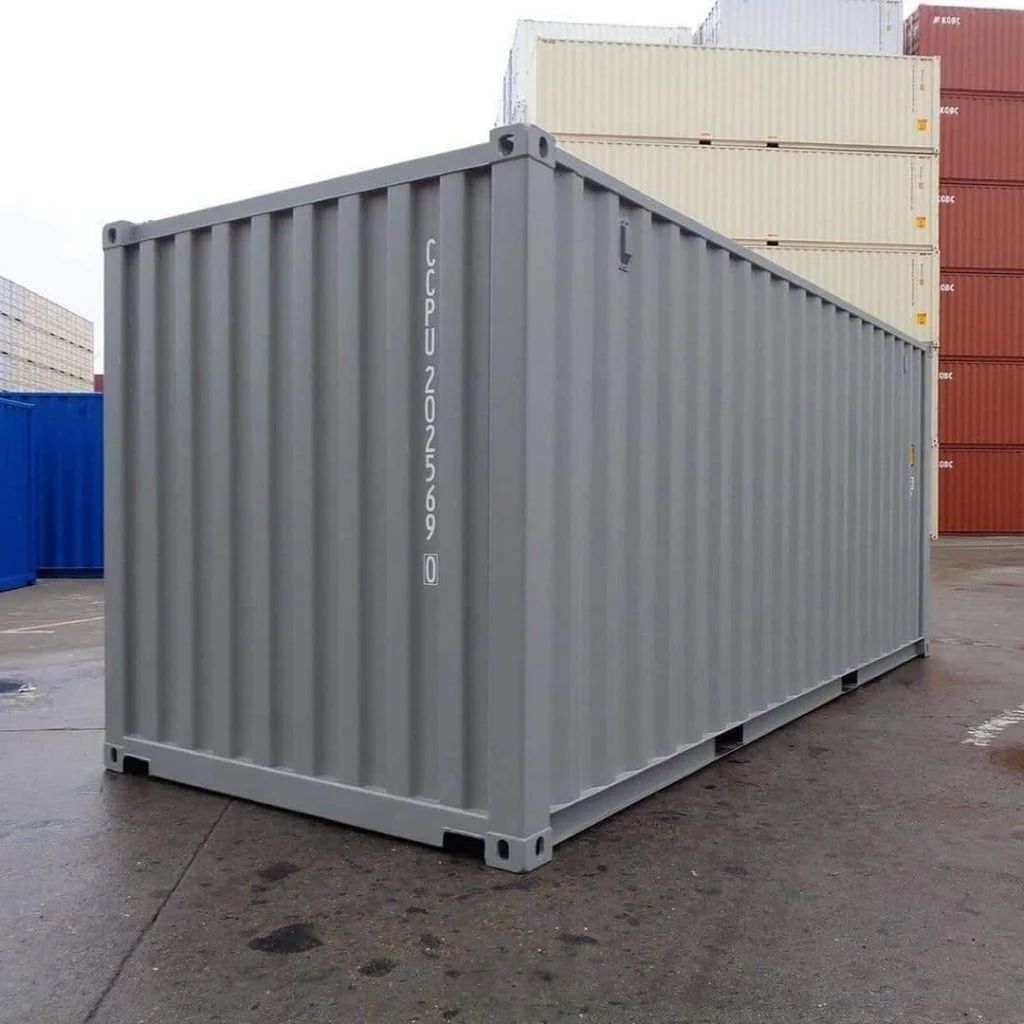
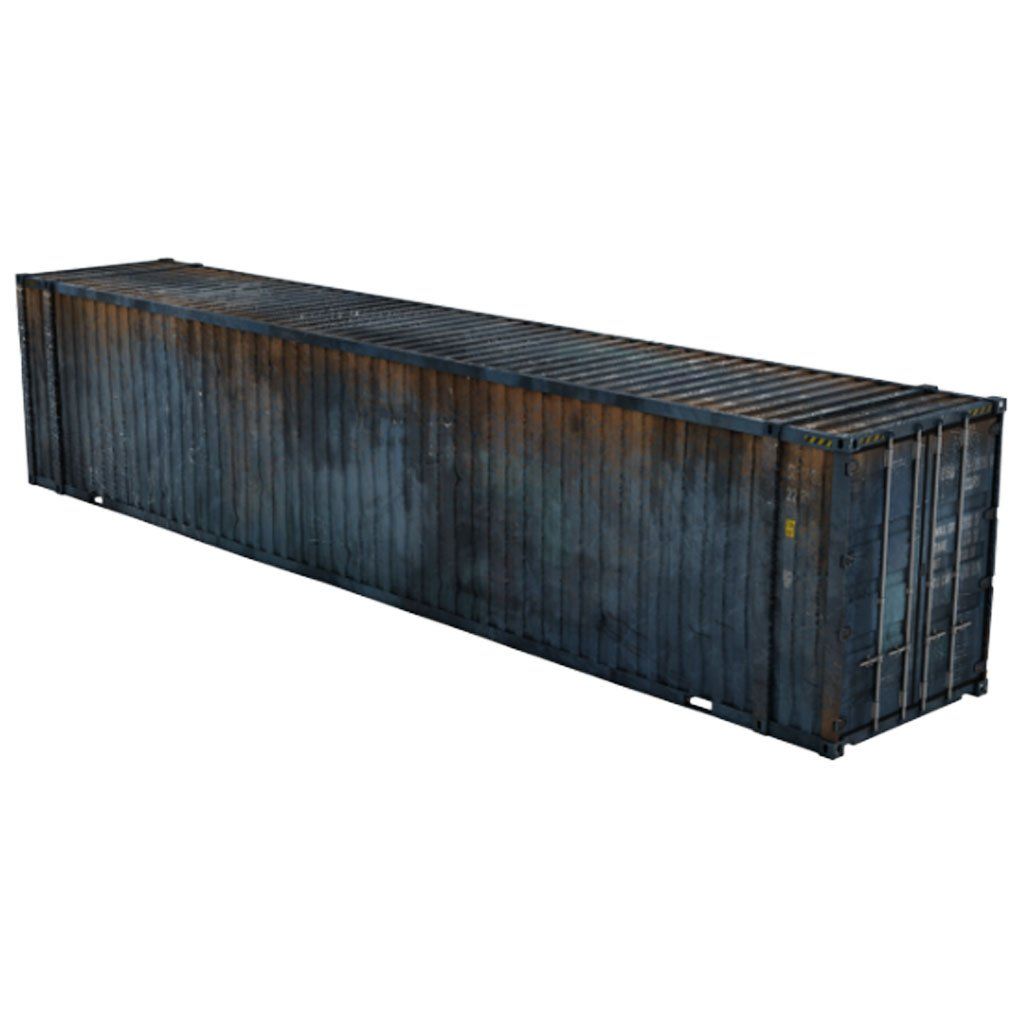
For a 20ft container, 4 solid bearing points (1 under each corner casting) carry the unit. A 40ft container is long enough that the bottom rails can sag between the ends, so it wants additional support near the mid-span, giving roughly 6 bearing points. The longer and heavier the unit, the more that mid-support matters. A taller high cube (1 foot taller than a standard container, at 9ft 6in) carries the same corner-load rule; the extra height changes the volume, not where the weight goes.
Use materials that will not crush, rot, or wash out:
- Steel plates. Flat, load-rated steel pads spread the bearing load and will not compress. Stackable for fine height adjustment.
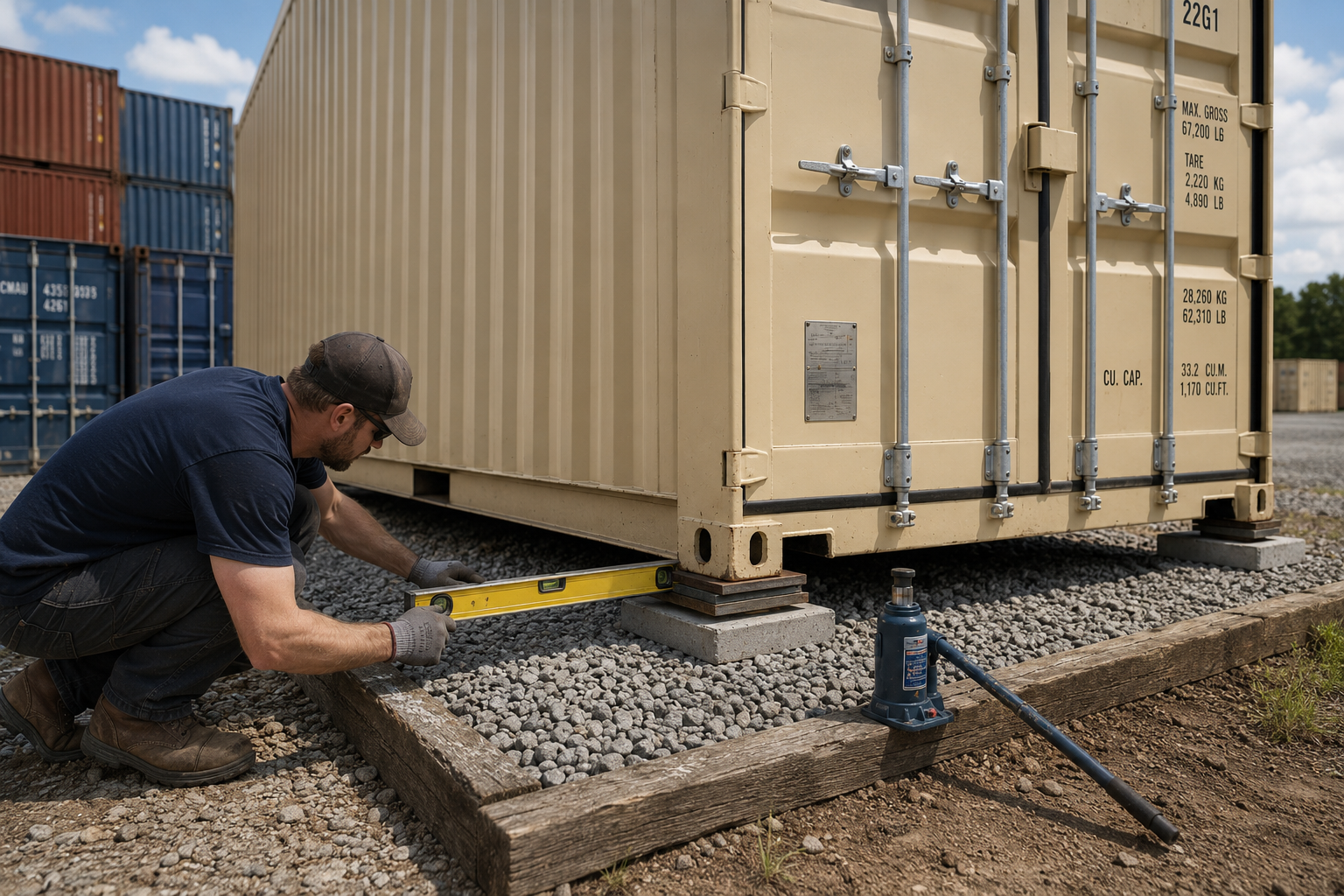
- Solid concrete blocks. Solid units, not hollow cinder blocks — hollow blocks can crack and collapse under a corner load. Concrete piers or pads do the same job permanently.
- Pressure-treated timber. Treated railroad ties or heavy treated lumber, rated for ground contact, resist rot in wet soil.
Never use untreated or rotting wood, thin pavers that crack, or loose bricks. A shim that fails in 2 years drops a corner and undoes the whole job — and you will find out when the doors stop latching, not before.
How to level it, step by step
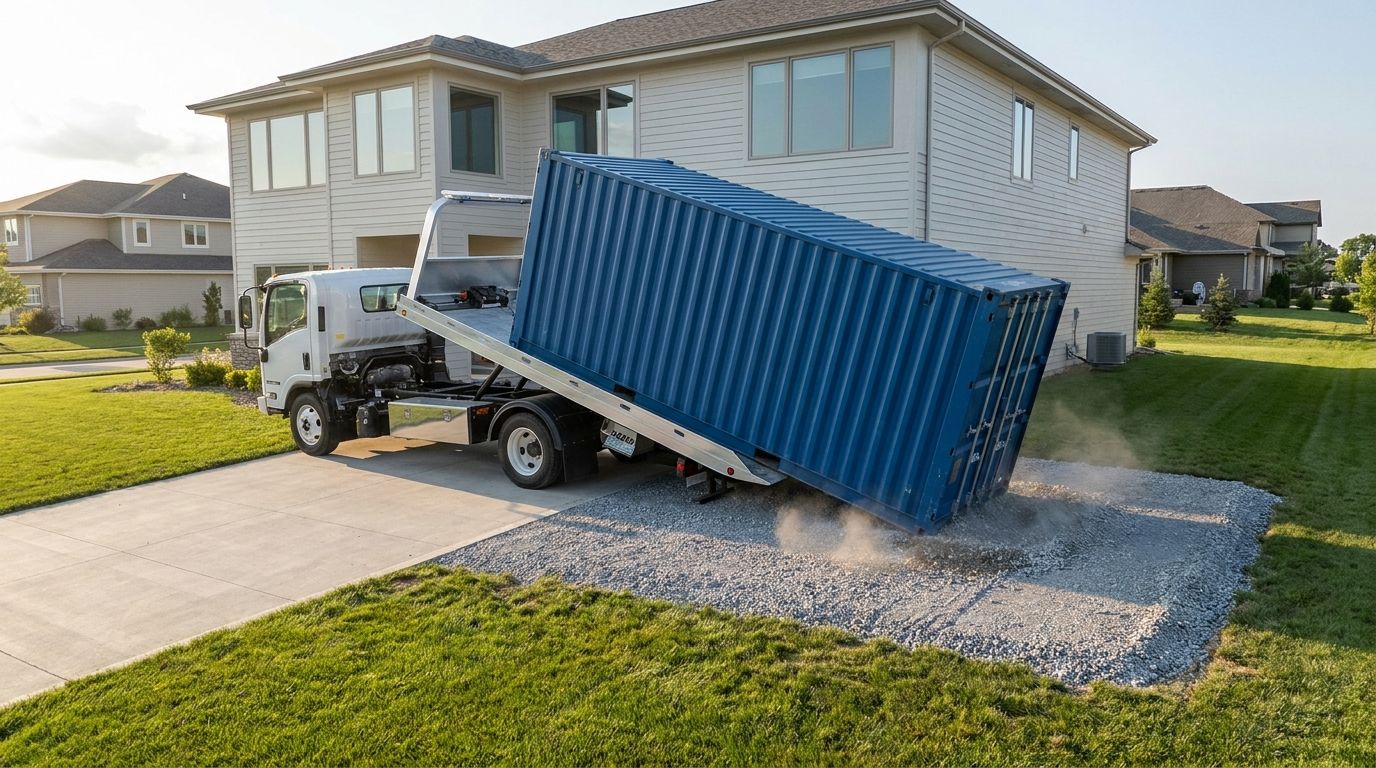
The order below assumes the unit is being set on a prepared base. A firm, well-drained surface, most often a compacted gravel pad, does most of the leveling work before a single shim goes in, because the tilt-bed truck (a delivery trailer whose bed tilts down to slide the container off) needs level, firm ground to set the box down evenly in the first place.
- Start with the base, not the shims. Set the container on firm, drained ground — ideally a compacted gravel pad graded close to level. Shims correct the last fraction of an inch; they are not a fix for soft or sloped ground. For the site and access work that comes before this, see the steps in the delivery-prep guide.
- Find the high corner. Put your level on each corner casting. The highest corner is your reference point — you bring the other 3 up to it rather than digging the high one down.
- Support and shim the low corners. Working 1 corner at a time, lift or pack under each low corner casting until it reaches the height of the reference corner. Use steel plates, solid concrete, or treated timber stacked to the height you need. Keep the bearing directly under the casting.
- Add mid-rail support on a 40ft unit. For a 40ft container, set bearing points near the mid-span of each bottom side rail so the rails do not sag between the ends. A 20ft unit rides on its 4 corners alone.
- Check all 3 planes. Read the level lengthwise along each side, widthwise across each end, and diagonally corner to corner. Adjust shims until all 3 reads land within the quarter-to-half-inch target.
- Run the door test. Open and close both doors. If they swing free and latch square and stay shut, you are done. If not, the frame is still out of square — go back to the corner that fails and adjust.
- Confirm it does not rock. Push on each corner. A unit that rocks has a corner not fully bearing. Seat that shim.
Tools you need
- A 4-foot level, or a shorter level on a long straightedge, to read the long runs accurately.
- A bottle jack or high-lift (farm) jack rated above the corner load, to raise 1 corner at a time.
- Shim material: steel plates, solid concrete blocks or piers, or pressure-treated timber.
- A pry bar, a shovel for grading the base, and a hand tamper if you are firming up gravel.
- A tape measure to confirm the diagonals match end to end.
You do not need surveying equipment or a laser level. The container's own doors are your most accurate instrument for the result that counts.
Common mistakes
- Shimming the middle of a rail. The most damaging error. It pushes the frame toward racking and oil-canning. Load the corners and, on a 40ft, the mid-points only.
- Chasing perfect level and ignoring the doors. A reading that is dead flat in a single spot but fails the door test means the frame is twisted. Trust the doors.
- Skipping the diagonal check. Lengthwise and widthwise can both read fine while the box sits racked. The corner-to-corner read is what catches it.
- Using hollow blocks or rotting wood. Hollow cinder blocks crack under a corner load; untreated wood rots and drops the corner. Use solid, rot-resistant material.
- Leveling on soft or sloped ground. Shims cannot rescue a bad base. Get the ground firm and drained first.
- Never re-checking. Fresh ground settles. A unit that was level on delivery day can shift over the first weeks.
Re-checking over time
A container is heavy, and the ground under a new pad compresses unevenly for the first few weeks, especially after rain or a freeze. Re-check the level once the site has had time to settle — and again after the first hard winter in cold climates, because frost heave can lift 1 corner as the ground freezes and thaws (the frost line is the depth to which soil freezes locally; corners above shifting soil move with it). The check is quick: read the 3 planes and run the door test. If a corner has dropped, re-shim it the same way you set it. Catching a quarter-inch shift early is a 5-minute fix; ignoring it until the doors bind is a much longer afternoon.
Frequently asked questions
How level does a shipping container actually need to be?
Within roughly a quarter to a half inch across the whole unit is the working target. More important than any single reading is the door test: if the cargo doors swing freely and latch square and stay shut on their own, the container is level enough.
Can I level a container on dirt without a pad?
You can set one on firm, drained, graded soil, but a compacted gravel pad drains better and holds level far longer. Bare dirt softens after rain and lets corners settle, which is when the doors start to bind. The base does most of the leveling work before any shim goes in.
Why can't I just shim the middle of the container?
Because a container carries its weight through the corner castings and the bottom side rails, not the floor. Lifting the middle of a rail twists the frame, which racks the box and can ripple the wall panels (oil-canning). Always load the corners, and on a 40ft unit the mid-points as well.
How often should I re-check the level?
Re-check after the first few weeks while the ground settles, and again after the first hard winter in cold climates where frost heave can lift a corner. After that, a quick read whenever you notice a door starting to bind.
If you are still setting up the site, the steps in preparing your property for container delivery cover the ground, access, and clearance work that comes before leveling. For the full picture on bases and footings, see the shipping container foundations guide.
Need a unit set level on your site? Get a free quote and we will match the container and delivery to your ground — or browse containers to compare sizes and conditions. Our 20ft standard dry one-trip container is the general-purpose steel box for storage and conversions, and the 40ft high cube used container gives you the most usable volume per dollar.