Container Office Guide: Sizes, Power, Plumbing, and Permits
What goes into a container office: 20ft vs 40ft, power, HVAC, insulation, windows, plumbing, and the permit questions to settle before you buy.
 Editorial TeamEditorial Team5 min read
On this page
A container office gives you a lockable, weathertight room that arrives on a truck instead of being built on site. Searches for container offices have climbed over the past year, mostly from contractors, yards, farms, and small businesses that need a desk near the work. This guide covers how a steel shipping container becomes an office, which size to choose, what the fit-out involves, and the permit questions to settle before you order.
What a container office is
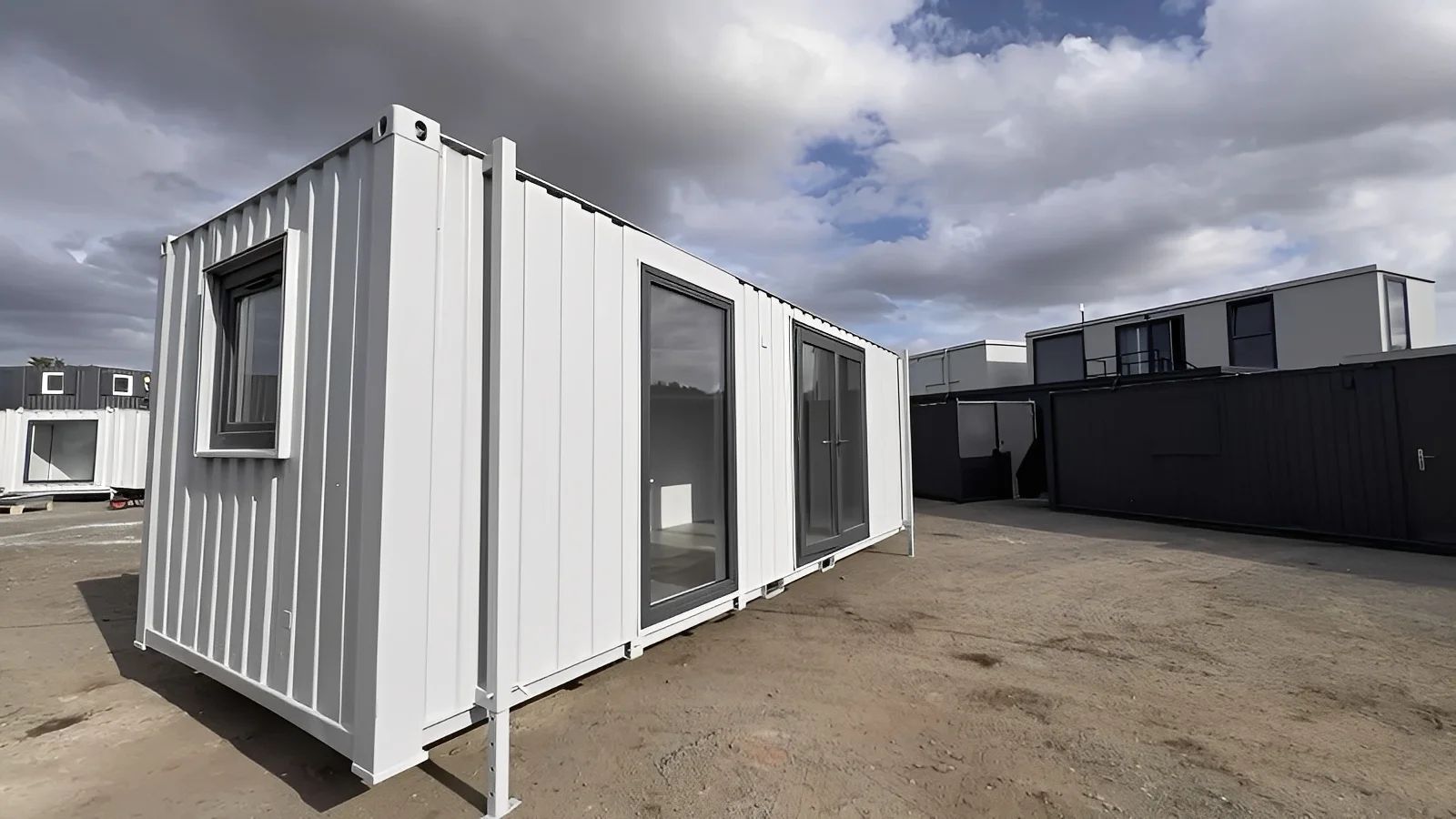
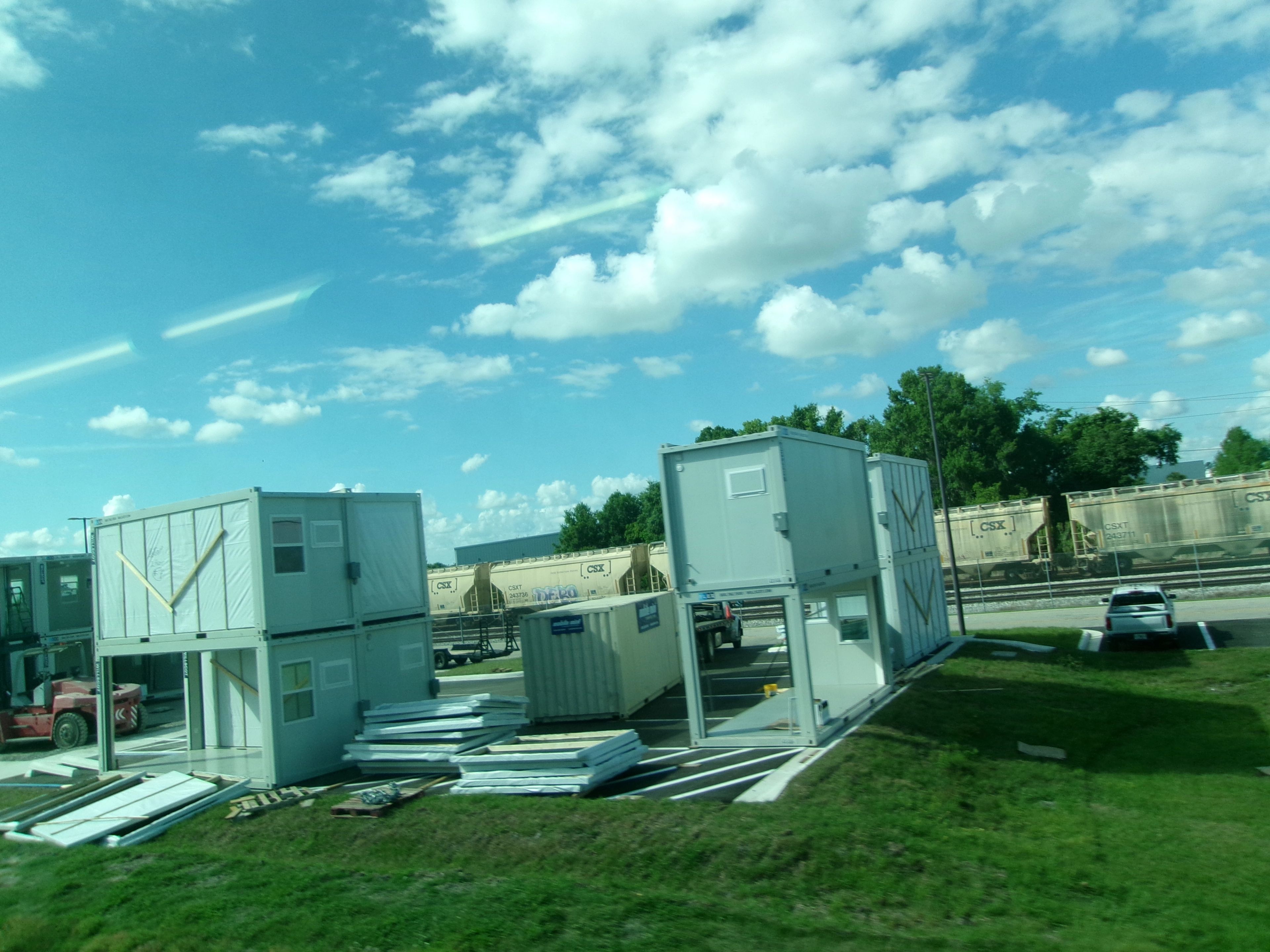
A container office starts as a steel shipping container built to cross oceans. It is then fitted out with a personnel door, windows, insulation, interior lining, lighting, power outlets, and usually heating and cooling. Some units add a restroom or a small kitchenette. The steel shell is what makes it useful on a job site: it locks, it keeps weather out, and it can be moved again when the project ends.
The tradeoff is that bare steel is a poor place to work. It heats up in the sun, gets cold overnight, and sweats with condensation when warm air meets cold metal. Almost everything that turns a container into an office is about fixing those three problems.
20ft or 40ft: picking a size
Size decides how many people the office can hold and how it fits on your site.
- A 20ft container gives roughly 160 square feet of floor. That suits one or two desks, a plan table, and some filing. It is easier to place on a tight lot and lighter to deliver.
- A 40ft container gives roughly 320 square feet. That leaves room for a partition, several workstations, a small meeting area, or a restroom at one end.
- A high cube adds about a foot of height, which helps once insulation and a ceiling lining take a few inches back.
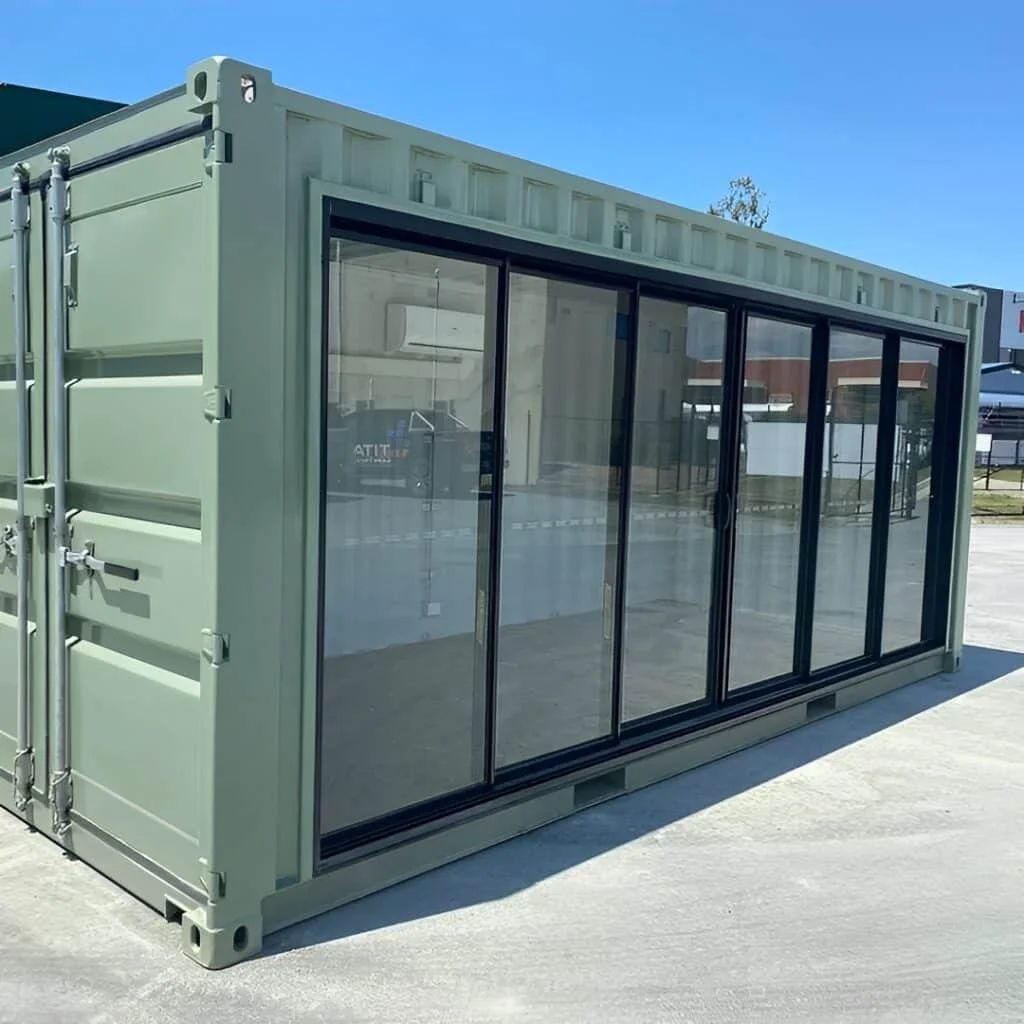
For most site offices, a 20ft office container with a glass door and AC covers the basics. If you need space for a team or a bathroom, a 40ft office container with a bathroom and storage gives you the length to split the room. Our shipping container sizes guide lists the dimensions in full.
Power, heating, and cooling
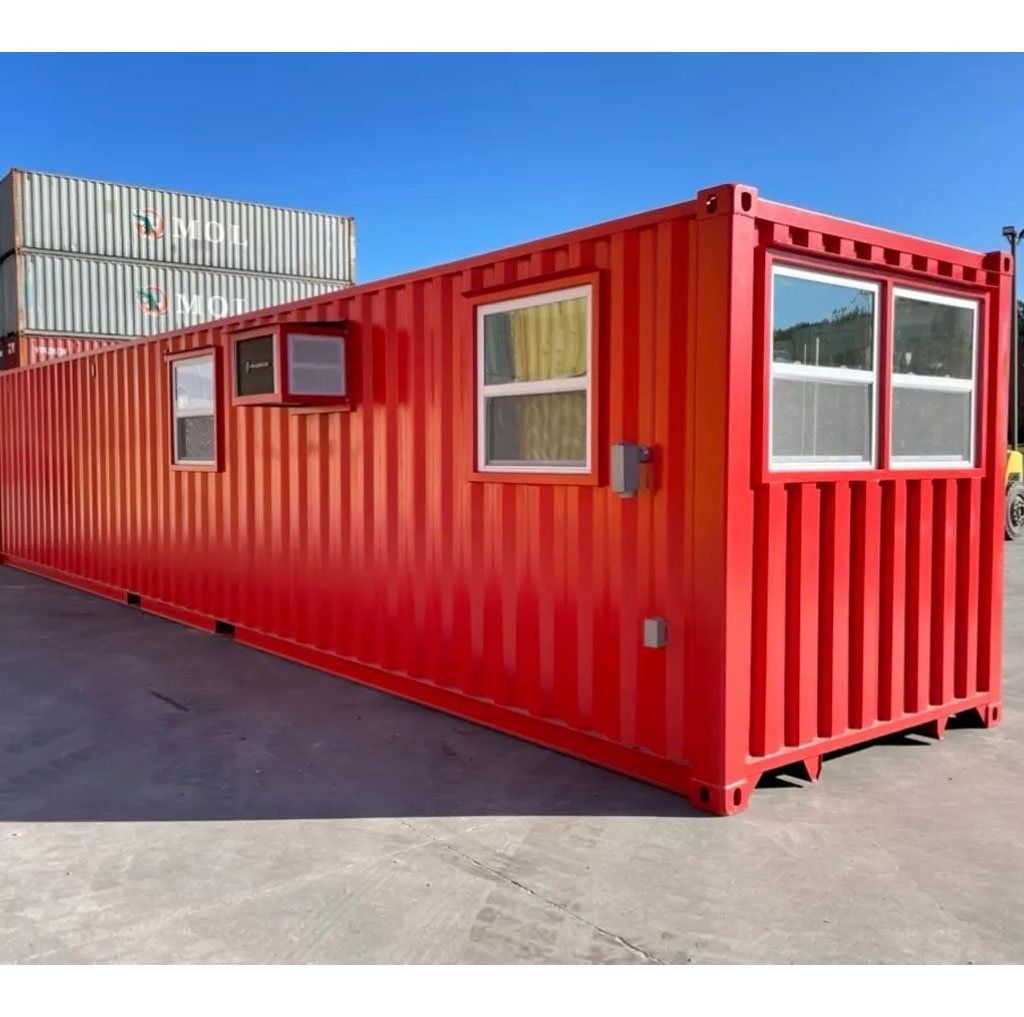
An office needs outlets for computers and chargers, lighting, and a way to hold a comfortable temperature. A typical fit-out includes a breaker panel, wired outlets, LED lighting, and a through-wall air conditioner or a ductless mini-split for heating and cooling.
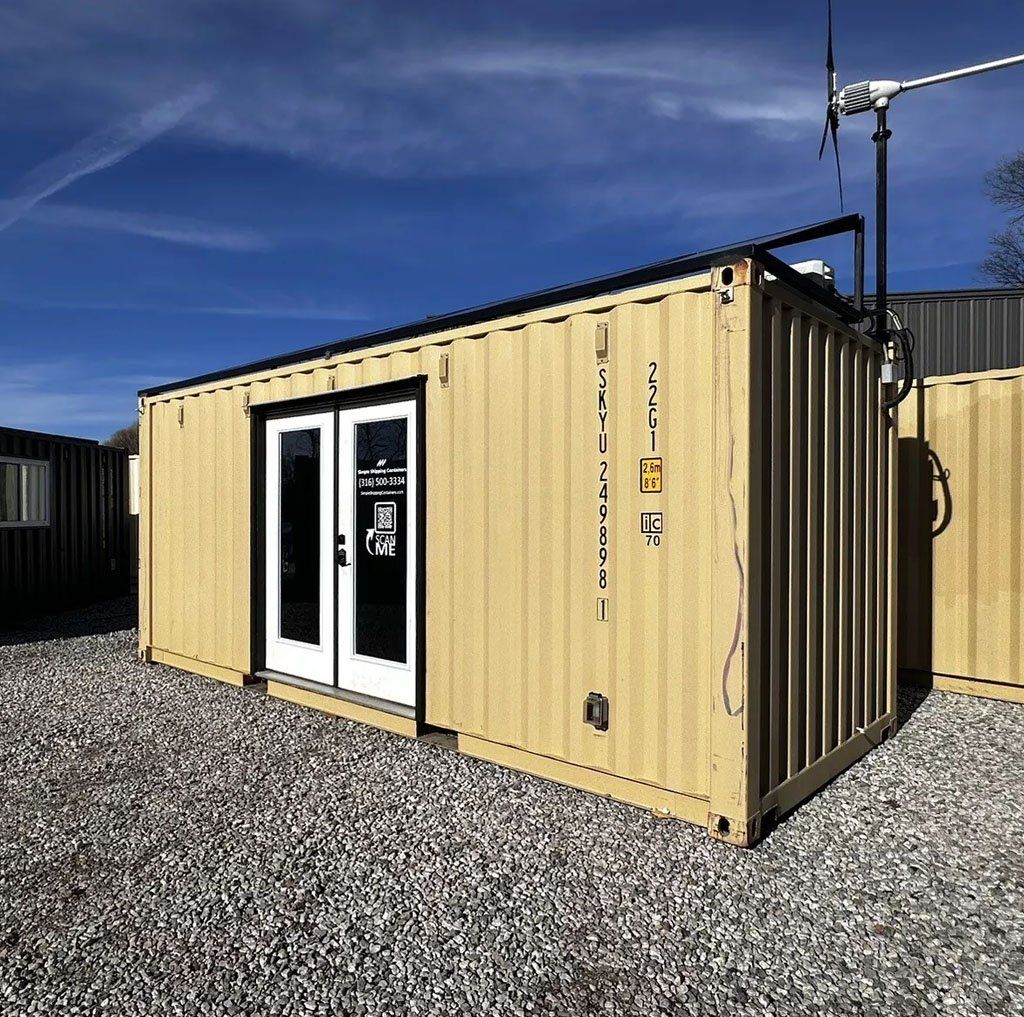
Power can come from the grid, a generator, or solar. Grid power is the simplest to live with but needs a connection from your supply, which an electrician should handle to local code. A generator works for short projects but adds noise and fuel runs. Solar suits remote sites; a solar-ready 20ft office container is set up for off-grid or grid use. The catch with solar is capacity: air conditioning draws a lot, so size the panels and batteries for the cooling load, not just the lights.
Insulation and lining
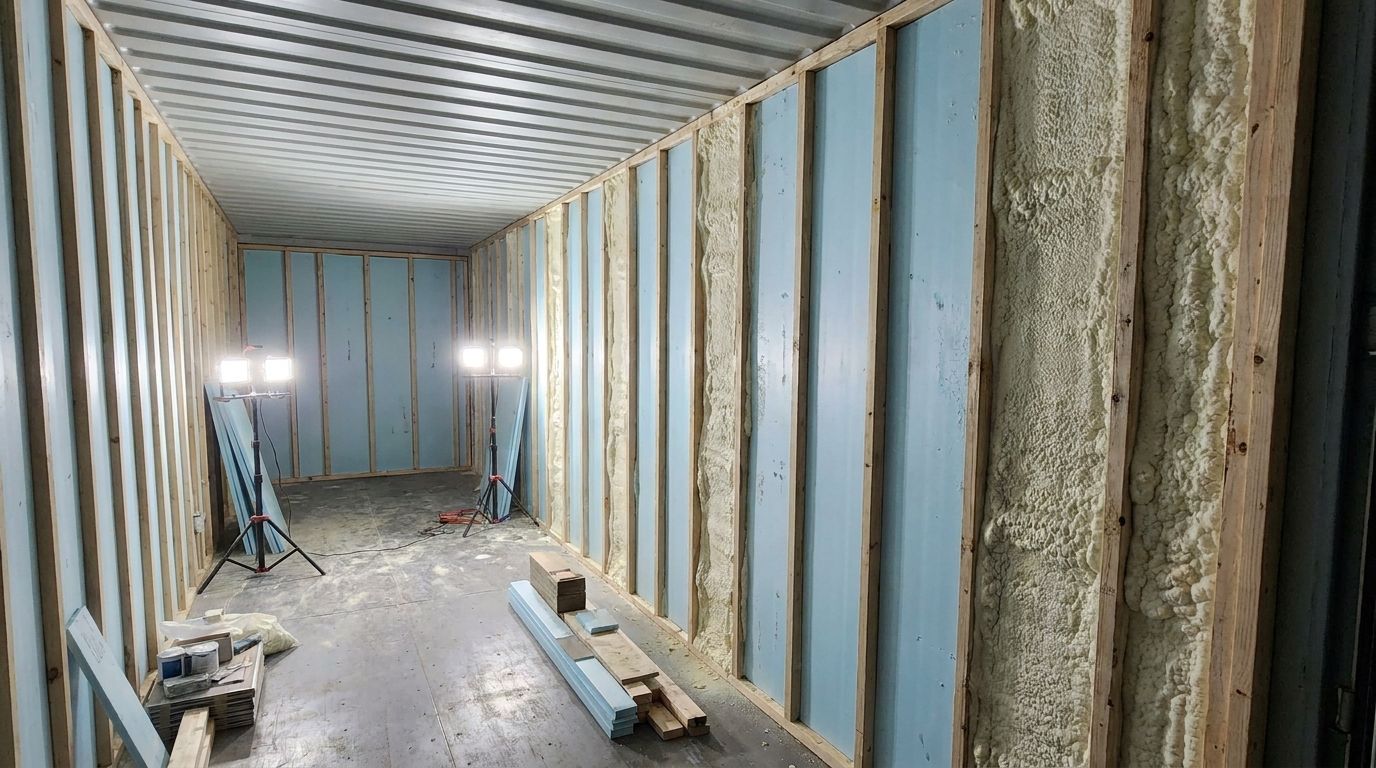
Insulation is what makes the office usable in summer and winter. Spray foam seals the steel and stops condensation at the source, while panel insulation behind a wall lining costs less but needs care at the seams. Either way, the lining takes a few inches off the interior on each wall. Our guide on how to insulate a shipping container compares the methods and their tradeoffs.
Doors and windows
The cargo doors at one end are heavy and awkward to open every time someone walks in. Most offices add a personnel door in the side wall, often with a glass panel for light. Windows add daylight and a view of the site, and security bars or shutters protect them when the office is closed.
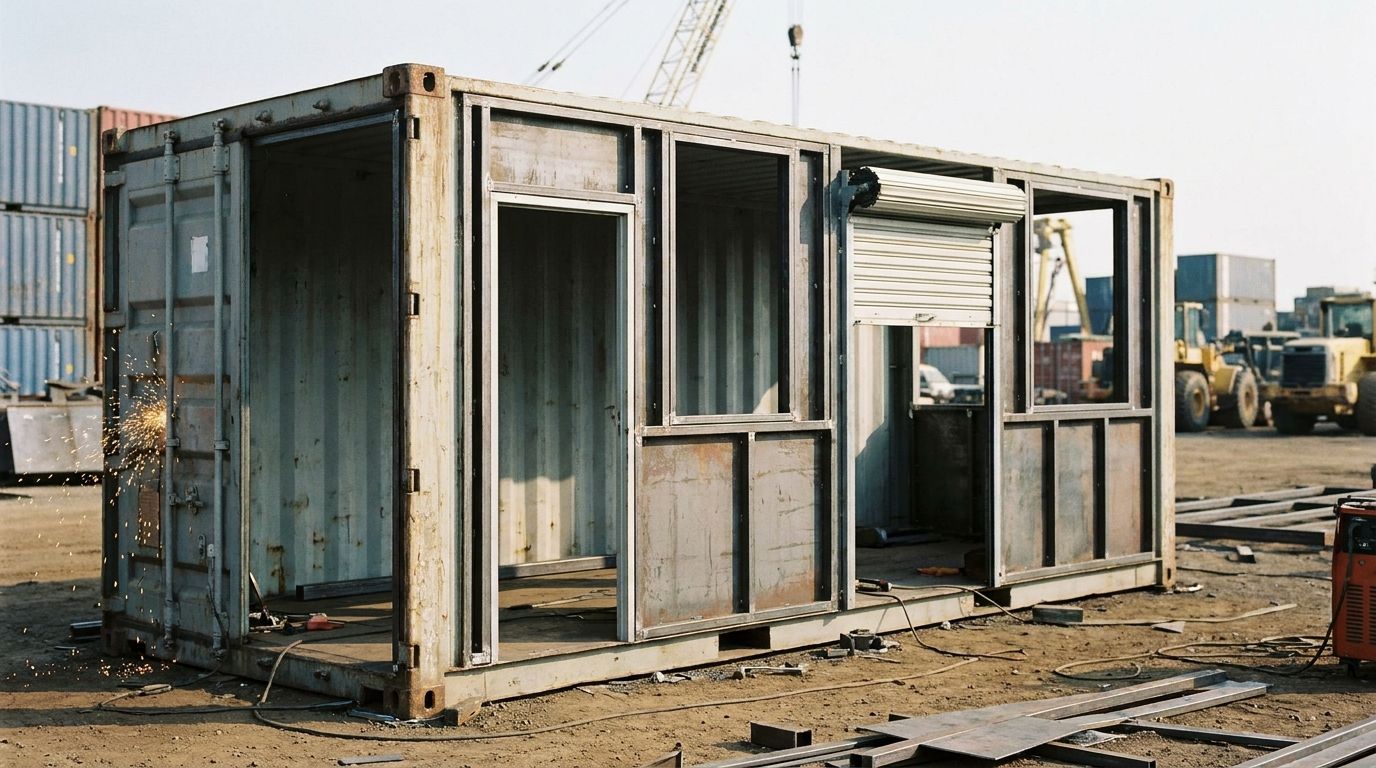
Every opening cut into the wall removes steel that helps hold the box rigid, so larger openings need a welded frame around them. That is why cut-outs are priced by size and number. Our overview of shipping container modifications explains how openings are framed.
Plumbing and restrooms
A restroom or sink turns a container office into a full site base, but it adds the most cost and planning. You need a water supply, a drain route to sewer, septic, or a holding tank, and heat tracing on pipes if your winters freeze. Some buyers skip plumbing in the office and place a separate toilet unit nearby. A site office with a built-in toilet puts both in one cabin if your site has the connections.
Permits and placement
Whether a container office needs a permit depends on where it sits, how long it stays, and whether it is wired or plumbed. A temporary office on an active construction site is often treated differently from a permanent office on commercial land. Rules vary by city and county, so check with your local building and zoning department before delivery. Our shipping container permits guide walks through the questions to ask. This is general guidance, not legal advice.
The ground matters too. A container office should sit on firm, level ground or simple pads so the doors close square and water drains away. Our guide on preparing your property for container delivery covers access and ground prep.
A buying checklist
Before you request a quote, write down:
- How many people will work inside and what furniture has to fit.
- Whether you need a restroom, a sink, or neither.
- Your power source: grid, generator, or solar.
- The doors, windows, and security you want.
- How long the office will stay and whether it will move.
- The delivery address and a note on access and ground.
With that list, the container offices we supply can be matched to your site. For a rough idea of base container prices before fit-out, see how much a shipping container costs. Every unit is inspected and graded before delivery, and you get one free, itemized quote with no hidden fees.
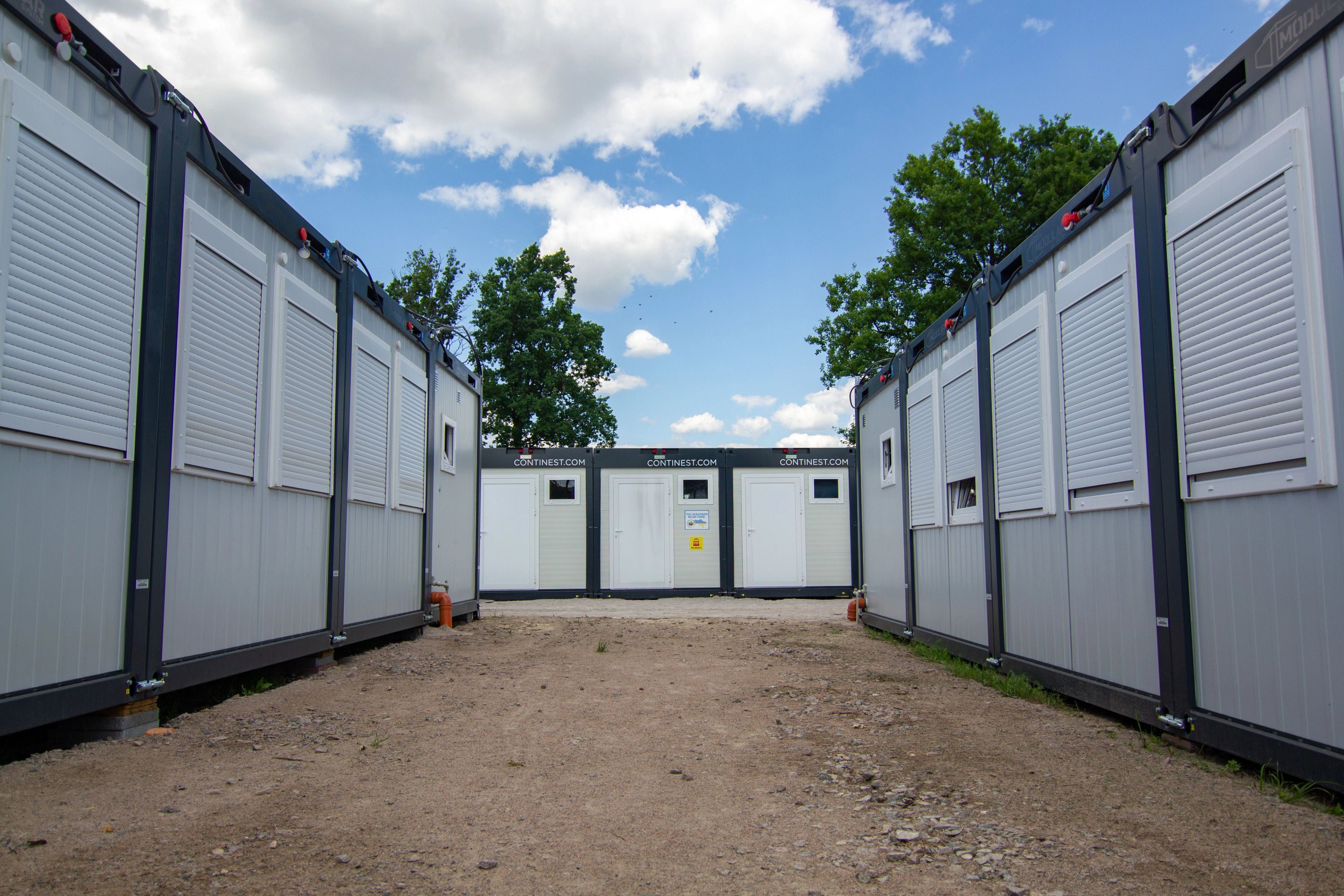
Illustrative photo: Borys Zaitsev · Pexels License.