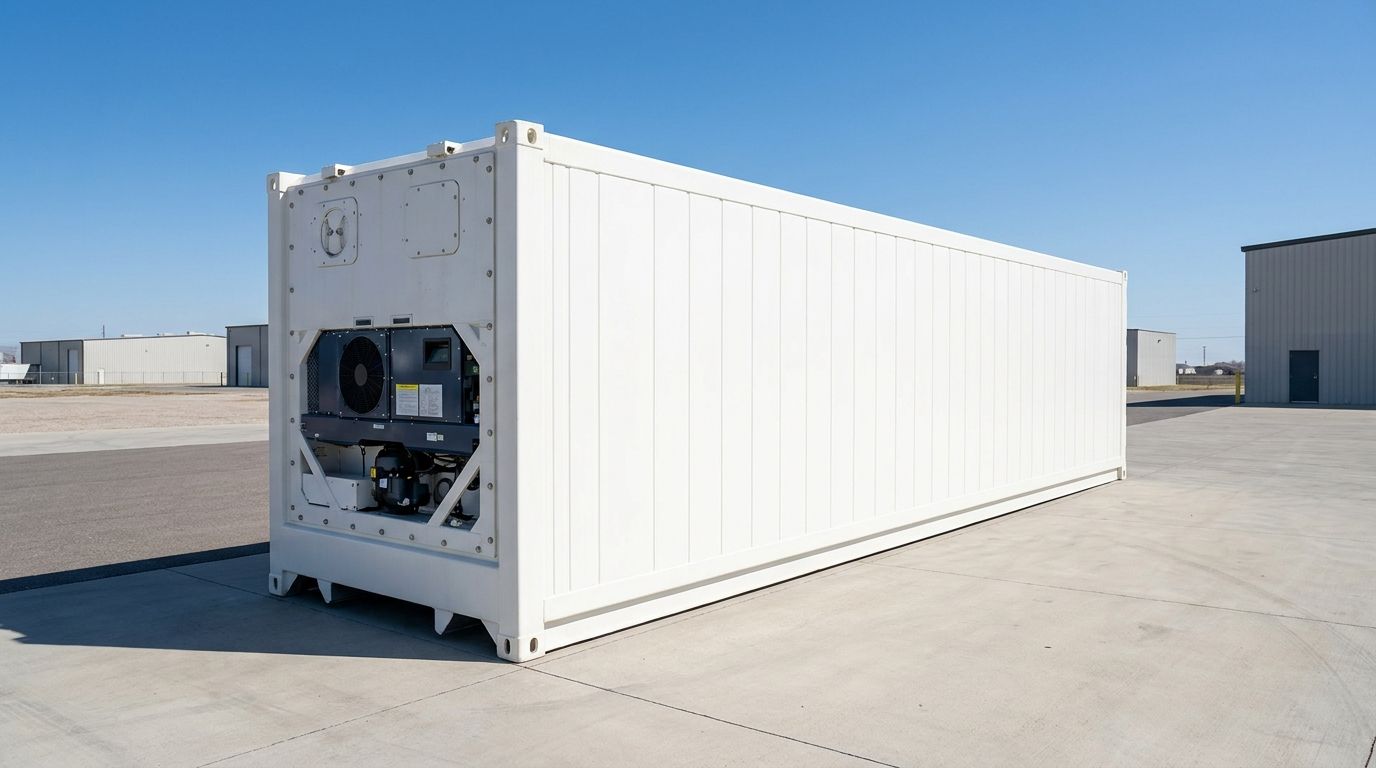
Shipping Container Greenhouses and Grow Rooms: Two Ways to Grow
A shipping container greenhouse floods the box with sunlight; a container farm seals it and grows under LEDs. How each build works and which fits your crop.
 Editorial TeamEditorial Team6 min read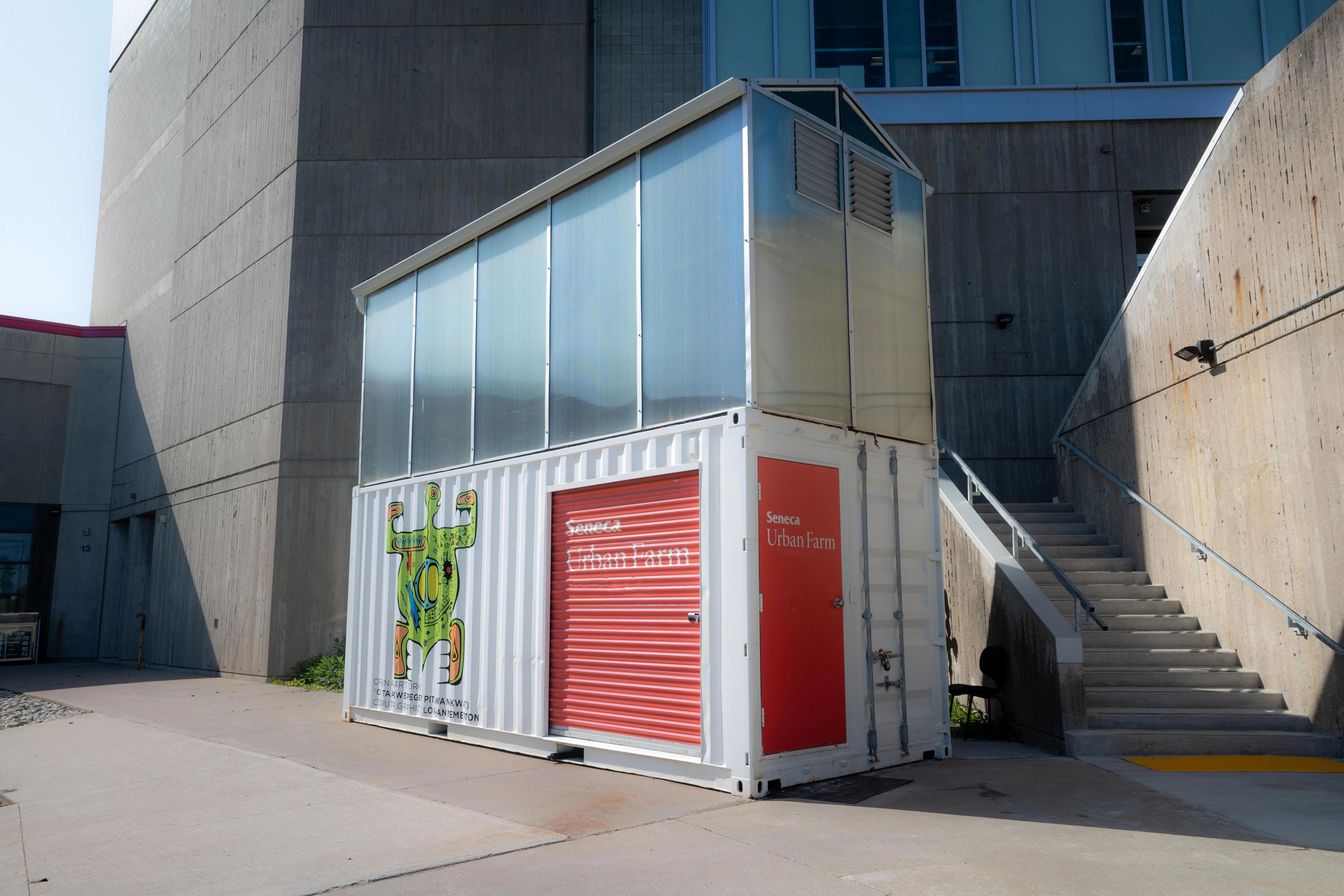
On this page
- 01Quick answer
- 02Build 1: the glazed greenhouse conversion
- 03Build 2: the sealed grow room, or container farm
- 04The humidity problem both builds share
- 05Water and power: the practical gate
- 06Starting points: buy it built or convert a box
- 07Siting, zoning, and the boring details
- 08Frequently asked questions
- 09Get a free quote
Search for a shipping container greenhouse and you will find two builds that could not be more different. One cuts most of a wall out of the box and fills it with glazing so the sun does the work. The other seals the box, insulates it, and grows everything under LED light — the unit the industry calls a container farm. Both start from the same steel shell; nearly every decision after that runs opposite.
This guide covers the structural work a glazed conversion involves, the power and insulation a sealed grow room demands, and which crops suit each build. One boundary up front: this is about growing inside a container. To store feed, seed, tools, or harvest on a farm, see our containers for agriculture and farm storage solution instead.
Quick answer
A shipping container greenhouse is a container opened up with glazed panels so crops grow in natural light — the fit for seedlings, season extension, and nursery stock. A container grow room, or container farm, is the opposite: a sealed, insulated box where LEDs and climate control grow greens, herbs, and microgreens year-round. The conversion takes structural work up front; the sealed room runs as an always-on electrical load. Choose by crop and by the power the site can supply.
Build 1: the glazed greenhouse conversion
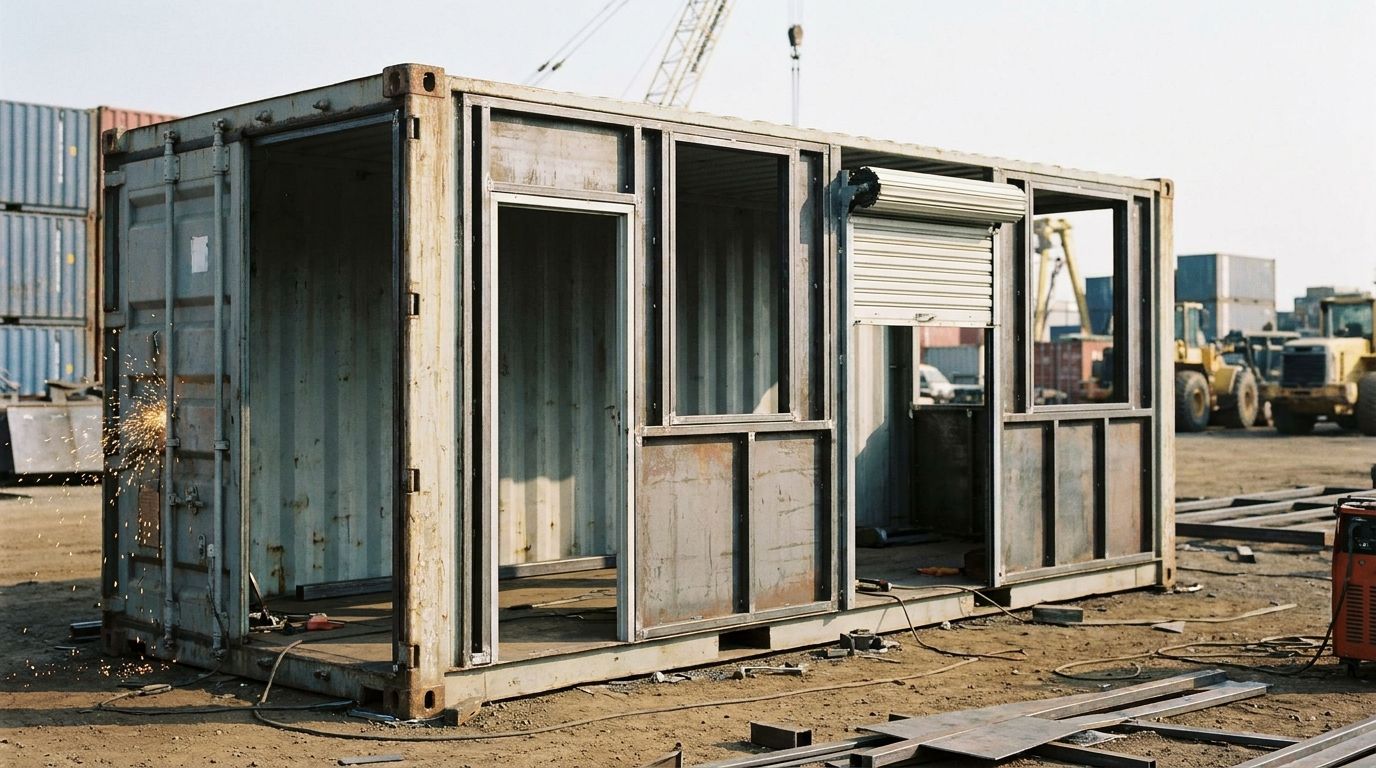
A greenhouse conversion treats the container as a rugged frame and lets light in: you cut large openings (most of a side wall, sometimes roof sections) and fit glazed panels, usually polycarbonate, since glass adds weight and breaks in transit. Those openings are the real work — corrugated walls carry structural load, so a big cutout changes how the box holds itself up and needs welded framing to give the stiffness back. This is fabrication, not carpentry, and our guide to shipping container modifications covers what cutting into the shell involves.
What you get is a tough, relocatable greenhouse that runs on very little power: circulation fans and maybe a small heater in the shoulder seasons. It suits seedling starts, hardening off nursery stock, and stretching the season past the frost dates. The limit is the glazing itself — a single-skin panel sheds heat fast on winter nights, so a conversion extends the season rather than abolishing it.
Build 2: the sealed grow room, or container farm
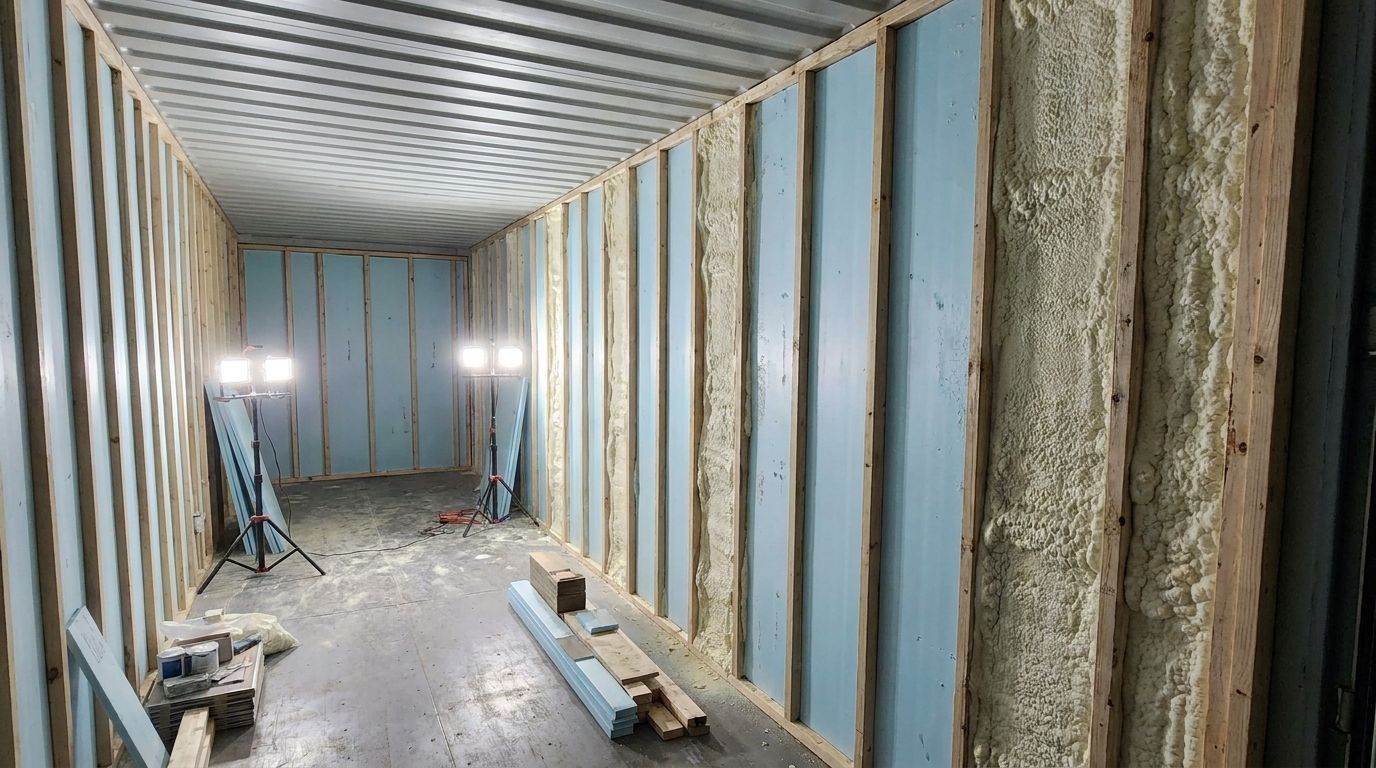
The sealed grow room goes the other way: no natural light at all. The box keeps its steel walls, gains thick insulation, and grows under LED fixtures with heating, cooling, and dehumidification running as one system. This is the container farm model — tiered racks of greens, herbs, or microgreens in a climate that ignores the weather, behind a sealed envelope that keeps insects, spores, and airborne disease off the crop.
Insulation is the make-or-break spec: every degree the climate system holds, it holds against the insulation behind the walls, so a poorly insulated box wastes electricity around the clock. Read our guide on how to insulate a shipping container before pricing grow equipment — in a sealed room, insulation quality decides whether climate control is affordable to run.
The humidity problem both builds share
Plants transpire, and a box full of them pushes moisture into the air all day. Where that humid air meets cool steel it condenses, drips from the ceiling, wets foliage, and invites the fungal problems a controlled space was meant to prevent. The fix differs by build — fitted vents and fans for a glazed conversion, dehumidification sized into the climate system for a sealed room. Our guide to shipping container ventilation covers how air moves through a steel box and what stops condensation.
Water and power: the practical gate
Before choosing a build, look at what the site can supply. A sealed grow room is an always-on electrical load: lights, climate control, and pumps run every day of a crop cycle, and an outage with no backup can cost the crop. A glazed conversion asks for far less, which is why remote sites with thin power usually end up glazed. Water is the quieter requirement — a supply line or a refillable tank, plus a drain, planned before the box is set.
Starting points: buy it built or convert a box
There are two ways into either build. The fastest is a unit already fitted out: a 20ft insulated container greenhouse arrives with insulation, HVAC, lighting, outlets, and a breaker box in place — a working growing space rather than a project.
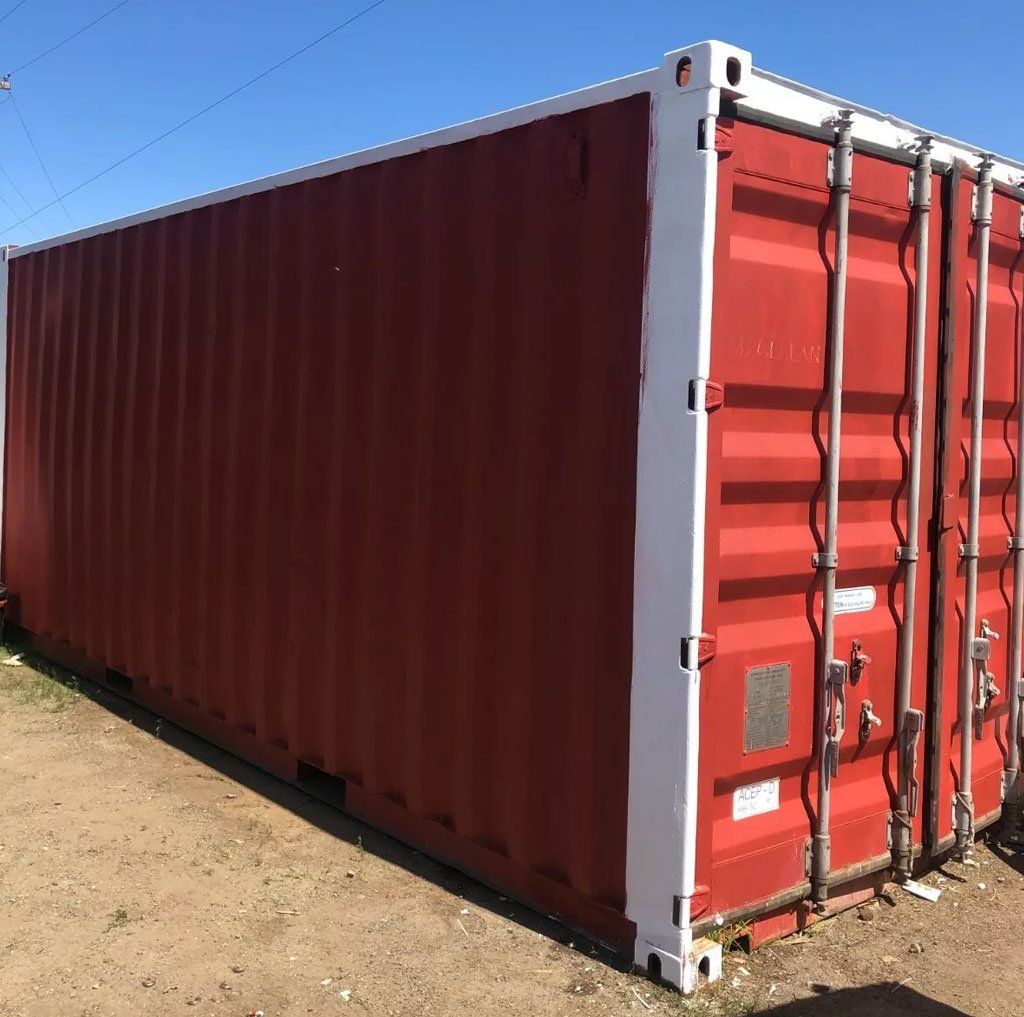
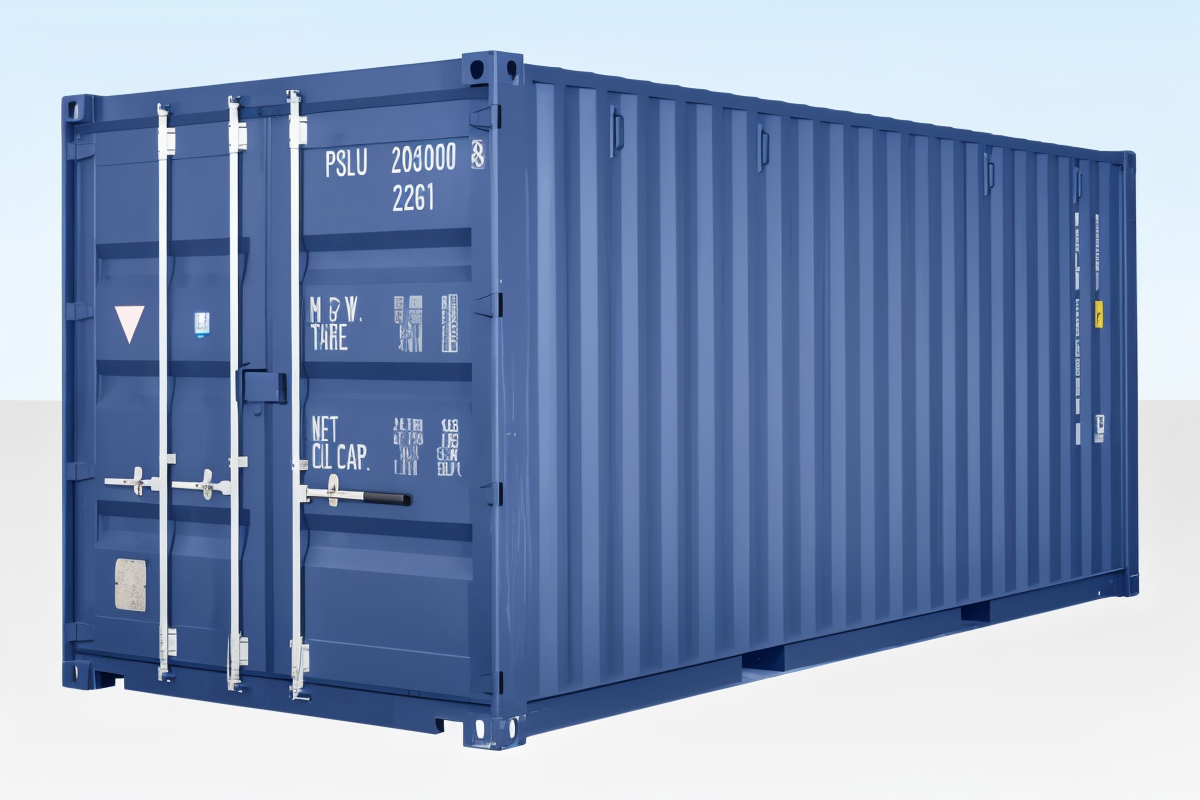
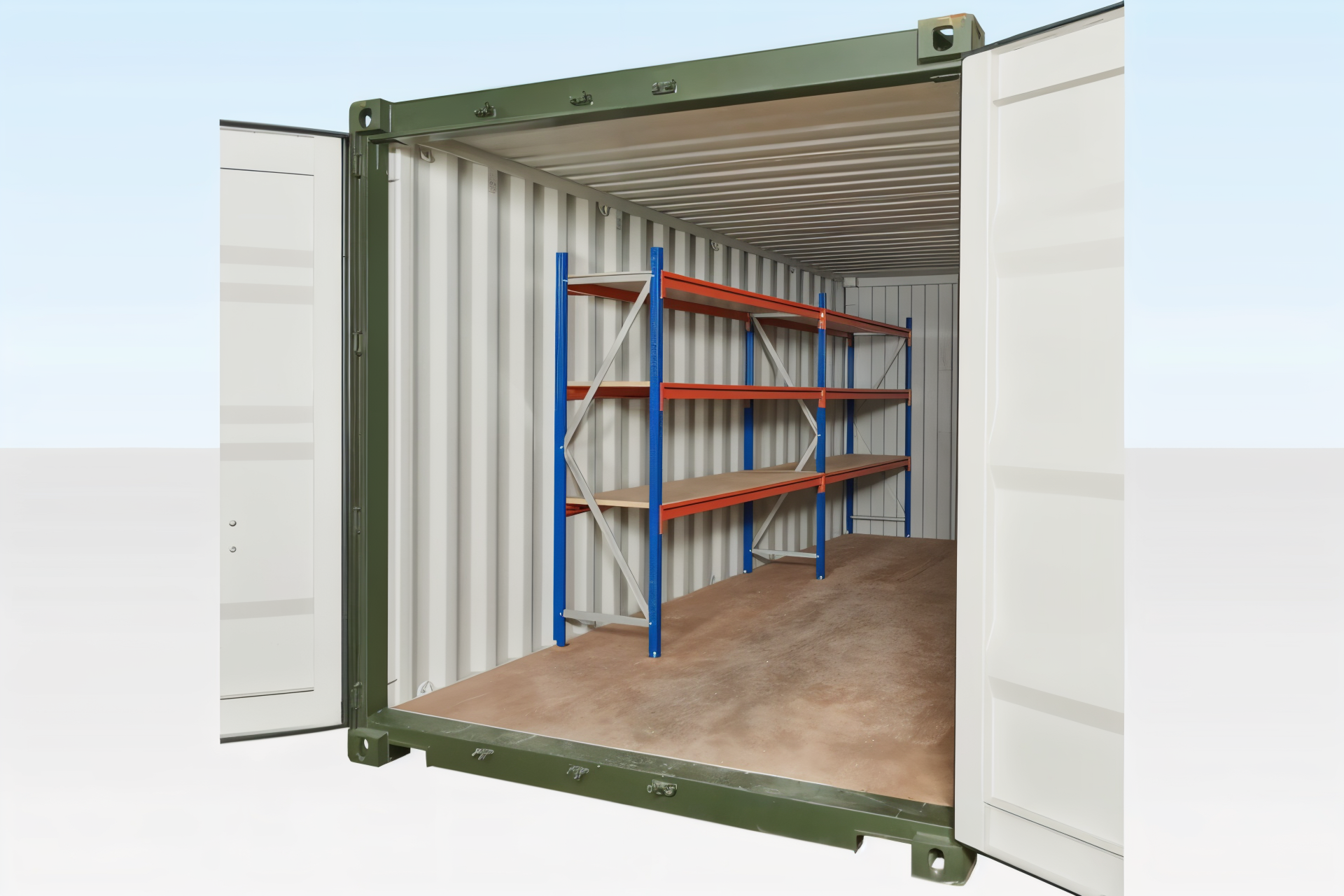
The other path is converting a box yourself. The shell should be straight and sound: wind and watertight (WWT, the grade that keeps weather out but may show cosmetic wear) is the working minimum, and a 20ft one-trip container (one-trip meaning a single cargo run from the factory, the closest condition to new) gives you clean steel to cut and weld. Inside, adjustable three-tier container racking puts growing tiers along the walls. For a commercial setup, our container farms and greenhouses solution page matches units, cold storage, and services to each build.
Siting, zoning, and the boring details
Both builds want a level base, compacted gravel or concrete piers, so doors swing true and water drains away. Glazed conversions also care about orientation: aim the glazing south in US latitudes. Plan utility runs before delivery day, and remember the truck — a tilt-bed (roll-off) truck slides the container off at ground level, no crane needed, but it needs a straight, obstacle-free run to position and unload; we check site access and clearance before delivery.
Zoning is the last gate. Some jurisdictions treat a container greenhouse as a temporary or agricultural structure, others as a permanent accessory building that needs a permit, and utility hookups often trigger review on their own. This is general guidance, not legal advice; check your city or county before you order. Regulated crops carry their own state licensing rules — check yours first.
Frequently asked questions
Can you grow year-round in a shipping container?
In a sealed, insulated grow room, yes — LEDs and climate control hold the same conditions in January and July. A glazed conversion extends the season instead; single-skin glazing loses too much heat on hard winter nights to promise year-round growing without heavy supplemental heat.
Do you need a permit for a container greenhouse?
Often, and it varies. Some areas exempt temporary or agricultural structures; others treat any accessory building as permit work, and utility hookups usually need their own sign-off. Check local code before you order — this is general guidance, not legal advice.
Which build costs less to run?
The glazed conversion, and it is not close: the sun provides the light and much of the heat, so the running load is fans and a seasonal heater. A sealed room pays for every hour of light and every degree of climate — that load buys year-round output and pest control glazing cannot match.
What condition of container should you convert?
Straight and weathertight. Wind and watertight is the working minimum, but if you are cutting and welding glazing openings, a one-trip unit gives you the cleanest steel to work with and the longest remaining life once the fit-out is done.
Get a free quote
Tell us what you want to grow, what power and water the site has, and whether you are starting from a built unit or a bare box, and we will match the container and the fit-out to it. Every unit is inspected and graded before delivery, and glazing, insulation, electrical, plumbing, vents, and racking can all be added through our custom modifications service. The quote is free and itemized with no hidden fees — what we quote is what you pay. We reply within 1 business day.