Shipping Container Cabins: Off-Grid, Hunting, and Weekend Builds
A shipping container cabin gives you a lock-and-leave steel shell for hunting, lake, or off-grid land. Here is what fits, the systems, and the honest limits.
 Editorial TeamEditorial Team7 min read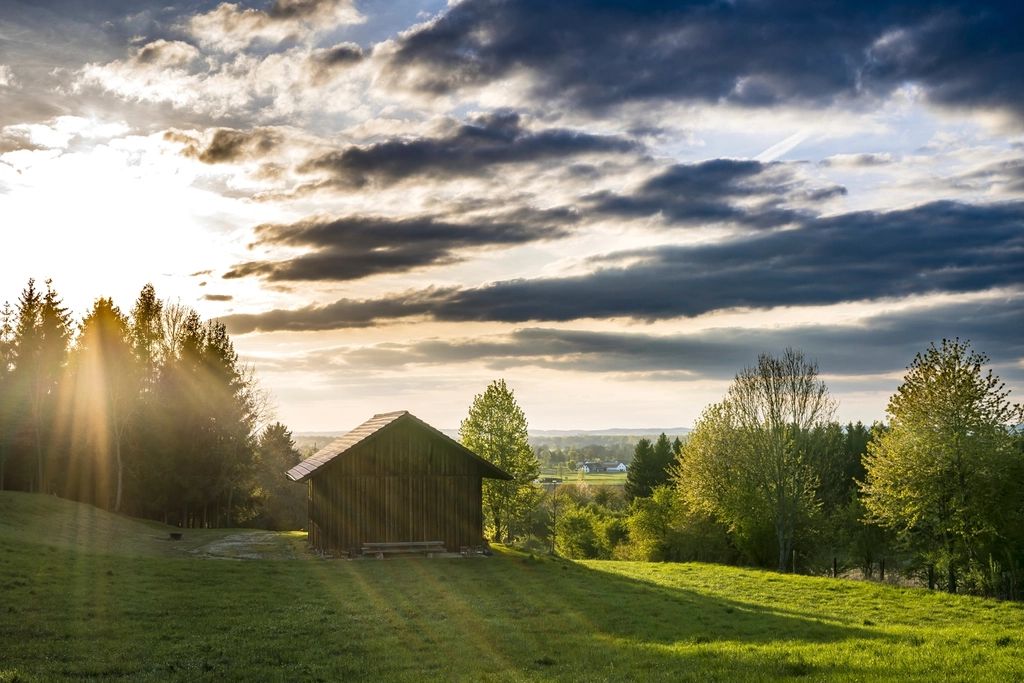
On this page
A shipping container makes an unusually good cabin for one reason most cabin kits cannot match: you can lock it, drive away, and leave it alone for months. The shell is welded steel, so it shrugs off wind, rain, and the animals that chew their way into a stick-built hunting shack over a winter. There is no crawlspace for a bear to den under and no soft wall a raccoon can open.
This guide covers using a container as a recreational or off-grid cabin: a hunting bunkroom, a lake weekend getaway, a backcountry retreat, or a glamping or short-term-rental unit. It walks through what makes the shell work, the off-grid systems reality, why insulation is not optional, how to match 10ft, 20ft, or 40ft to the use, and how to get the box onto remote land. One boundary up front: a great seasonal cabin is not automatically a legal full-time house, and the last section is honest about where that line sits.
Quick answer
A shipping container cabin is a steel shipping container modified with windows, a door, insulation, and off-grid or grid power to serve as a recreational or seasonal retreat. A 20ft unit gives you about 148 square feet, a comfortable one-room cabin for two. It works because the shell is secure and weatherproof enough to leave unattended, but it needs insulation and ventilation before you heat it, and it is not a code-compliant full-time dwelling unless your county says so.
What makes a container a good cabin
The steel shell is the whole argument. A container is designed to sit on a ship's deck through storms, so it handles a remote site with no one watching it. That is the lock-and-leave quality: you close the doors on Sunday and the cabin is as secure in February as it was in October. For a hunting camp on leased land or a lake cabin you visit a few weekends a year, that matters more than square footage.
The shell also arrives in one piece. A finished or partly finished unit is trucked in and set down, so your on-site work is siting and hookups rather than framing walls in the weather. The tradeoff is width: the interior is about 7ft 8in wide, which is cozy for a one-room layout and the reason many builders join two boxes for a family retreat.
The off-grid systems reality
Most cabin land has no utility hookup, so an off-grid container cabin runs on systems you size to your use. Treat these as general guidance; a solar installer or licensed electrician sizes the real thing.
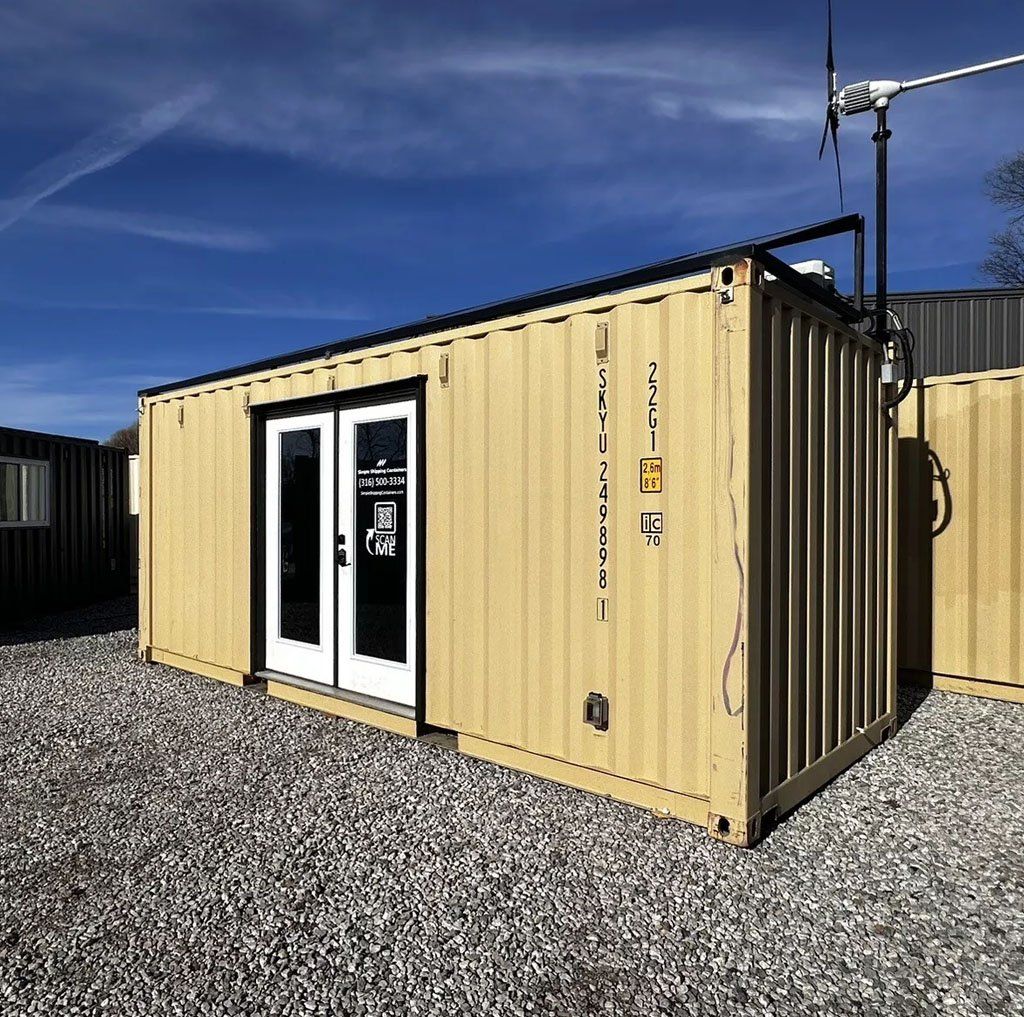
Power usually comes from solar panels feeding a battery bank. A weekend cabin running lights, a fan, and phone charging needs far less than one running a fridge and a water pump, so size the battery to what you actually plug in, not to a catalog number. A 20ft solar container office shows the pattern, with panels, battery, and an inverter built into the box, and the same approach drops into a cabin. A small generator covers cloudy stretches.
Heat is where people get hurt or start fires. A wood stove is the classic cabin heater, but in a steel box it needs proper clearance to the walls and a rated pass-through where the flue exits the roof or wall, not a hole cut through bare steel. Get the stove and the pass-through kit rated together. For water, a tank you fill and haul is the simplest start; rainwater off the roof into a cistern works where rain is reliable. For waste, a composting toilet avoids a septic system entirely, which keeps a remote cabin simple; a full septic install is a bigger permitted job.
Insulation is not optional
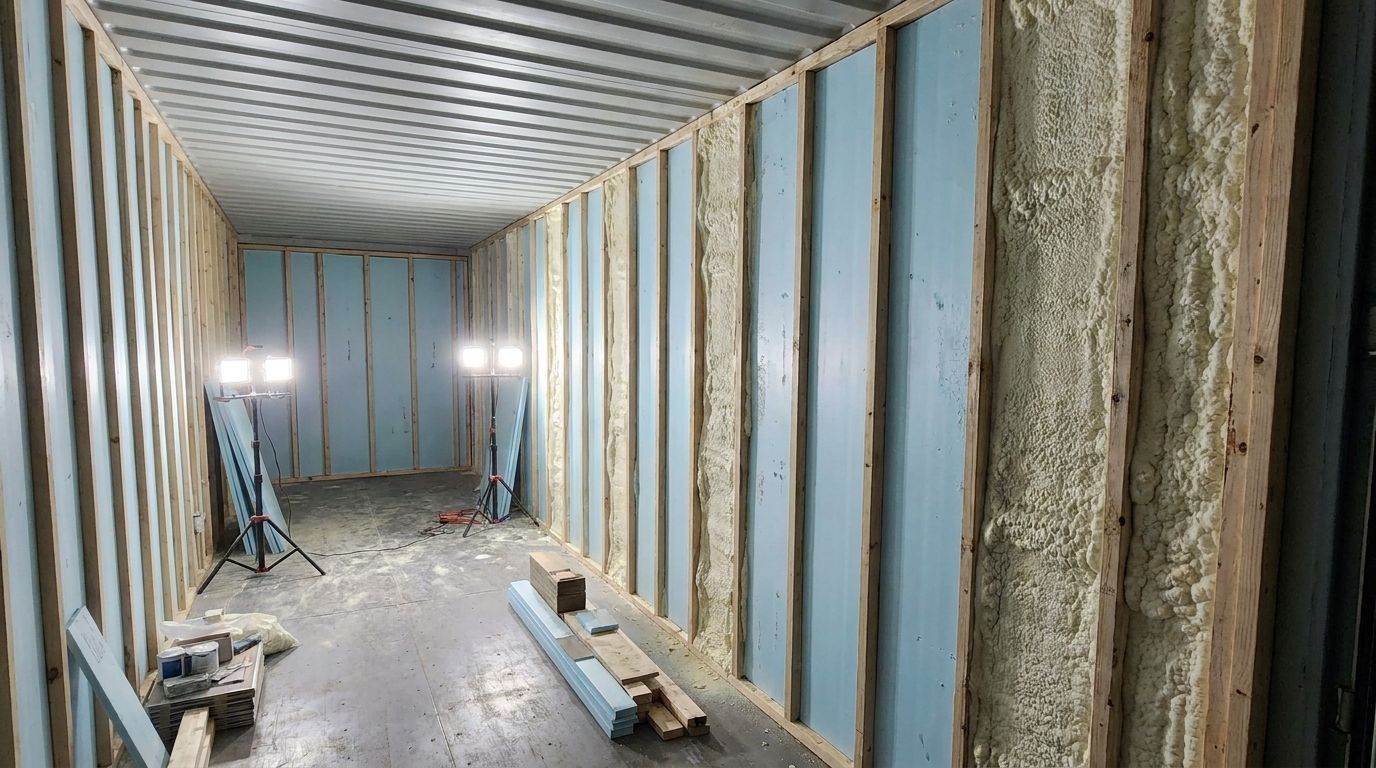
A steel cabin you heat only on weekends will sweat. When you warm the inside air and the steel skin stays cold, moisture condenses on the walls and ceiling and drips — owners call it container rain — soaking bedding and rusting fasteners over a season. Intermittent heating makes this worse than a house you heat constantly, because the shell cycles cold and warm every visit.
The fix is insulation plus ventilation, together. Closed-cell spray foam is the common choice because it insulates and blocks the moist air from reaching the cold steel in one step. Our guide on how to insulate a shipping container covers the options and where each fails. Add fitted vents so the box breathes; a sealed, unvented cabin traps the moisture you are trying to get rid of.
10ft, 20ft, or 40ft: matching the box to the use
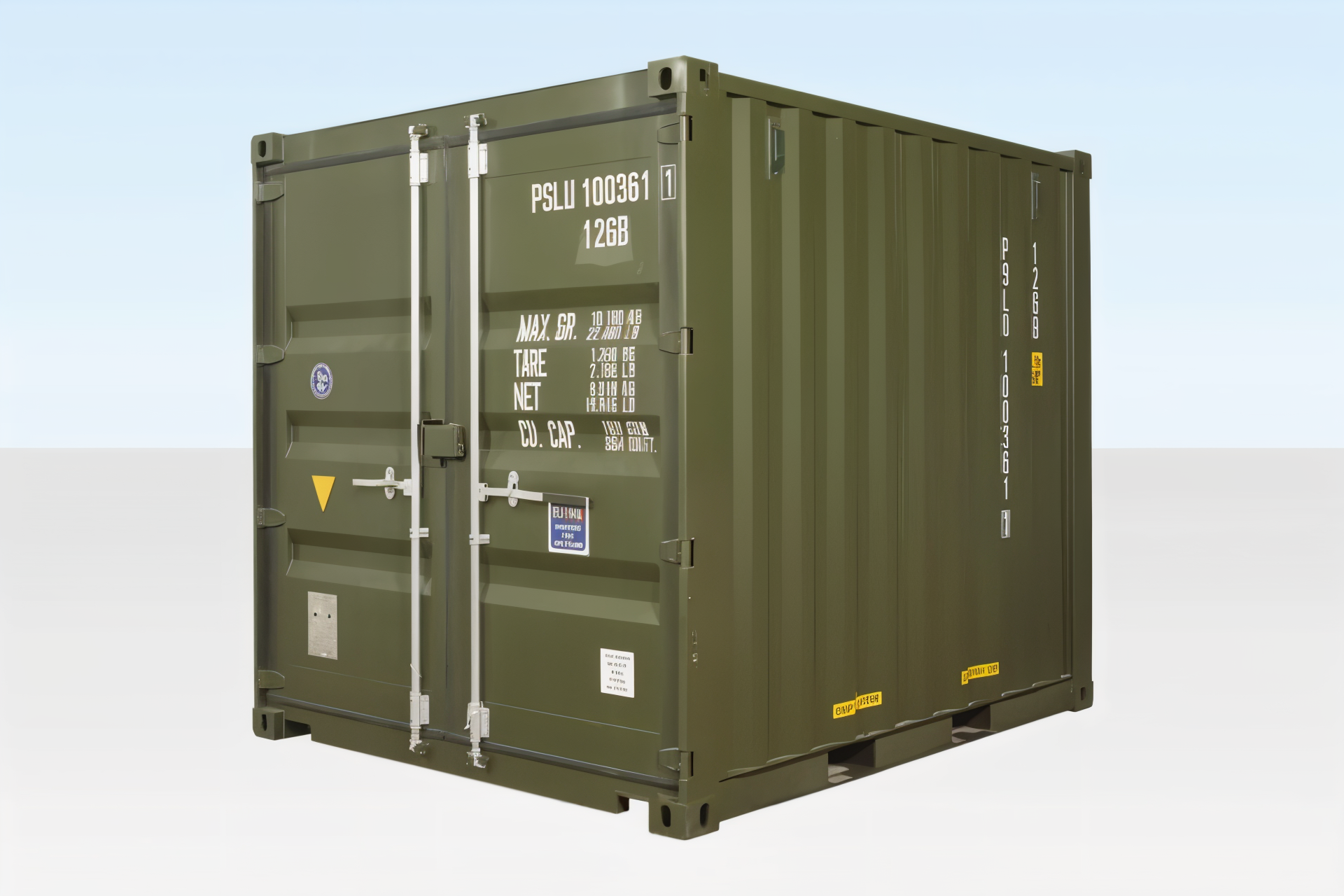
Size follows the job. A 10ft one-trip container in green (RAL 6007) — one-trip meaning the unit made a single cargo run from the factory before sale, the closest condition to new, and a muted green that hides on a treeline — suits a hunting blind or a bunkroom for one or two, with the door low-profile against a wooded lot.
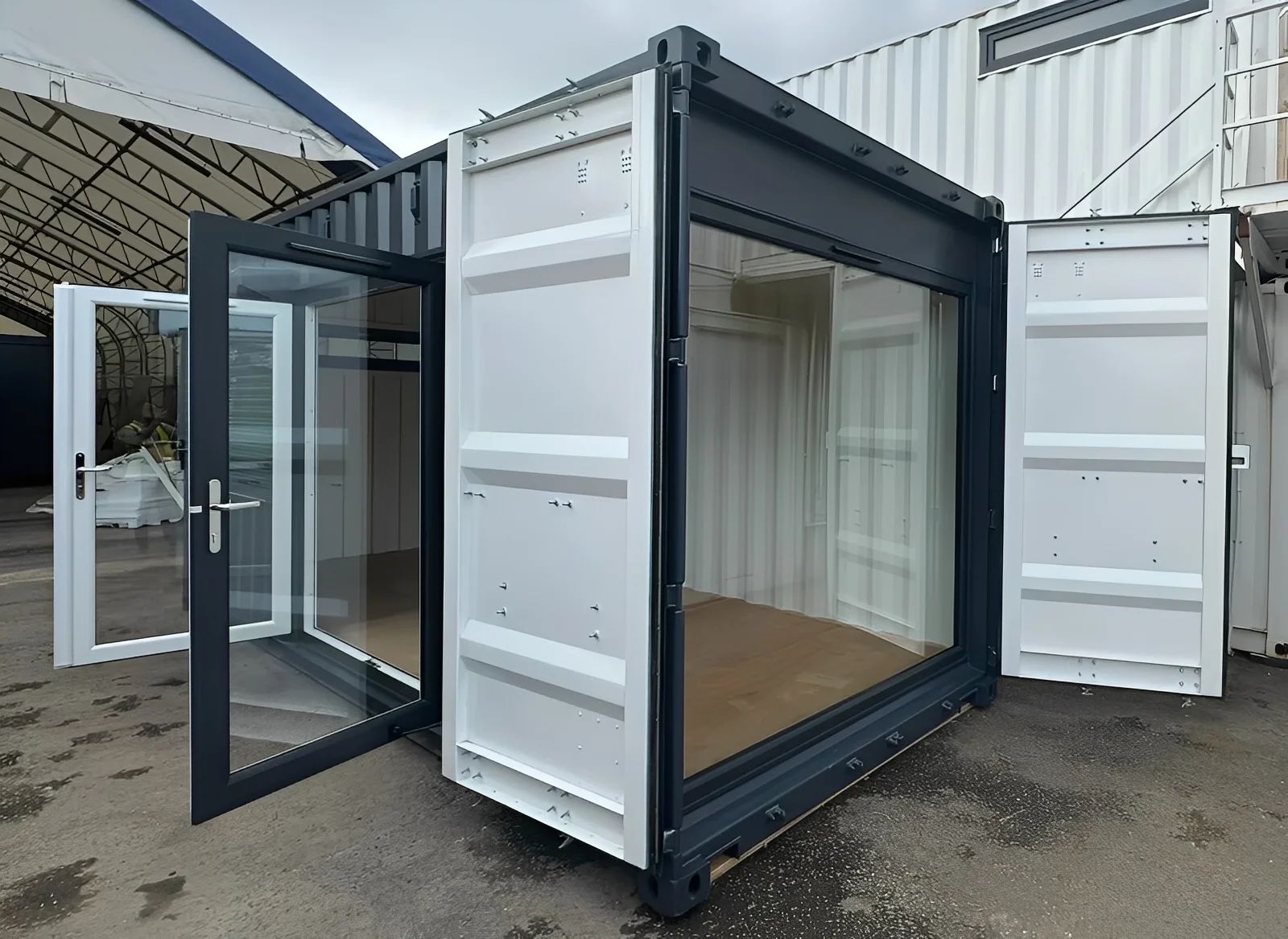
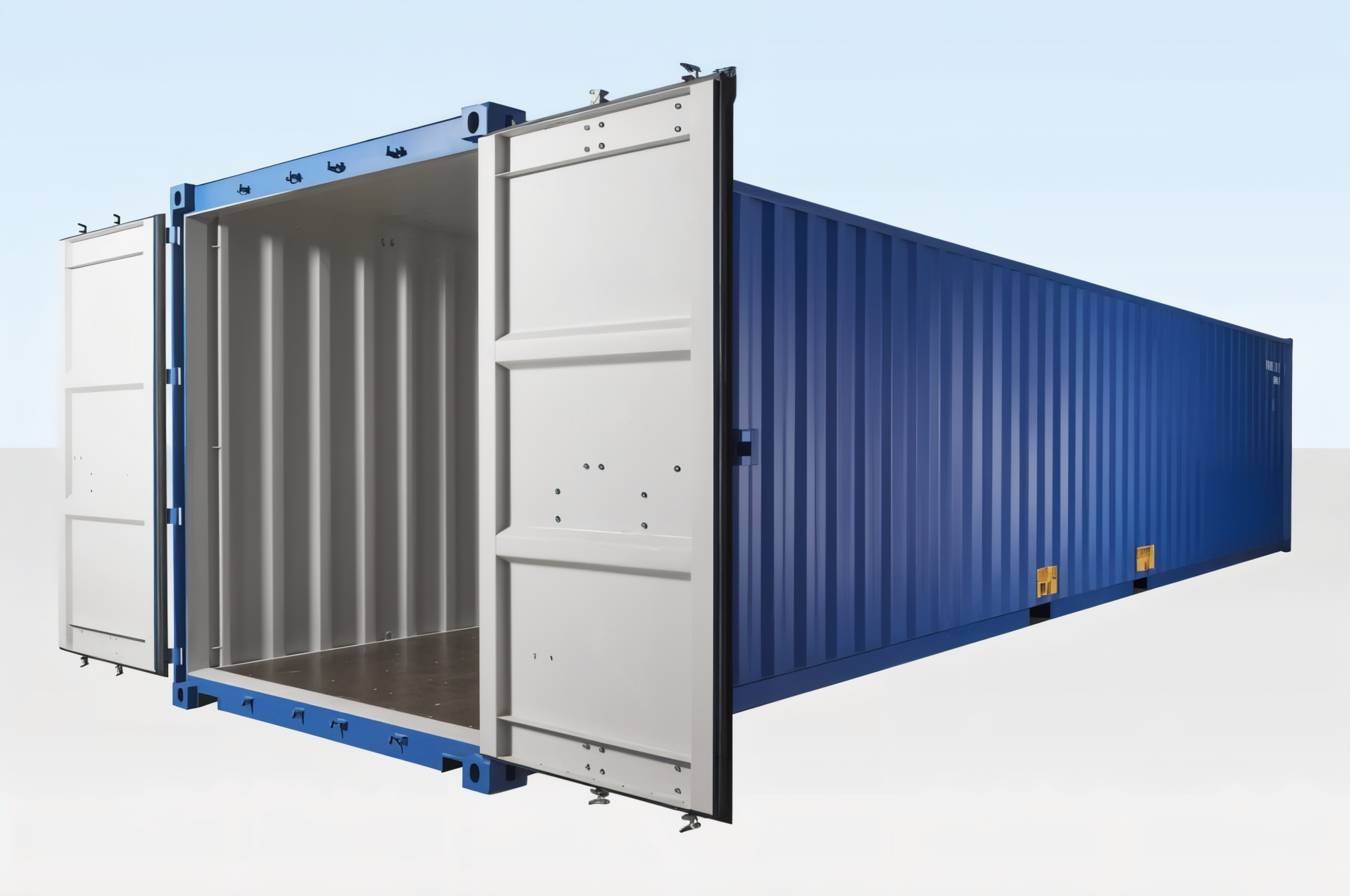
A 20ft unit is the default one-room cabin: a bed end, a small kitchen and stove, and a seating corner in about 148 square feet. A 20ft custom container conversion already carries the window and door cutouts a cabin needs. For a family retreat, step up to a 40ft high cube container — high cube meaning it stands about 1ft taller than a standard box, roughly 8ft 10in of interior height, which keeps a loft or a wall of cabinets from feeling low — or set two boxes in an L to get a separate bunkroom and a real living space.
Siting on remote land
Getting the box there is its own project. A tilt-bed (roll-off) truck slides the container off at ground level, so no crane is needed on an open site, but it needs a straight, obstacle-free run to back in and unload, and a tight wooded lot with a curving two-track often does not give the truck that. Where the truck cannot reach the final spot, placement may need a crane, which is a separate cost; we check site access and clearance before delivery so this is settled before the truck rolls, not on the day.
Set the cabin on a level base. Compacted gravel or concrete piers under the four corners keep it off wet ground and level enough that the doors swing true. Clear the approach, know where the low branches are, and mark the exact spot before delivery day.
Permits, zoning, and the honest boundary
Recreational structures live in a gray zone that varies wildly by county. Many jurisdictions do not require a permit for a structure under 200 square feet that is not connected to public utilities, which is part of why a 160-square-foot container cabin appeals, but that is a common rule, not a universal one, and your county, state, or HOA may say otherwise. If you plan to rent the cabin as a short-term rental, that adds a separate layer of local rules on top. This is general guidance, not legal advice; check local code before you order.
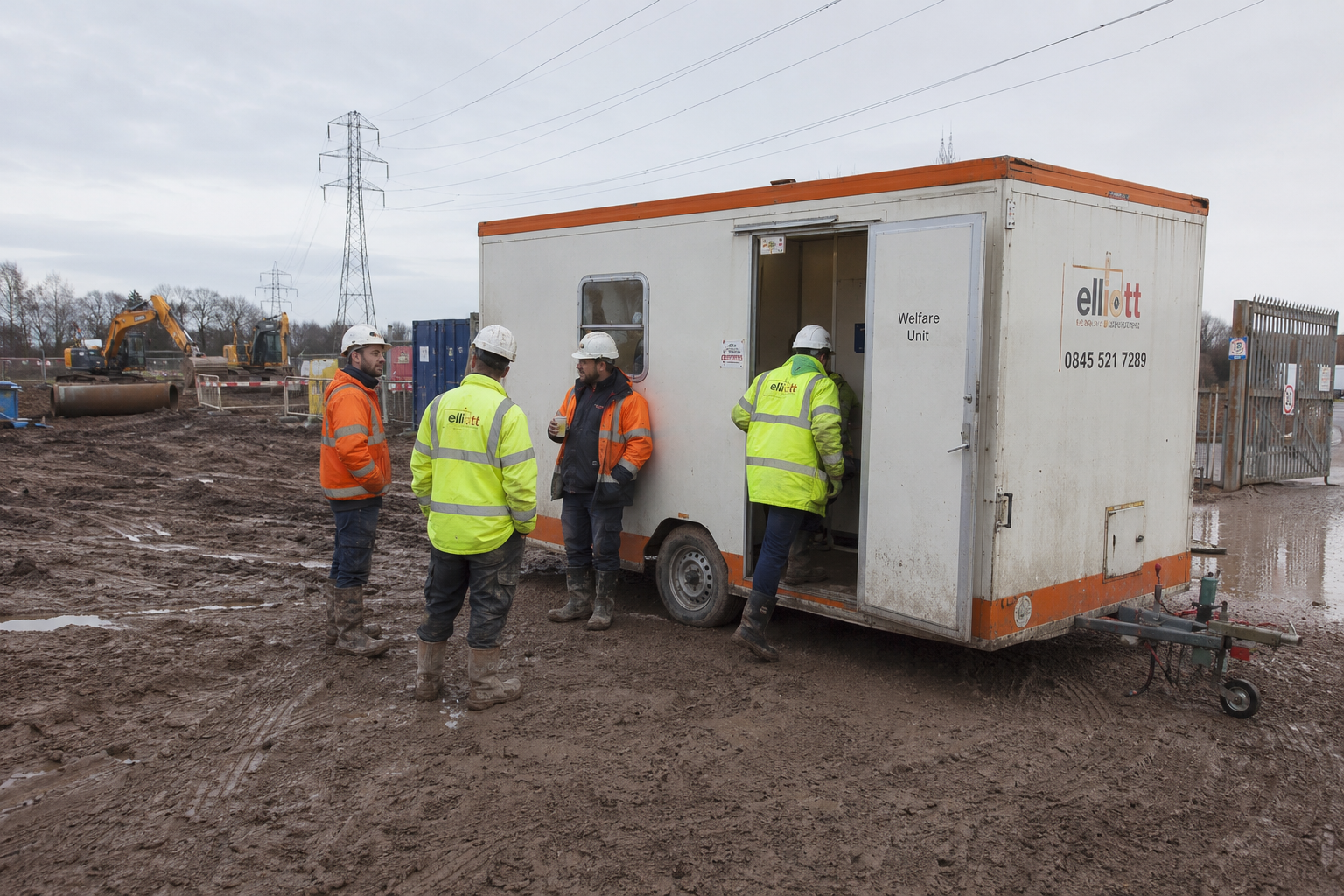
Here is the honest line. A container makes an excellent seasonal, off-grid, or recreational cabin. It is not automatically a legal full-time residence: a code-compliant dwelling or an accessory dwelling unit (ADU) has to meet residential building code for insulation, egress, foundations, and utilities, which is a different project. If a permitted place to live full-time is the goal, read our guide to container homes instead, and if you need a jobsite welfare cabin for workers rather than a recreational one, our site welfare units guide covers that. A related solution page on container cabins and off-grid retreats lines up the buyer paths and units.
Frequently asked questions
Can you live in a shipping container cabin full time?
You can use one as a seasonal or off-grid retreat freely in most places, but living in it full time turns it into a dwelling that has to meet residential building code: insulation, egress, foundation, and utilities. Whether your county allows that, and under what permit, varies. For a full-time home or ADU, that is a different build.
Do you need a permit for a container hunting cabin?
Often no for a small, unconnected recreational structure, since many areas exempt buildings under 200 square feet with no utility hookup, but this varies by county and HOA, and short-term-rental use adds its own rules. Check local code before you buy; this is general guidance, not legal advice.
How do you heat an off-grid container cabin?
A wood stove is the common choice, installed with proper wall clearance and a rated flue pass-through, never a hole in bare steel. Propane heaters are an alternative. Whatever you use, insulate and ventilate first, because an intermittently heated steel box condenses moisture inside without it.
What size container makes the best cabin?
A 20ft unit (about 148 square feet) is the sweet spot for a one-room cabin for two. Go 10ft for a hunting blind or single bunkroom, and 40ft or two joined boxes for a family retreat that needs a separate sleeping area.
Get a free quote
Tell us how you will use the cabin, whether the site has power, and how a truck reaches the spot, and we will match the size and the modifications to it. Every unit is inspected and graded before delivery, we check site access and clearance before the truck rolls, and windows, doors, insulation, electrical, solar, and a wood-stove pass-through can all be added through our custom modifications service. The quote is free and itemized with no hidden fees — what we quote is what you pay. We reply within 1 business day.