

A lock-and-leave cabin for hunting, lake, and off-grid land
Turn a steel container into a secure retreat you can close up and leave for months, as a bare shell or a finished unit.
Built for the job
Lock it and leave for months
A welded steel shell stays secure on remote land with no one watching. The tradeoff is width: about 7ft 8in of interior makes a cozy one-room cabin, not a wide floor plan.
Shell or finished, your call
Buy a bare box to fit out yourself, or a finished, insulated unit with a minisplit. A shell costs less up front but more of your time; a finished unit costs more and arrives ready.
Off-grid or grid-tied
Run on solar and a battery sized to your load, or tie into power where it reaches. Off-grid keeps you independent but caps what you can run at once; size it to real use.
Sited on raw land
A tilt-bed truck sets the box at ground level on an open site. A tight, wooded lot may need a crane, which is a separate cost, so we check access before delivery.
Repeatable units for rentals
Durable, stackable boxes suit glamping and short-term-rental operators who want the same unit again. But local rental permitting varies, so confirm your county's rules first.
Insulation is non-negotiable
An intermittently heated steel box sweats, so insulation and ventilation come first, not last. That is added work and cost, but skipping it rusts the shell and soaks bedding.
A retreat you can close up and leave
Landowners with hunting or lake ground, remote-property owners, and glamping or short-term-rental operators all want the same thing: a small, secure, weatherproof building they can lock and leave on land with no utilities and no one watching it. A shipping container does that better than a stick-built shack, because the welded steel shell resists weather and animals through a season alone. This page covers turning that shell into a recreational or off-grid retreat, and where the honest limits sit.
Two buyer paths: shell or finished
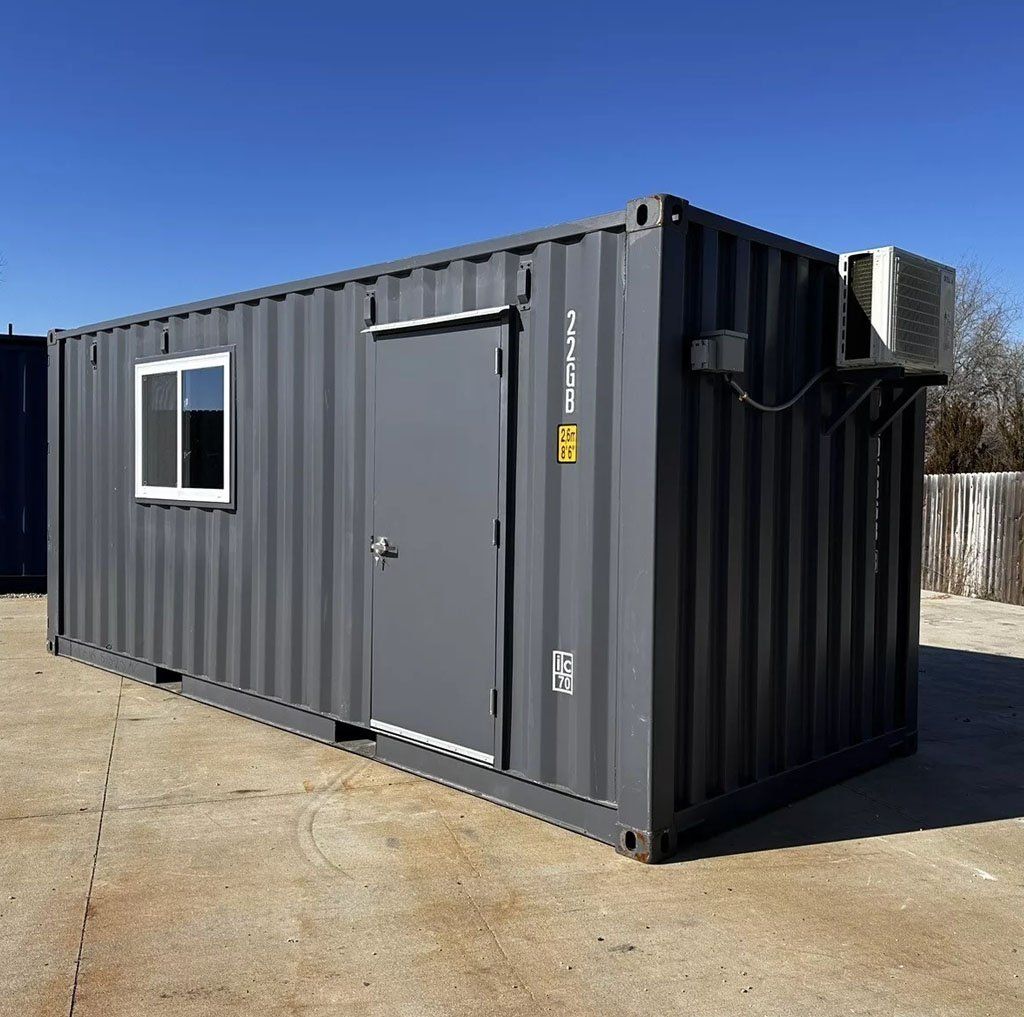
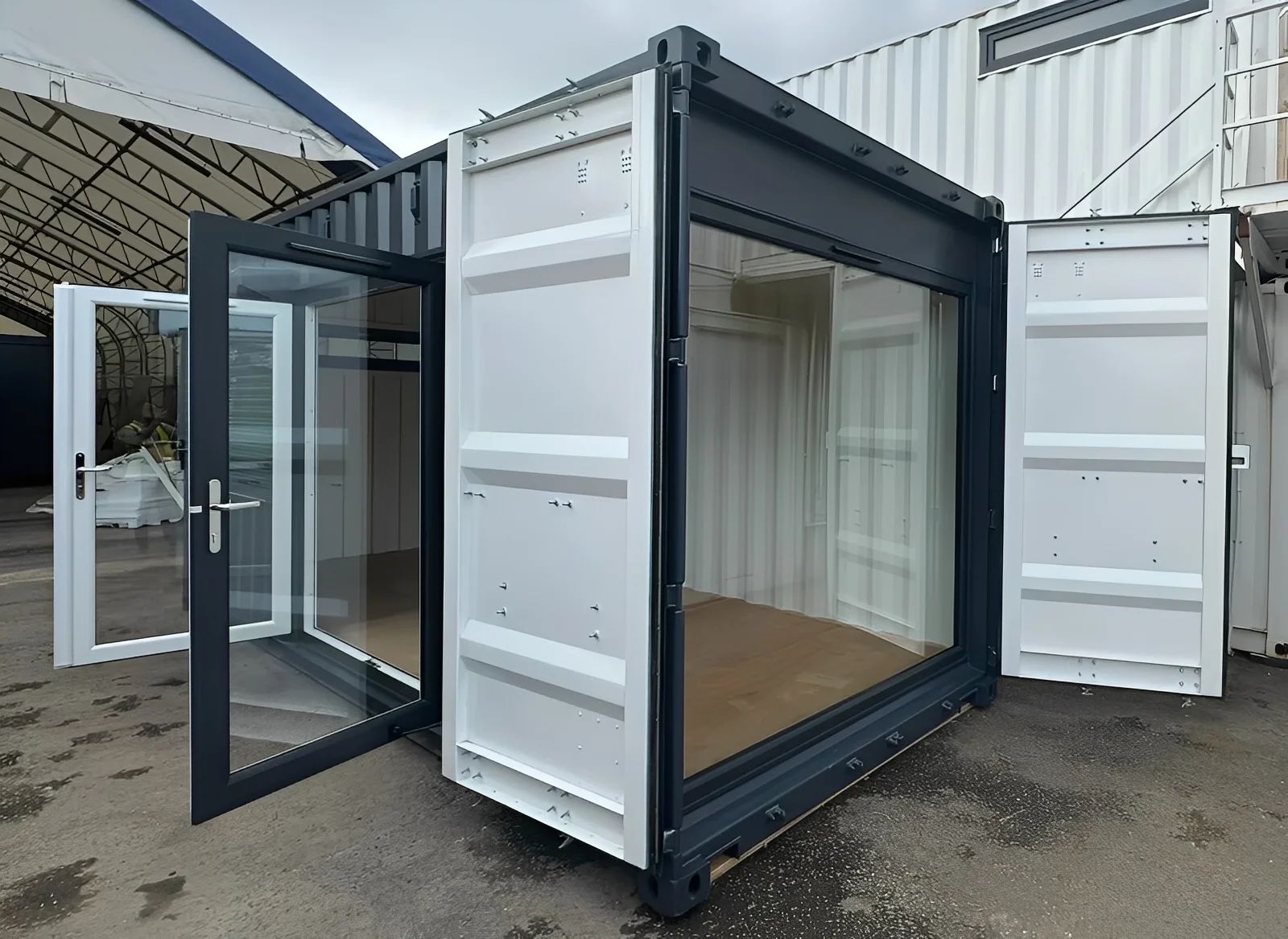
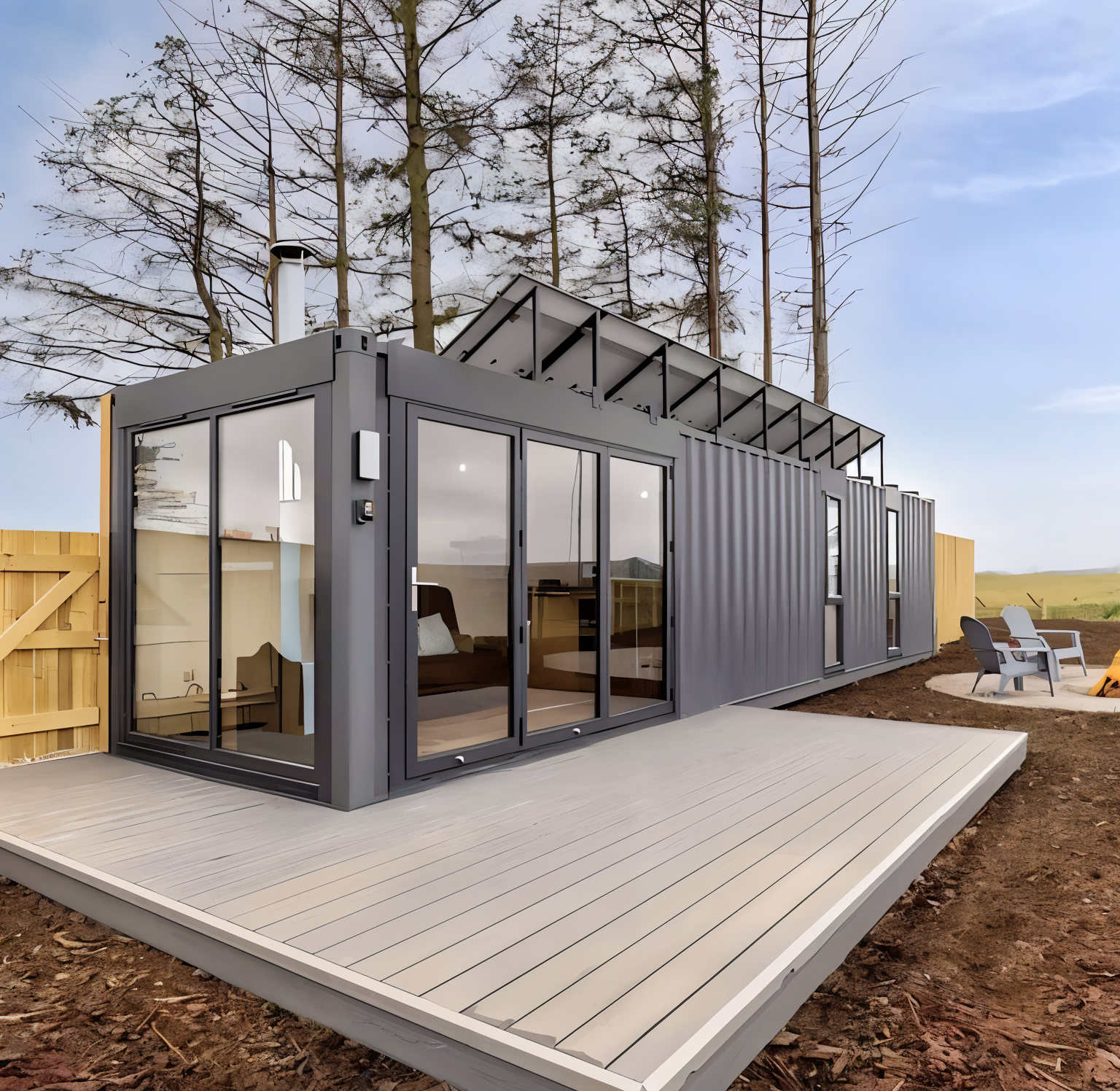
There are two ways in. The first is a bare or lightly modified shell you fit out yourself, cheaper up front, but the insulation, wiring, and interior are your project and your time. A 20ft custom container conversion gives you the window and door cutouts to start from. The second path is a finished unit that arrives insulated and climate-ready: a 20ft slate gray shiplap container office with a minisplit is built out and cooled from day one, and a 1BHK container house with a deck arrives furnished for a turnkey lake or rental cabin. Finished costs more; it also saves you a build season.
Off-grid or grid-tied
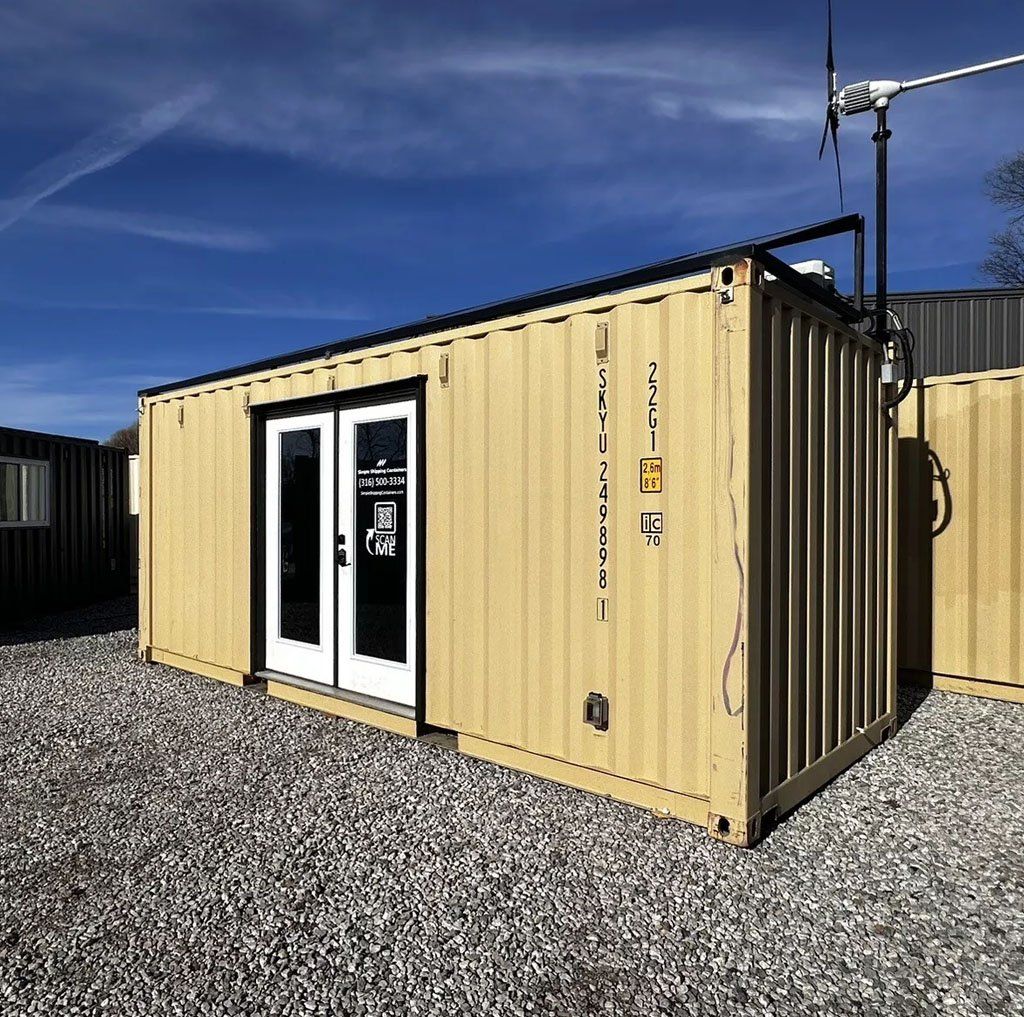
Most cabin land has no hookup, so power is a choice. Off-grid means solar panels, a battery bank, and an inverter sized to what you actually run: a weekend cabin with lights and charging needs far less than one with a fridge and a pump. A 20ft solar container office shows the built-in pattern and drops the same approach into a cabin. Where grid power reaches the property, tying in removes the battery limit. Either way, size the system to real use, not a catalog figure; this is general guidance, and a licensed electrician sizes the real thing.
Siting and delivery on raw land
Getting the box to the spot is the part aspirational photos skip. A tilt-bed (roll-off) truck slides the container off at ground level, so an open site needs no crane, but it does need a straight, obstacle-free run for the truck to back in and unload, and a tight or heavily wooded lot often does not offer that. Where the truck cannot reach the final position, placement may need a crane, which is a separate cost we flag up front rather than promise. Set the unit on a level base: compacted gravel or piers under the corners keep it off wet ground and the doors swinging true. We check site access and clearance before the truck rolls.
The glamping and rental angle
For operators, containers are repeatable in a way timber cabins are not: durable, stackable, and identical unit to unit, so a second or third cabin matches the first. That is the investor appeal, a finished box you can drop, power, and rent. The caveat is regulatory: short-term-rental permitting and county rules vary widely, and some areas restrict or license rentals tightly, so confirm local rules before you scale. This is general guidance, not legal advice.
Honest tradeoffs
Three limits are worth stating plainly. The interior is about 7ft 8in wide, which is a cozy one-room footprint, not a wide floor plan; a family retreat usually means a 40ft high cube (about 1ft taller than standard) or two boxes joined in an L. Intermittent heating makes insulation and ventilation non-negotiable, because a steel box you warm only on weekends condenses moisture inside and rusts without them. And a recreational cabin is not a permitted full-time dwelling. If you want a code-compliant place to live, see our container homes and backyard ADUs solution; if you need a jobsite cabin for workers rather than a getaway, that is our welfare units and site cabins page. For the full build-and-systems walkthrough, our guide to shipping container cabins covers off-grid power, wood stoves, and sizing.
What the unit can have
Containers take modification well. Windows, insulated doors, spray-foam insulation, electrical, solar, a minisplit, and a rated wood-stove pass-through are all common additions, handled through our custom modifications service and, for a two-box or ADU-style build, our ADU and modular builds service. Scope the work before delivery — retrofitting is possible but easier before the unit ships.
Frequently asked questions
Can I use a container cabin as a full-time home?
As a seasonal or off-grid retreat, yes, in most places. As a full-time residence it becomes a dwelling that must meet residential building code for insulation, egress, foundation, and utilities, and whether your county permits that varies. For a code-compliant home or ADU, see our container homes and backyard ADUs page, that is the right starting point.
Should I buy a bare shell or a finished cabin?
A bare or lightly modified shell costs less and lets you build to taste, but the insulation, wiring, and fit-out are your time and skill. A finished unit with insulation and a minisplit costs more and arrives ready to use. Choose by how much of the build you want to own.
Can a container cabin be delivered to remote land?
Usually, if a truck can reach it. A tilt-bed truck sets the box at ground level on an open site with a straight, clear run. A tight or wooded lot may need a crane, which is a separate cost. We check site access and clearance before scheduling so there are no surprises on delivery day.
Do I need a permit for a glamping or rental cabin?
Often yes, and the rules vary by county. Small unconnected recreational structures are sometimes exempt from building permits, but short-term-rental use adds a separate licensing layer in many areas. Confirm local code before you order; this is general guidance, not legal advice.
How do I stop condensation in a container cabin?
Insulate and ventilate. Closed-cell spray foam blocks warm inside air from reaching the cold steel, and fitted vents let the box breathe. This matters more in a cabin you heat intermittently, because the shell cycles cold and warm each visit and sweats without insulation.
Get a free quote
Tell us how you will use the retreat, whether the site has power, and how a truck reaches the spot, and we will match a shell or finished unit and the modifications to it. Every unit is inspected and graded before delivery, and our container delivery service checks site access and clearance first: a tilt-bed (roll-off) truck slides the box off at ground level on an open site, though a tight lot may need a crane. Windows, insulation, electrical, solar, a minisplit, and a wood-stove pass-through route through our custom modifications service, and a two-box or ADU-style build through our ADU and modular builds service. The quote is free and itemized with no hidden fees, and we reply within 1 business day.
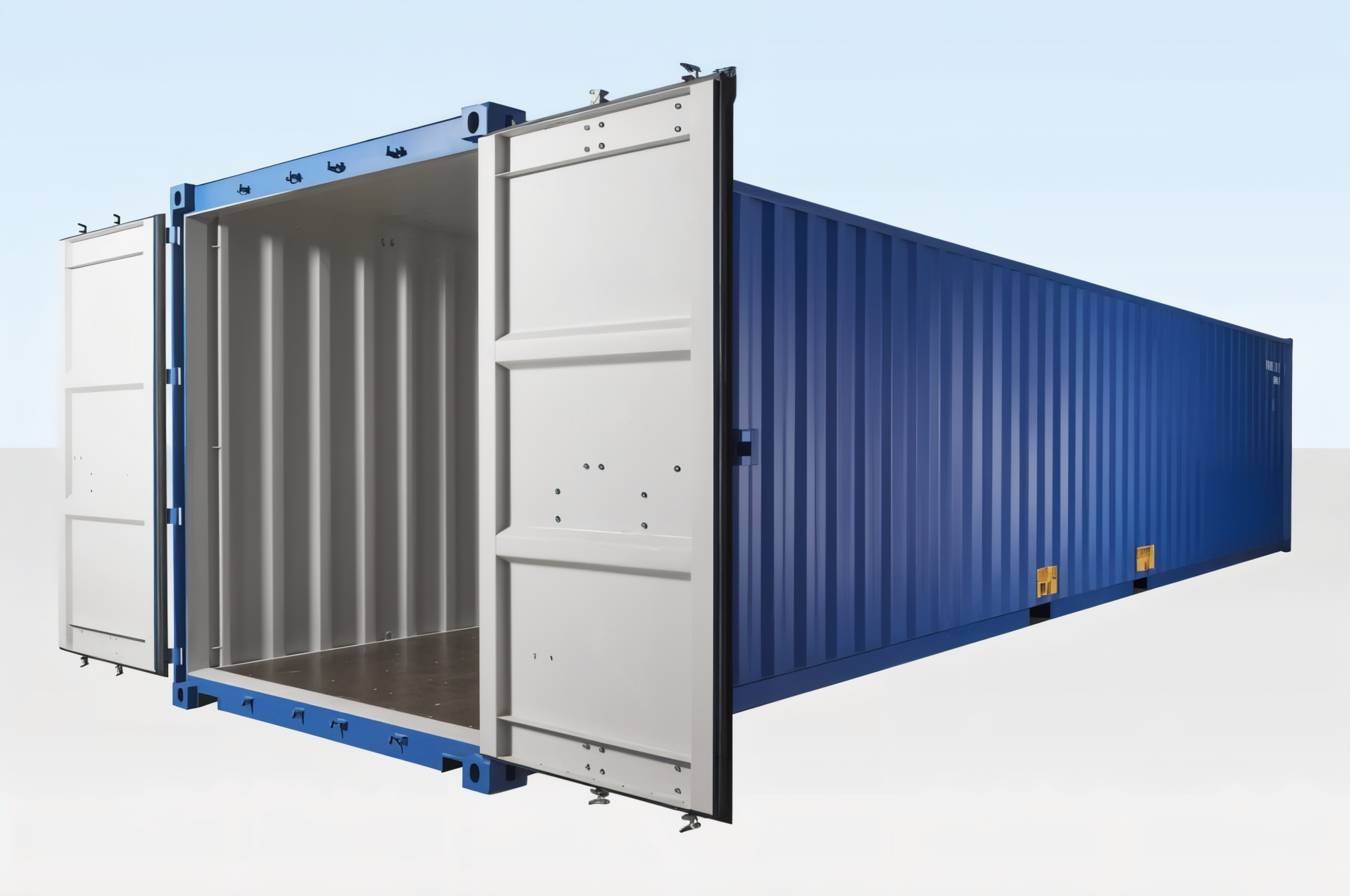
Containers suited for recreation & hospitality
Related services
- 01ADU and Modular BuildsContainer homes and modular structures
- 02Custom ModificationsDoors, windows, HVAC, and full fit-outs
- 03Container DeliveryTilt-bed delivery, coordinated door to door
Put containers to work in recreation & hospitality
Tell us about your project and we will send a free, no-obligation quote.