Buying a Refrigerated Container: New vs Used Reefers
Buying a refrigerated container? Here is how to choose new vs used reefers, what to inspect, the power you need, and single vs dual temperature.
 Editorial TeamEditorial Team6 min read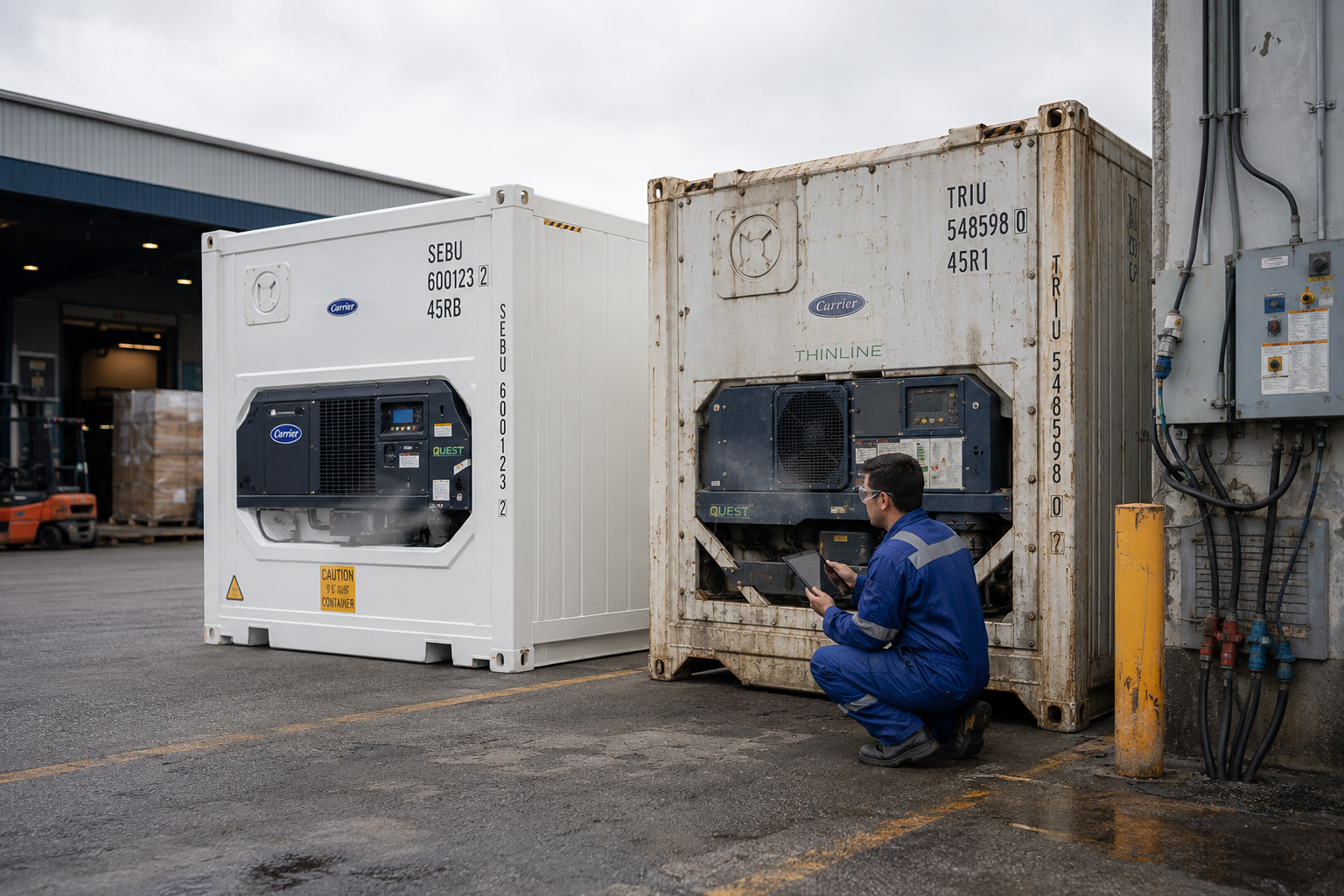
On this page
Buying a refrigerated container is a different decision from buying a dry box. You are not just choosing steel and a size; you are buying a working refrigeration machine that has to hold a set temperature for years. This guide assumes you already know what a reefer (a refrigerated container, an insulated box with a built-in refrigeration unit) is, and focuses on the buying choices: new versus used, what to inspect, the power you will need, and whether you want single or dual temperature.
Quick answer: new vs used reefer in one paragraph
Buy new if you need maximum remaining machinery life, a clean cosmetic unit, and the fewest unknowns, and you can absorb the higher price. Buy used if budget matters more than appearance and you are willing to inspect the refrigeration unit closely, because a used reefer costs less but carries fewer years of compressor and component life. The deciding factor is rarely the steel box, which lasts a long time either way; it is the condition of the machinery and how many running hours it already has on it.
What you are actually buying
A reefer is two products in one shell: an insulated container and an integral refrigeration unit (the cooling machinery built into one end of the box). The insulation lines the walls, floor, and ceiling so the unit can hold a temperature without fighting the outside air. The refrigeration unit does the work, and it is the part that wears, needs power, and eventually needs service.
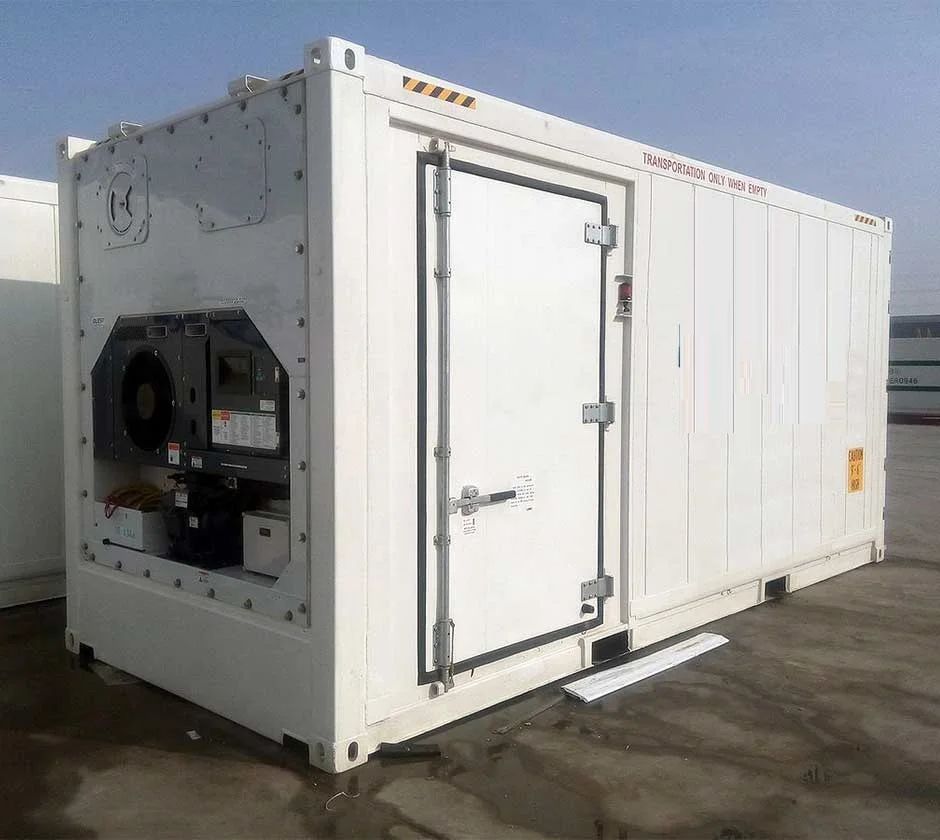
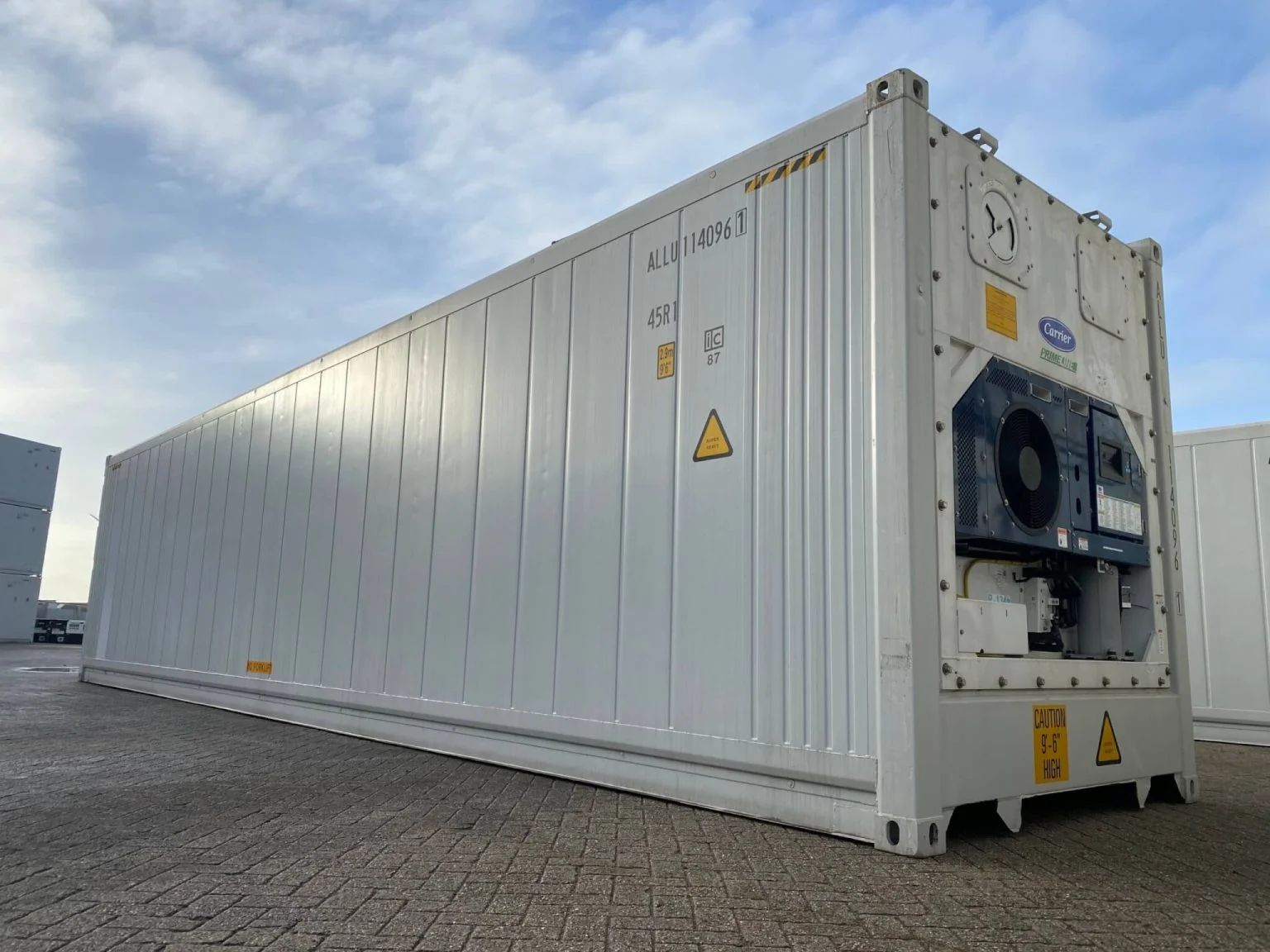
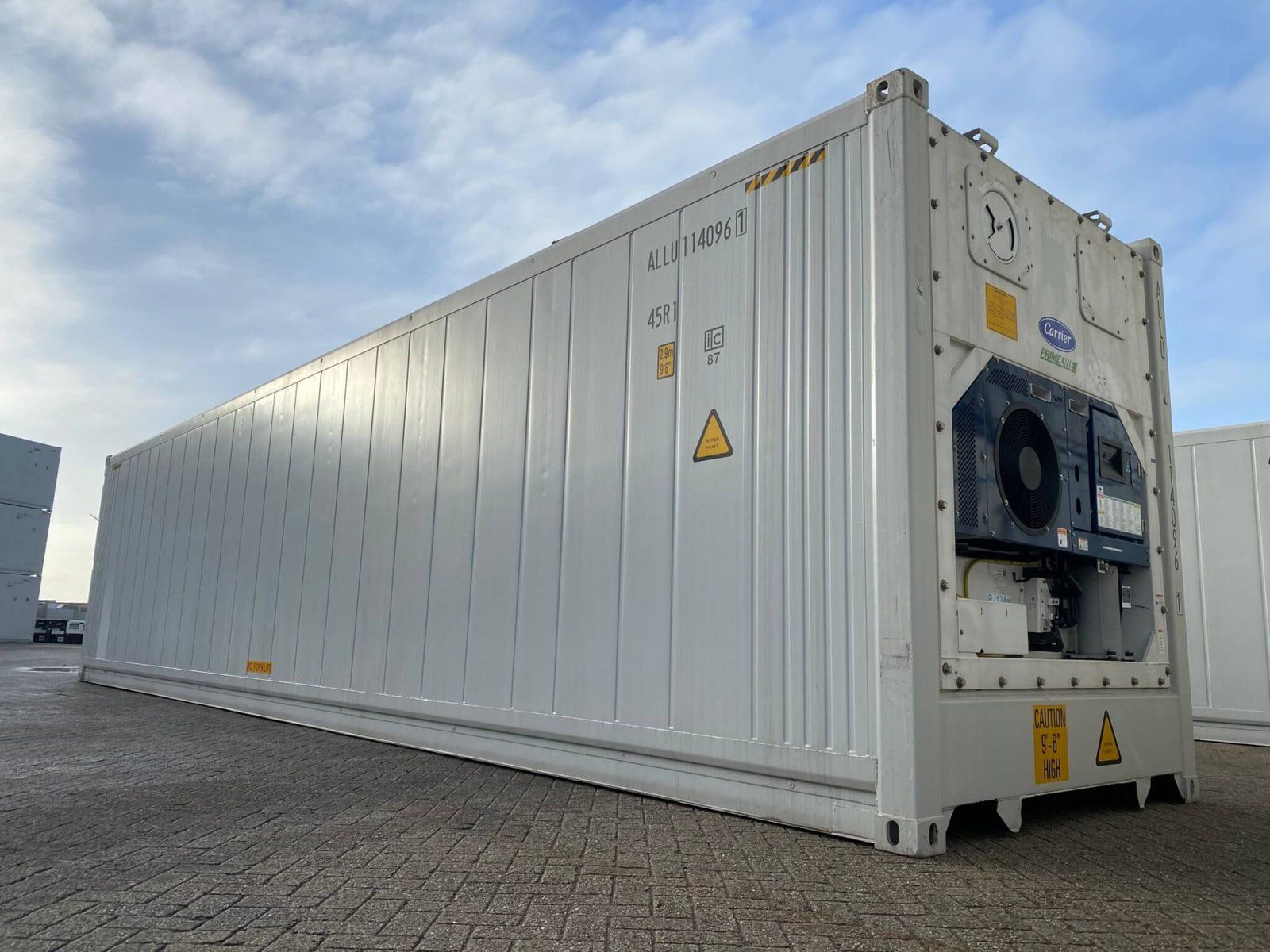
The two common sizes are the 20ft reefer and the 40ft high cube reefer. A high cube is a container that stands a foot taller than a standard box, which adds vertical room for stacking. Inside a reefer, insulation eats into the usable space, so a reefer holds less than a dry box of the same outside dimensions. The tradeoff is straightforward: a 20ft unit fits tighter sites and draws less power, while a 40ft high cube gives you the most cold capacity at the cost of footprint and a bigger electrical load.
New vs used reefers: the real tradeoffs
Price is the obvious gap, but it is not the only one. A new reefer gives you full remaining machinery life, current refrigerant and controls, and a cosmetically clean box. A used reefer gives you a lower price in exchange for years already spent on the compressor and components. The risk with used is not usually the steel; it is functional, not cosmetic. A scuffed exterior means nothing if the unit pulls temperature reliably, and a tidy paint job means nothing if the compressor is near the end of its life.
A practical middle path is a used box with strong machinery and honest cosmetic wear. If you go new, the premium buys certainty; if you go used, the savings buy a unit you should inspect more carefully before you commit.
What to check on a used reefer
The single most useful step is a pre-trip inspection (PTI), the self-test the refrigeration unit runs to confirm it can pull and hold temperature. Ask whether the unit passed a recent PTI and request the result. Beyond that, work through a short checklist before you buy a used reefer:
Running hours. Like engine hours on a generator, these tell you how hard the machinery has worked. Lower is better, and a unit with very high hours may need service sooner.
Door gaskets. The rubber seals around the doors keep cold in. Cracked, flattened, or torn gaskets let warm air leak, force the unit to run harder, and waste power. They are replaceable, but factor that in.
T-floor and insulation. The T-floor is the ridged aluminum floor that channels cold air under the cargo. Check it is flat and unbroken, and look for soft spots or water damage that signal wet insulation, which kills cooling efficiency and is expensive to fix.
Set-point range. Confirm the unit can reach the temperature you actually need. A reefer that only chills will not work for frozen storage, so match the set-point range to your product before you buy.
Power and siting
This is where reefer buyers are most often caught out. Most reefers need 3-phase power (an industrial supply with three live conductors, common in commercial buildings but not in homes), often at 460V. If your site does not have that supply, you will need either an electrician to bring it in or a generator (a genset) sized for the unit. The genset route adds fuel and maintenance, but it lets you place a reefer where there is no suitable mains power.
Two more siting details matter. First, the plug and receptacle type has to match between the unit and your supply or genset, so confirm it before delivery rather than on the day. Second, the refrigeration unit needs airflow: leave clearance around it so it can pull air and shed heat. Boxing the machinery end against a wall makes it run hot and work harder. A 20ft dual-temperature reefer is easier to power and place than a 40ft unit if your supply is limited.
Single vs dual temperature and set-point range
A standard reefer holds one temperature across the whole box. Within its set-point range it can run chilled (above freezing, for produce, dairy, and drinks) or frozen (well below freezing, for meat and frozen goods), but it holds one set point at a time. A dual-temperature reefer splits the interior into two zones so you can keep, for example, chilled on one side and frozen on the other in the same unit.
The tradeoff is flexibility versus capacity. A dual-temperature unit covers two needs in one box, but each zone is smaller than the whole interior, and the hardware is more complex. If you only ever store one temperature, a single-temperature reefer gives you the full interior and one less thing to maintain. A new 40ft high cube reefer is the usual pick when you need maximum single-temperature volume.
Running cost and maintenance reality
A reefer is not a buy-once-and-forget purchase. It draws power continuously, and a frozen set point costs more to hold than a chilled one because the unit works harder against a bigger temperature gap. Budget for electricity or fuel as an ongoing line, not a one-time number.
Maintenance is real but predictable: gaskets wear, the unit needs periodic service, and refrigerant systems need a qualified technician. This is the strongest argument for inspecting a used unit well, since a cheap reefer with tired machinery can cost more over a year than a sound one. A well-kept used 40ft high cube reefer can be a sound buy when the PTI and running hours check out.
Frequently asked questions
How is a refrigerated container delivered?
Reefers are heavy because of the insulation and machinery, so unlike a light dry box they may need a crane to lift into place rather than sliding off a tilt-bed truck. We check site access and clearance before delivery, and reefer orders typically take 7 to 10 business days to fulfill once your site is confirmed.
Can a reefer hold frozen and chilled at once?
Only a dual-temperature unit can. A standard reefer holds one set point across the whole interior. If you need both chilled and frozen at the same time, choose a dual-temperature reefer or run two units.
What power does a reefer need?
Most reefers run on 3-phase power, often 460V. Where that supply is not available, a correctly sized generator (genset) runs the unit instead. Confirm the plug and receptacle type matches your supply before delivery.
Once you know the size, condition, and temperature you need, the next step is a price. Tell us your site, your supply, and the temperature you want to hold, and we will send a free, itemized quote with no hidden fees, then reply within 1 business day. If you want to see how a reefer works as on-site cold storage, read our guide to refrigerated containers for cold storage.