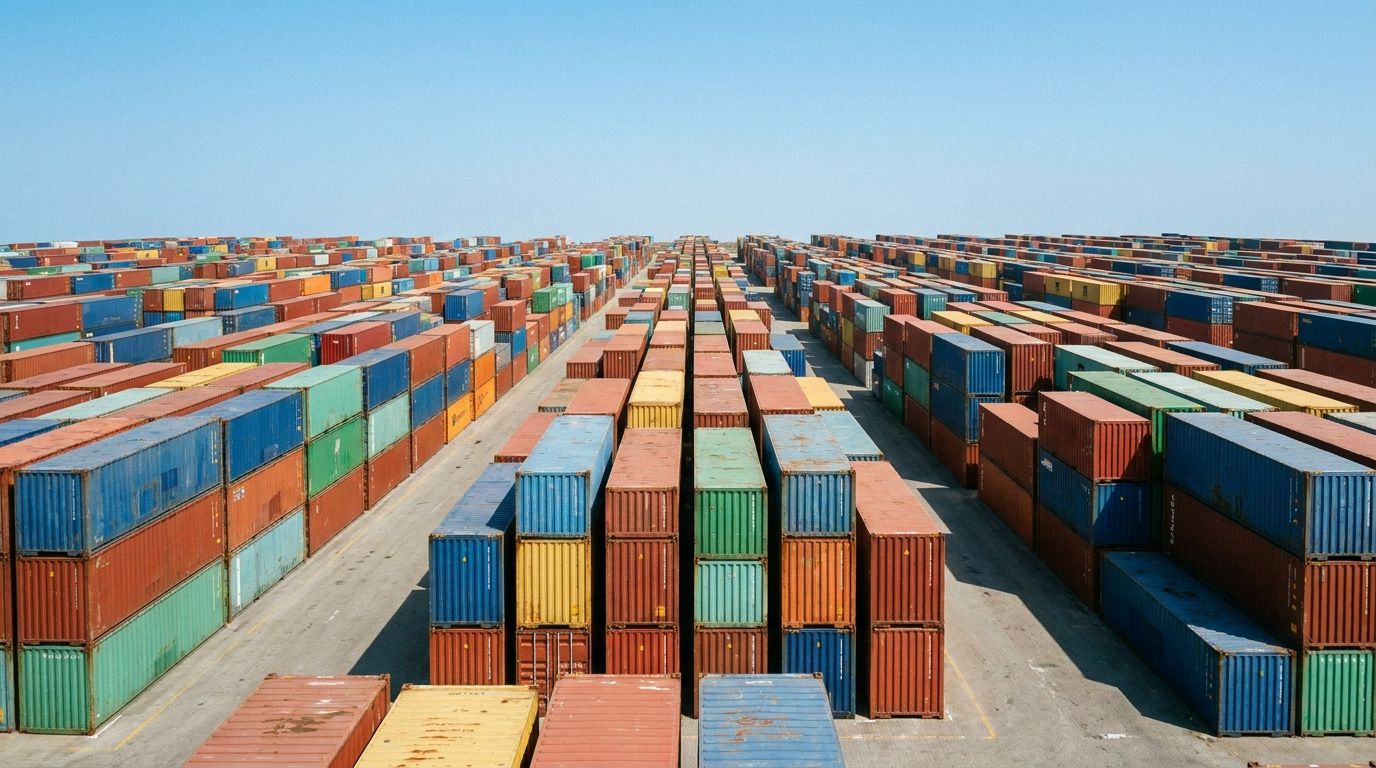
Flat-Pack vs Steel Storage Containers: When Each Wins
A flat-pack storage container ships flat and bolts together on site, while a welded steel box arrives in one piece. Here is when each one wins.
 Editorial TeamEditorial Team6 min read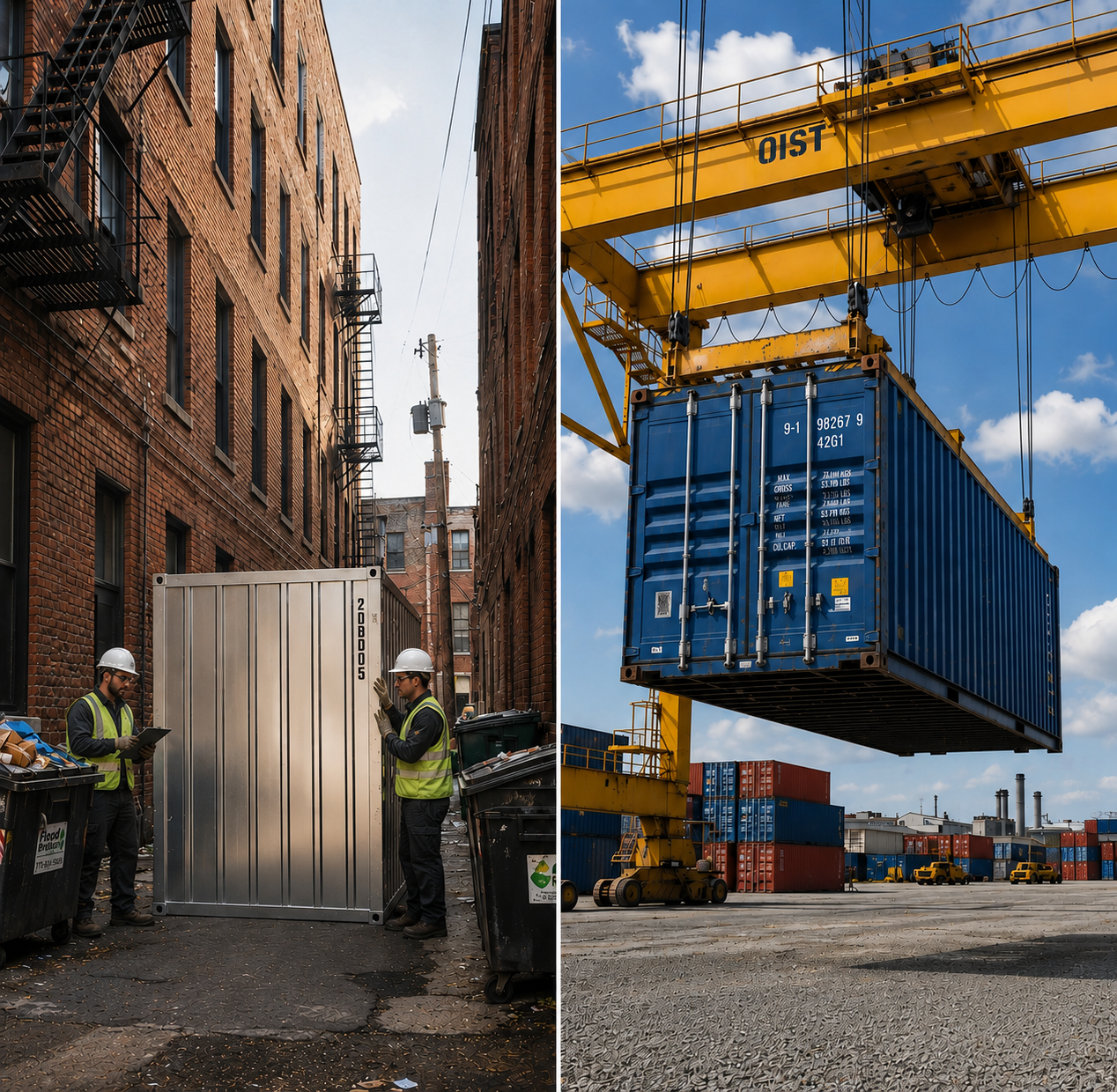
On this page
If you need lockable storage in a spot a delivery truck can barely reach, you have two real options: a flat-pack storage container that ships flat and bolts together on site, or a welded steel shipping container that arrives in one solid piece. They look similar once built, but they solve different problems. This guide walks through where each one wins so you can match the box to the site, not the other way around.
Quick answer
Buy a flat-pack when access is the constraint: a yard with no crane room, a gate too narrow for a 20ft box, or a rooftop plant deck. A flat-pack (a panelized steel store that ships flat on a pallet and bolts together on site) gets in where a one-piece container cannot, costs less to ship, and goes up with two people and basic tools. Buy a welded steel container when security and weather sealing matter more than access. A one-piece welded box is heavier gauge, harder to break into, and more weathertight than any bolted kit, but it needs crane or tilt-bed room and a clear run to its final spot.
What a flat-pack storage container actually is
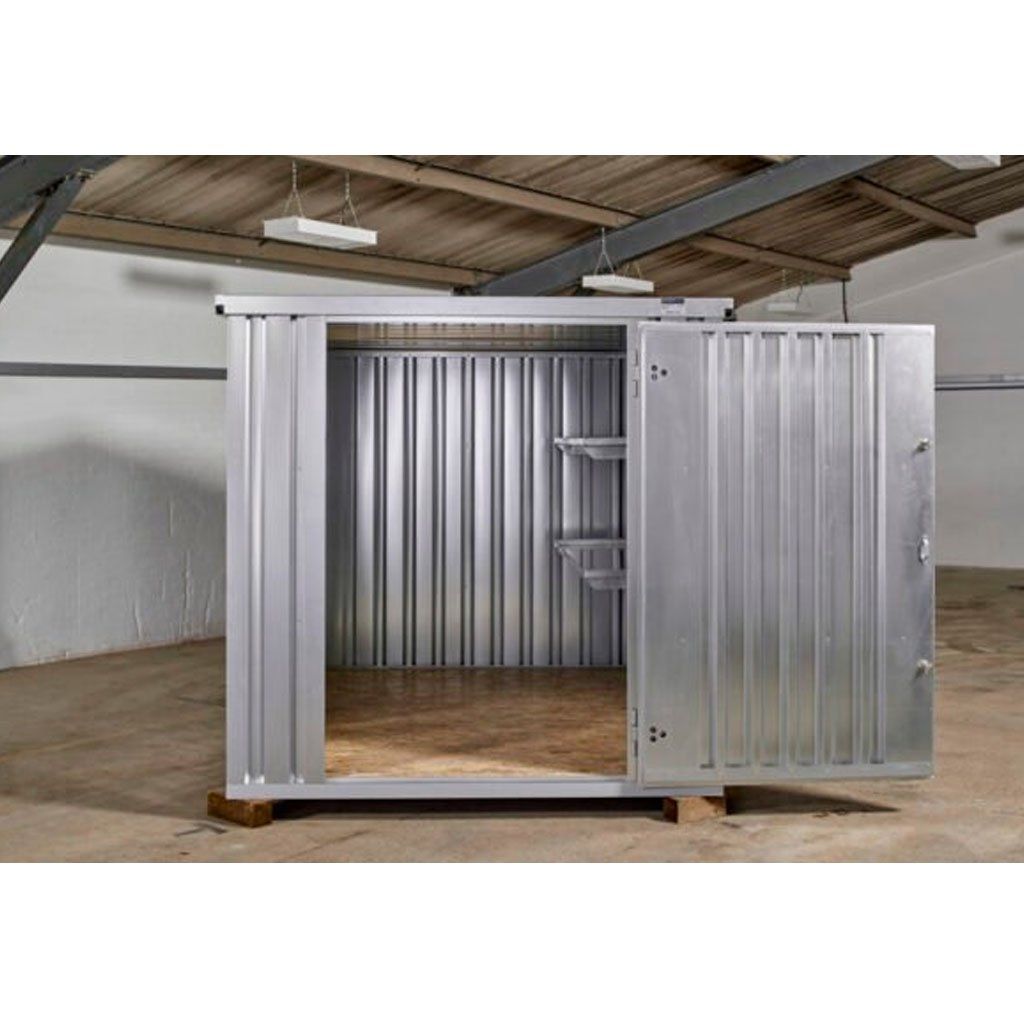
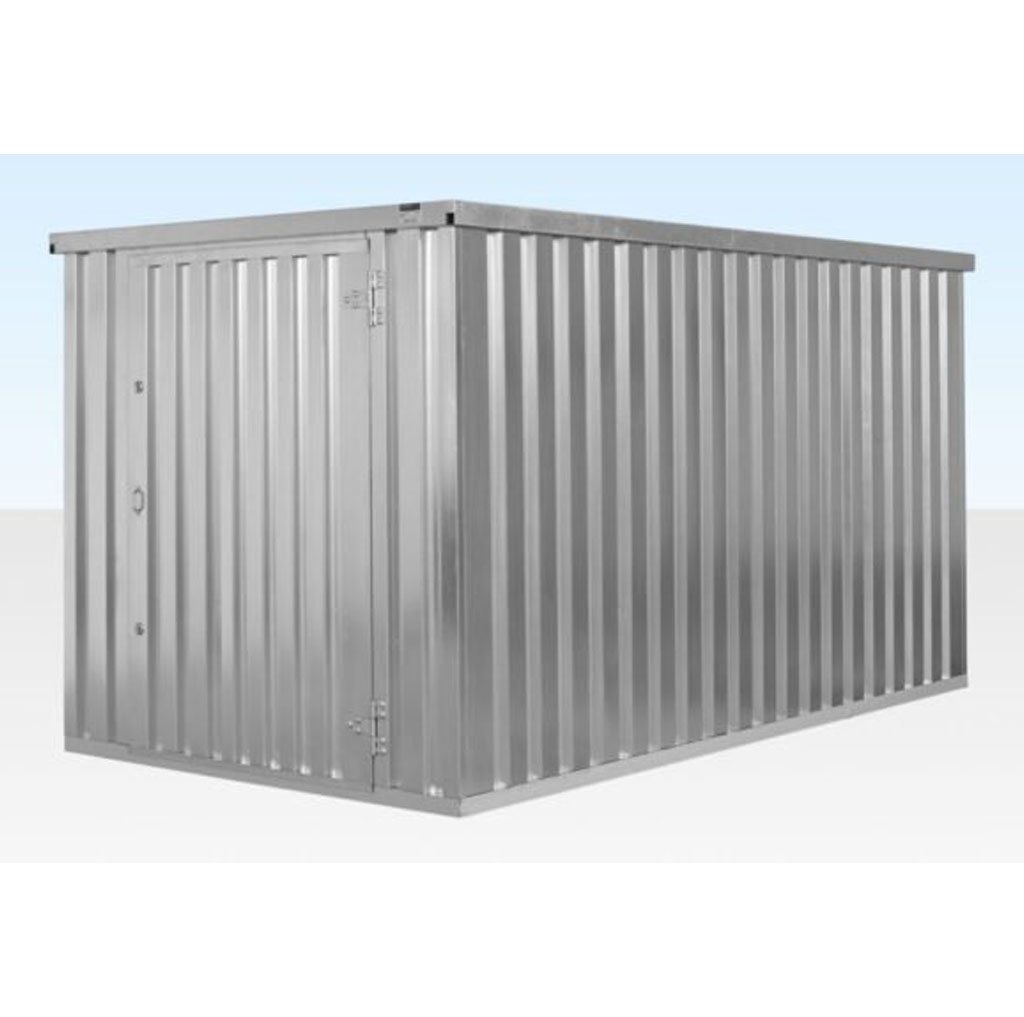
A flat-pack is a storage building that ships as a stack of steel panels, a roof, a floor frame, and a bag of bolts, all strapped to a single pallet. Two people assemble it on site with hand tools in a few hours, no crane and no welding. The panels bolt to a base frame, the roof drops on, and a lockable door hangs at one end. Because it leaves the factory flat, a 3m or 4m kit takes up a fraction of the truck space a built container would, which is why the delivered cost is lower and why it can be carried in pieces through a doorway or up a stairwell.
The tradeoff is in the joints. A bolted panel store will never be quite as rigid, as secure, or as weathertight as a single welded shell. It is built from lighter-gauge steel to keep the panels liftable by hand, and every seam between panels is a place water and pry bars can work at. For dry tools, stock, and seasonal gear that needs to be locked away, that is a fair trade. For high-value goods in an exposed yard, it may not be.
Flat-pack vs a welded ISO shipping container
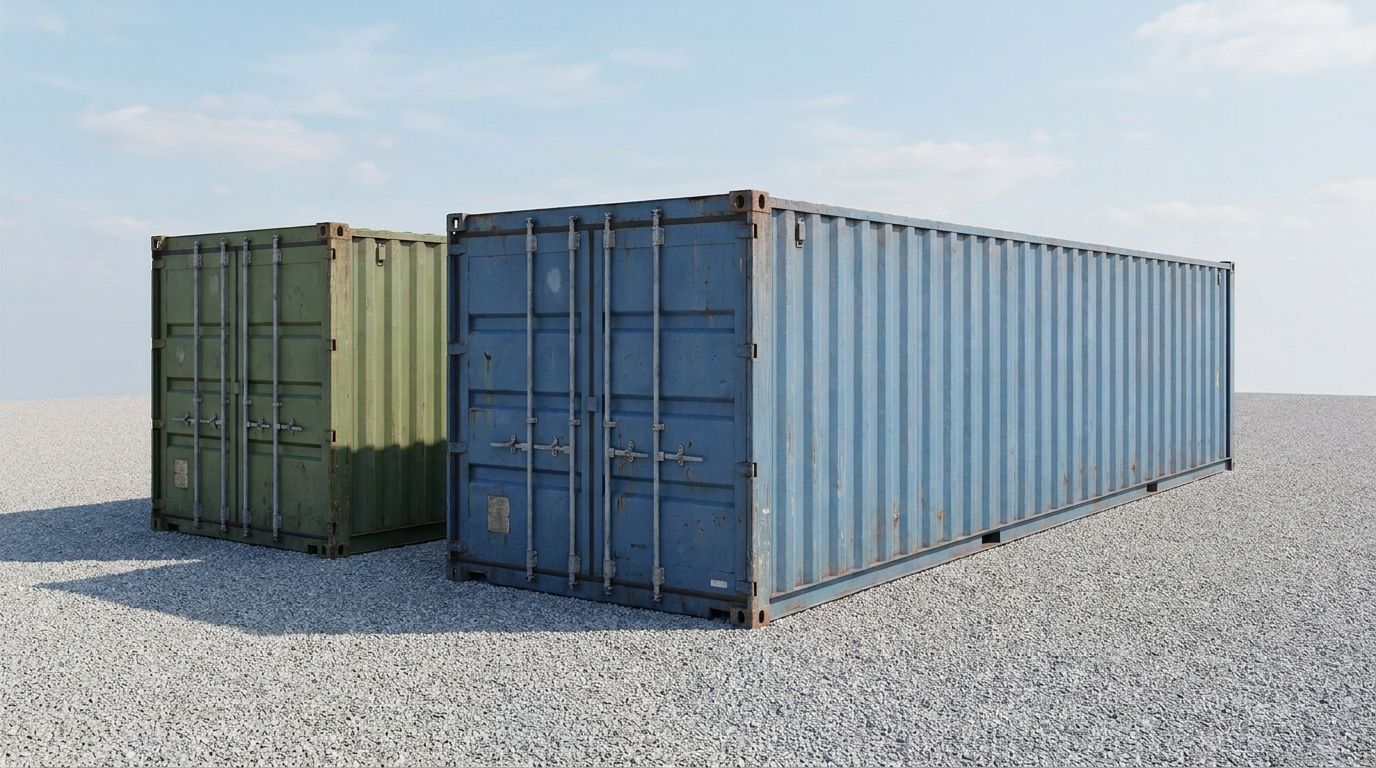
A welded ISO shipping container (the standard steel box built to cross oceans, ISO meaning it meets the international size and strength standard) is a single corrugated shell. That construction is its strength and its limit. The flat-pack wins on getting in: it fits through gates and doorways, can be carried up onto a roof or a mezzanine, ships for less because it travels compact, assembles fast, and can be unbolted and reconfigured or relocated later. The welded box wins on toughness: it is wind and watertight (WWT, meaning it keeps out driving rain and weather), it resists forced entry far better, and it needs no assembly because it is already one piece.
The flat-pack has real limits to weigh. It is not as secure or as weathertight as a one-piece welded box, the steel is a lighter gauge, and it needs a flat, firm base under it because the bolted frame relies on sitting square. Set a flat-pack on soft or uneven ground and the doors stop closing cleanly. A welded container is more forgiving of a rough surface and can take timber pads under its corners, but you pay for that toughness in delivery: it needs the room and access a flat-pack does not. The starting point for most facilities buyers is a compact kit like the 3m galvanised flat-pack store, which slots into a corner of a yard or compound.
Galvanised vs powder-coated finish
Flat-pack panels come in two finishes, and the choice is corrosion resistance versus appearance. Galvanised (a zinc coating bonded to the steel that protects it even where the surface gets scratched) is the workhorse: it shrugs off rust in damp or coastal sites and keeps protecting the metal at cut edges and bolt holes, but the finish is a plain grey and cannot be color-matched. Powder-coated (a baked-on colored paint layer) looks cleaner and comes in colors that suit a customer-facing or front-of-building spot, but a deep scratch through the coat can let corrosion start underneath. For an exposed compound, galvanised is the safer pick; for a retail frontage or a school yard where looks matter, powder-coated earns its place if you keep the panels from getting gouged.
Sizes and linking bundles
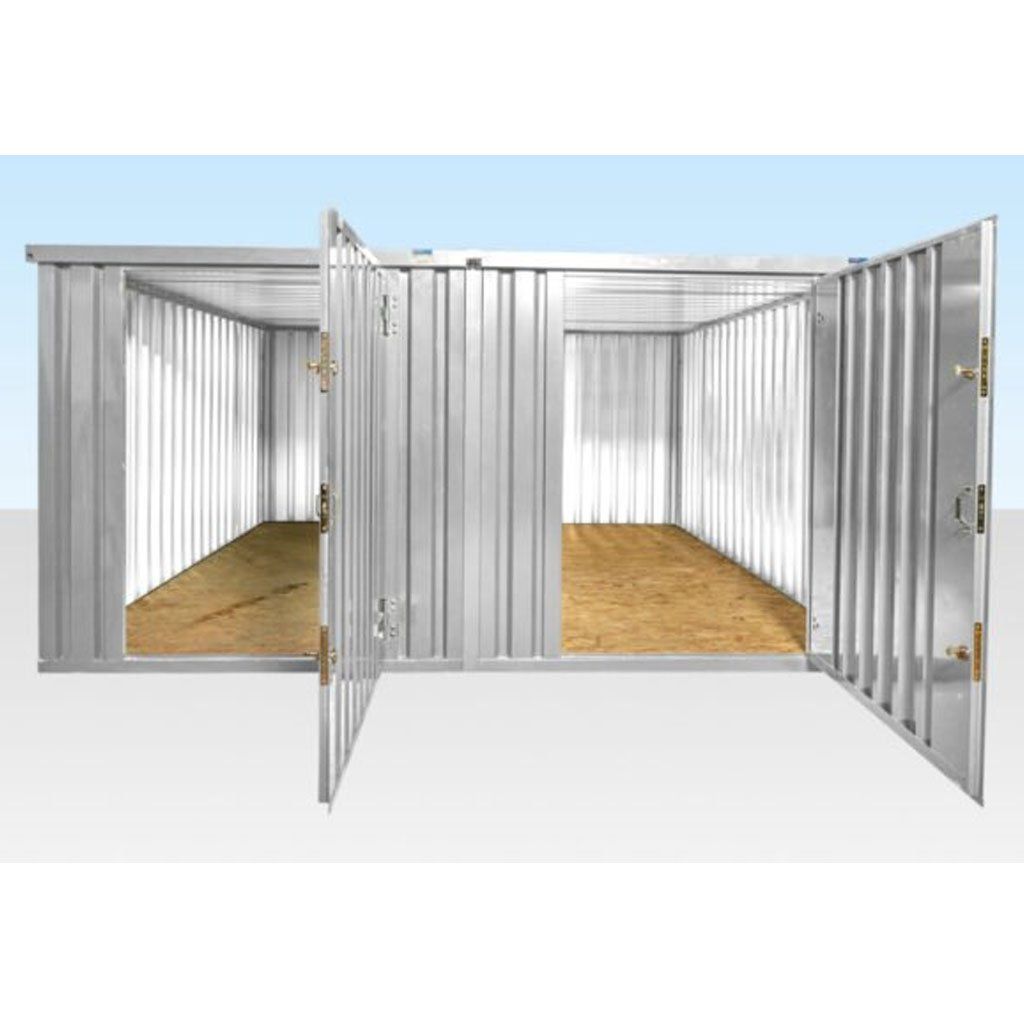
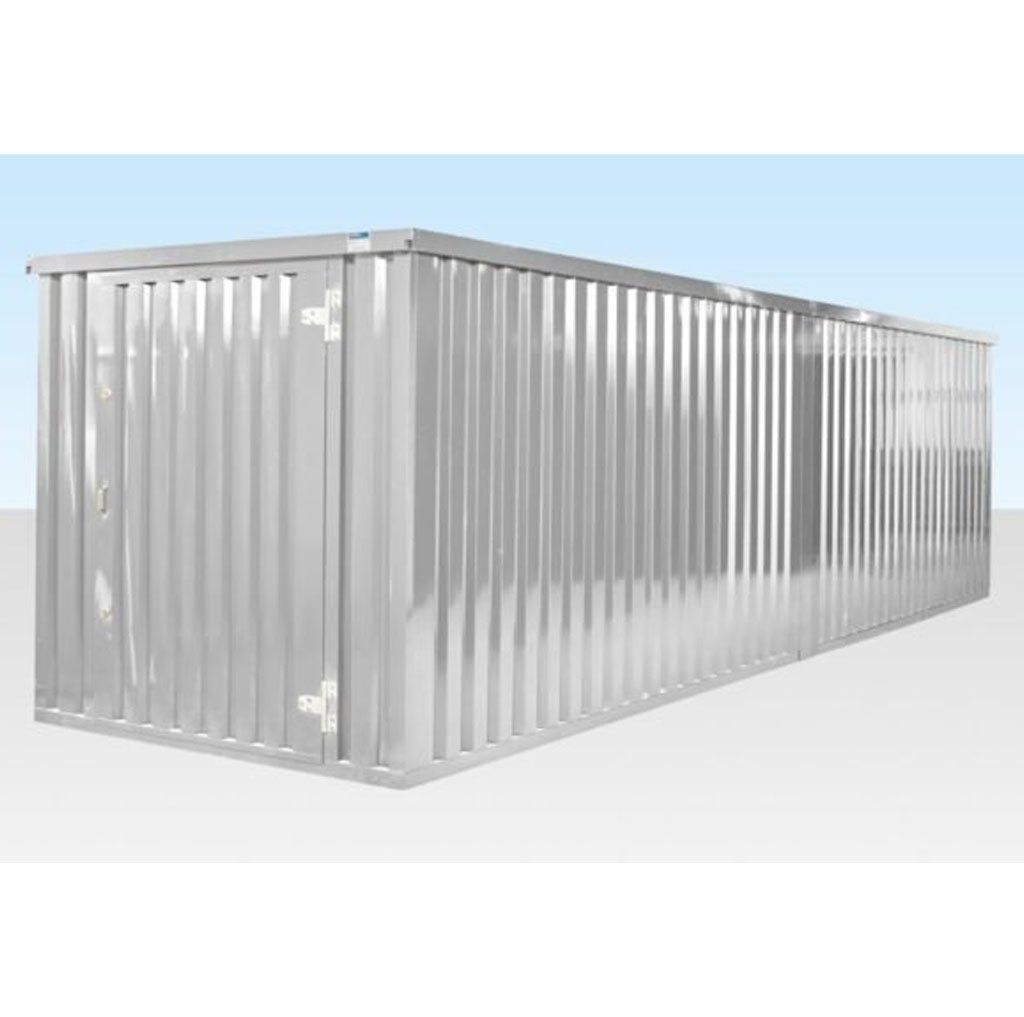
Flat-pack stores start around a 3m footprint and step up through 4m, and the 4m galvanised flat-pack store is a common single-bay size. When one bay is not enough, you do not jump to a shipping container; you link bays. A side-linked bundle sets two stores shoulder to shoulder and removes the shared wall to make one wider room, like the side-linked flat-pack bundle. An end-linked bundle joins them end to end for a long, narrow run instead. The catch is planning: a linked bundle needs a larger flat base laid out before the panels arrive, because the whole assembly has to sit square across its full width or length.
Who it suits, and who should buy a steel box
A flat-pack suits facilities and maintenance teams storing tools and spares in a tight compound, retailers who need a stockroom bolted together behind the shop, schools adding lockable storage inside a fenced yard, event crews who want a store that breaks back down, and rooftop plant decks where nothing larger can be lifted up. The common thread is access, reconfiguration, or both. If your site instead has crane or tilt-bed room and your priority is holding higher-value goods securely through all weather, buy the welded steel box. The same goes for anything you want to leave unattended long term in an exposed spot, where the heavier gauge and sealed shell of a one-piece container earn back the harder delivery.
Frequently asked questions
How long does a flat-pack take to assemble?
A single-bay 3m or 4m store goes up in a few hours with two people and basic hand tools, with no crane and no welding. Linked bundles take longer because there are more panels and a larger base to get square first.
Is a flat-pack as secure as a shipping container?
No. A bolted panel store is less secure and less weathertight than a one-piece welded box, and it uses lighter-gauge steel. It locks and keeps dry goods safe in a fenced or supervised site, but for high-value stock in an exposed yard a welded steel container is the stronger choice.
What base does a flat-pack need?
A flat, firm, level base, such as concrete, paving, or compacted hardstanding. The bolted frame relies on sitting square, so soft or uneven ground will stop the doors closing cleanly. Linked bundles need that flat area extended across the full footprint.
Get a free quote
Tell us the site, the footprint you need, and whether access rules out a one-piece box, and we will price the kit plus delivery with no hidden fees, so what we quote is what you pay. Every unit is inspected and graded before delivery, and we reply within 1 business day. See our flat-pack storage containers solution for matched sizes and linking options, then send us your details for a free, itemized quote.