

Flat-pack storage that ships compact and bolts together
Panelized steel stores delivered on a pallet and assembled on site, where a 20ft box can't go.
Built for the job
Fits where a container can't
Panels carry through gates, doorways, and stairwells a one-piece box cannot pass, so storage reaches tight yards and rooftops. The tradeoff is assembly time on site.
Ships flat, costs less to deliver
A whole kit travels on one compact pallet, so delivery costs less than freighting a built container. In return, you build it on site rather than dropping it ready-made.
Two people, basic tools
A single-bay store bolts together in a few hours with two people and hand tools, no crane and no welding. Larger linked bundles take longer and need more hands.
Galvanised or powder-coated
Galvanised resists corrosion in damp or coastal sites; powder-coated looks cleaner for a customer-facing spot. A deep scratch through powder-coat can let rust start.
Link units for more space
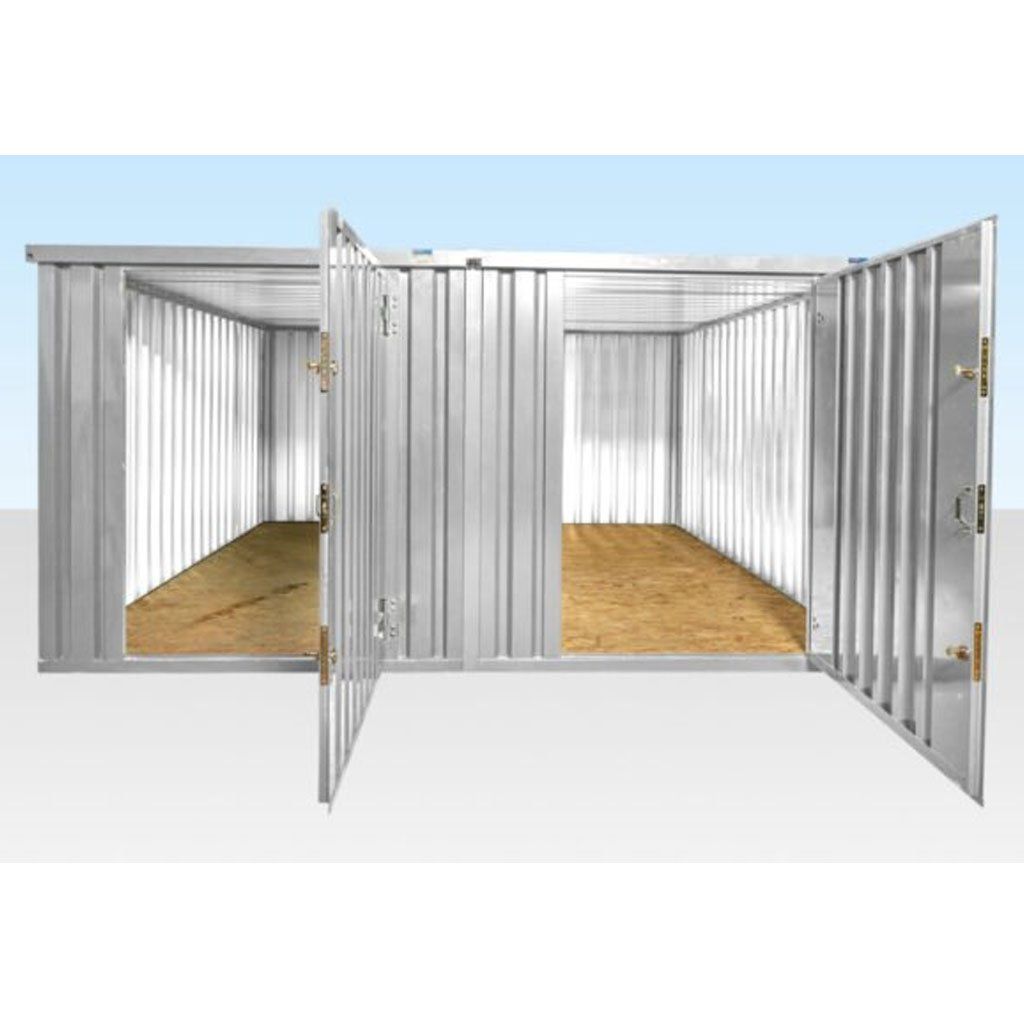
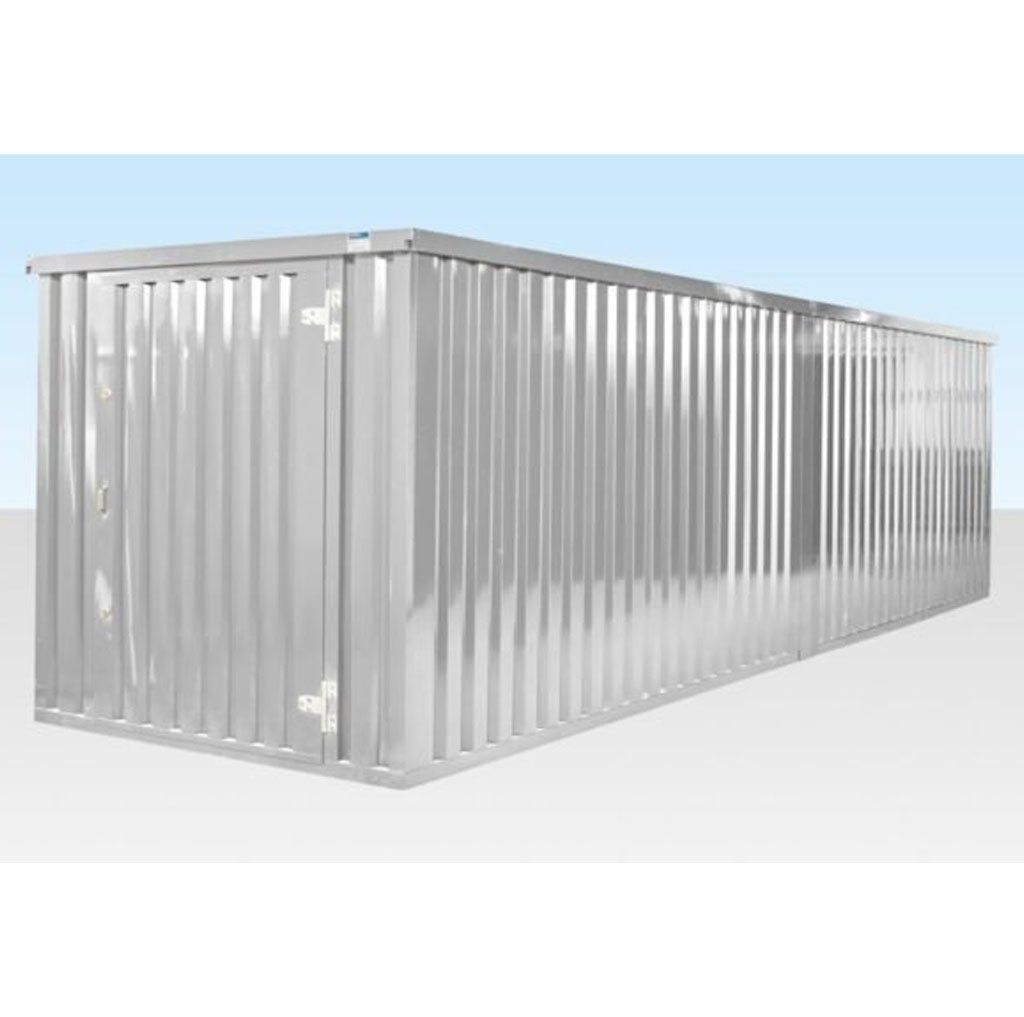
Side-linked and end-linked bundles join bays into one larger store. Plan the base first, because the whole run has to sit square across its full footprint.
One itemized quote
We price the kit plus delivery in one quote with no hidden fees. Worth knowing up front: a bolted store is not as secure as a one-piece welded box.
When a container can't reach the spot
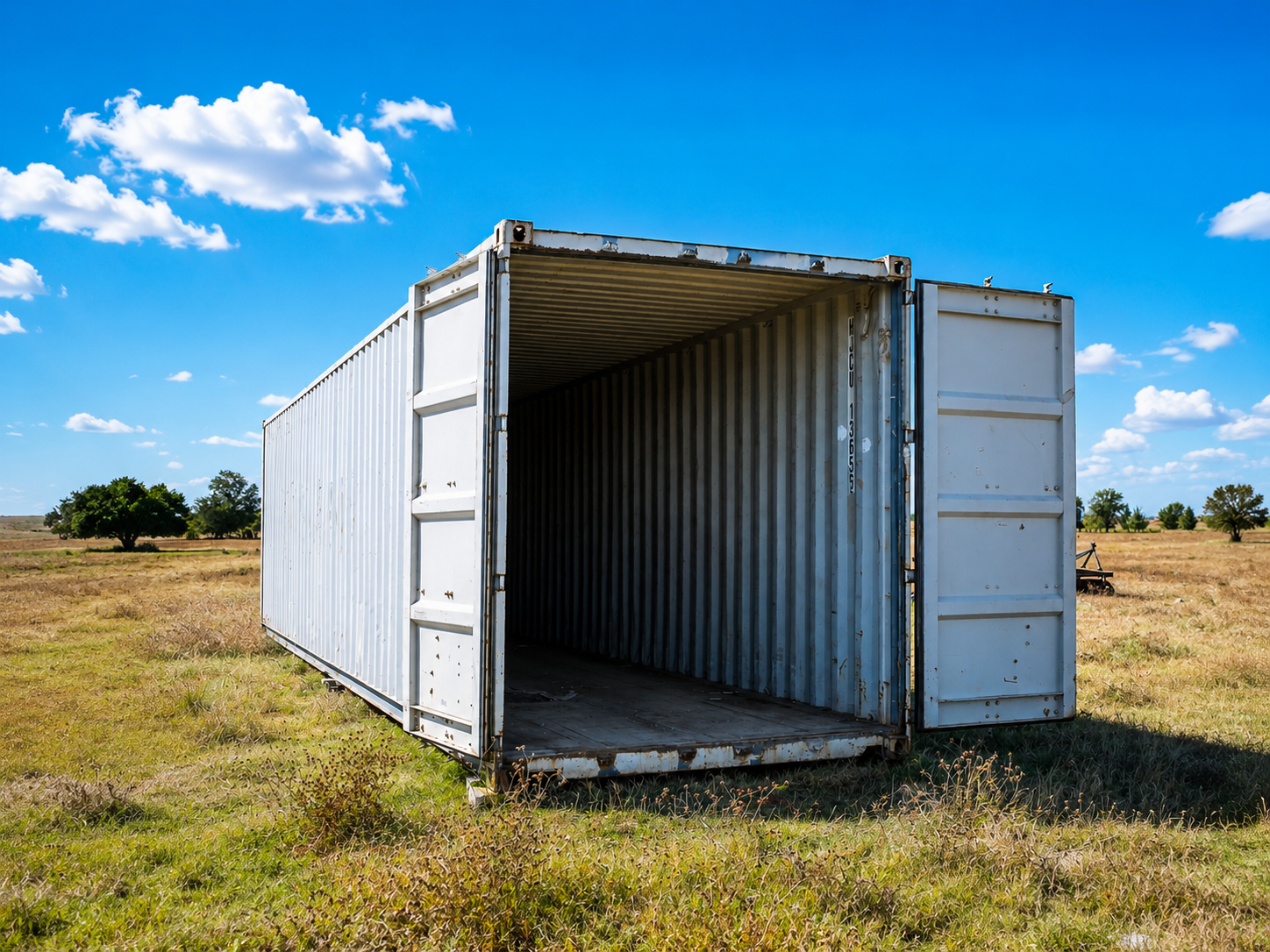
Plenty of sites need lockable storage exactly where a one-piece container can't go. The only way in is through a doorway. The yard has no crane access and no clear run for a tilt-bed truck. The storage has to land on a roof or a mezzanine deck. Or the layout keeps changing, so you want a store you can take apart and rebuild somewhere else next quarter. A welded steel box solves none of these well, because it arrives in one rigid piece that has to be lifted or rolled into its final position.
How a flat-pack solves it
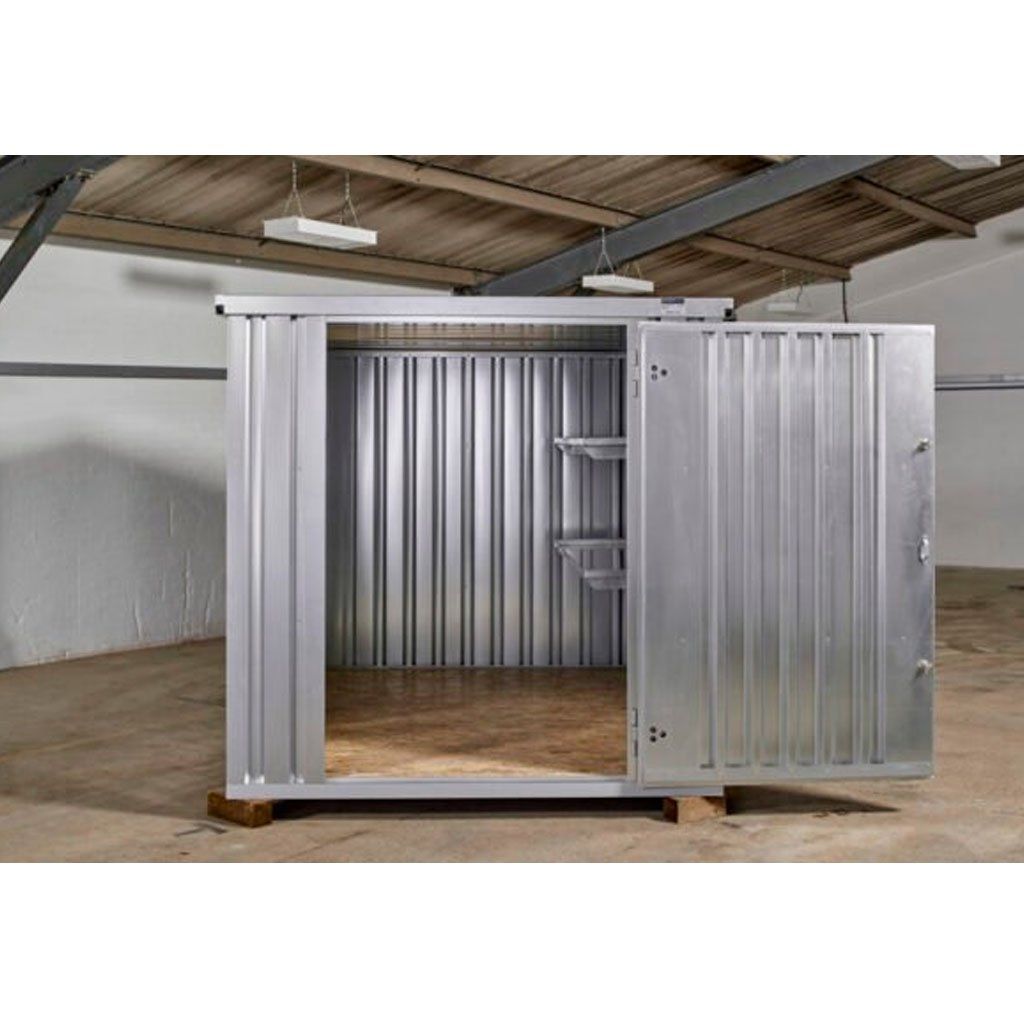
A flat-pack (a panelized steel store that ships flat on a pallet and bolts together on site) arrives as a stack of panels, a roof, a floor frame, and the fixings, all on one pallet. Two people build it with hand tools in a few hours, with no crane and no welding. Because the panels travel flat, the kit fits through gates and doorways and can be carried up to where it is needed, then bolted square on a prepared base. If the site changes, you can unbolt it and move it. The honest limit is that a bolted panel store is built from lighter-gauge steel and is not as secure or as weathertight as a single welded shell, so it suits dry goods in a fenced or supervised spot rather than high-value stock left in the open.
Where flat-pack stores earn their place
Facilities and maintenance teams use them for tools and spares inside a tight compound. Retailers bolt one together as a stockroom behind the shop floor where a delivery truck could never swing a container in. Schools add lockable storage inside a fenced yard without a crane visit. Event and grounds crews want a store that breaks back down between seasons. And building services teams put them on rooftop plant decks, where nothing larger could be lifted. In each case the deciding factor is access or the freedom to reconfigure, not raw strength, which is where a flat-pack beats a welded box.
Matched sizes and finishes
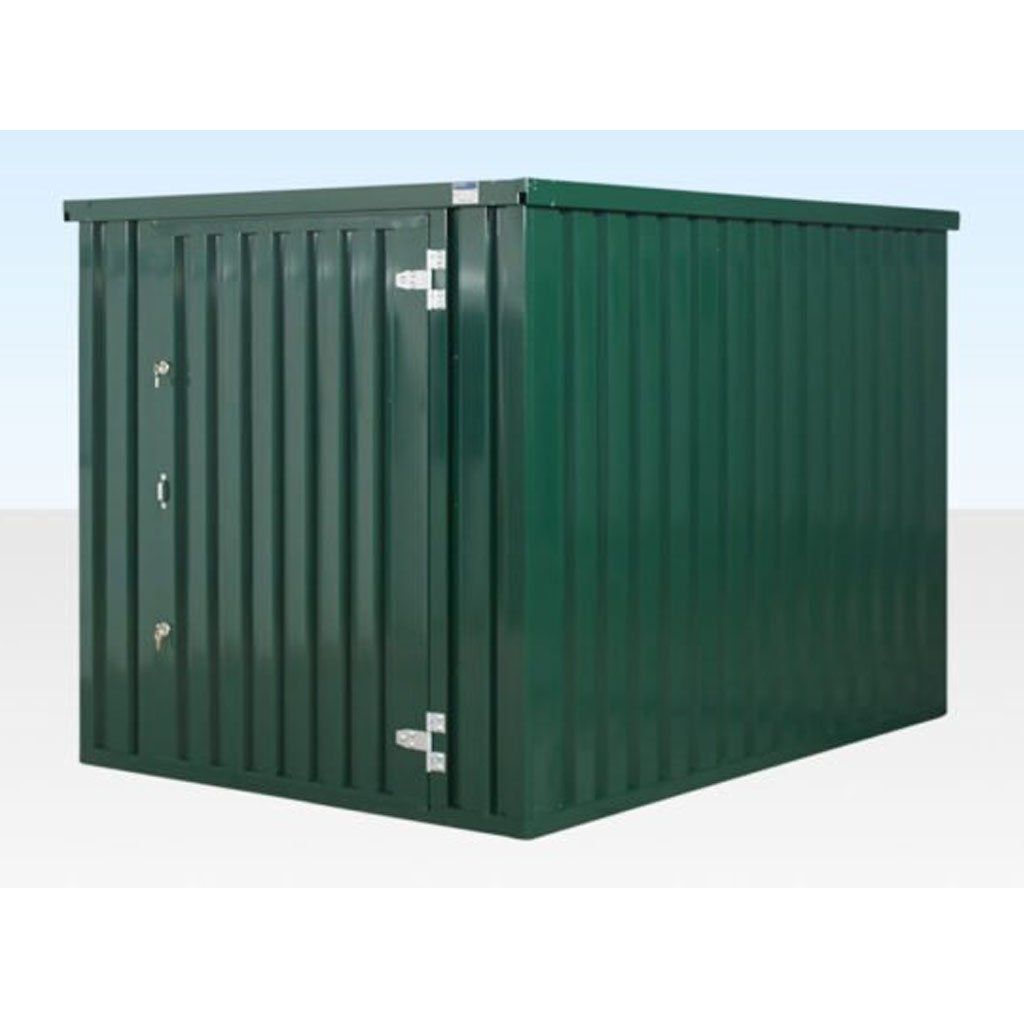
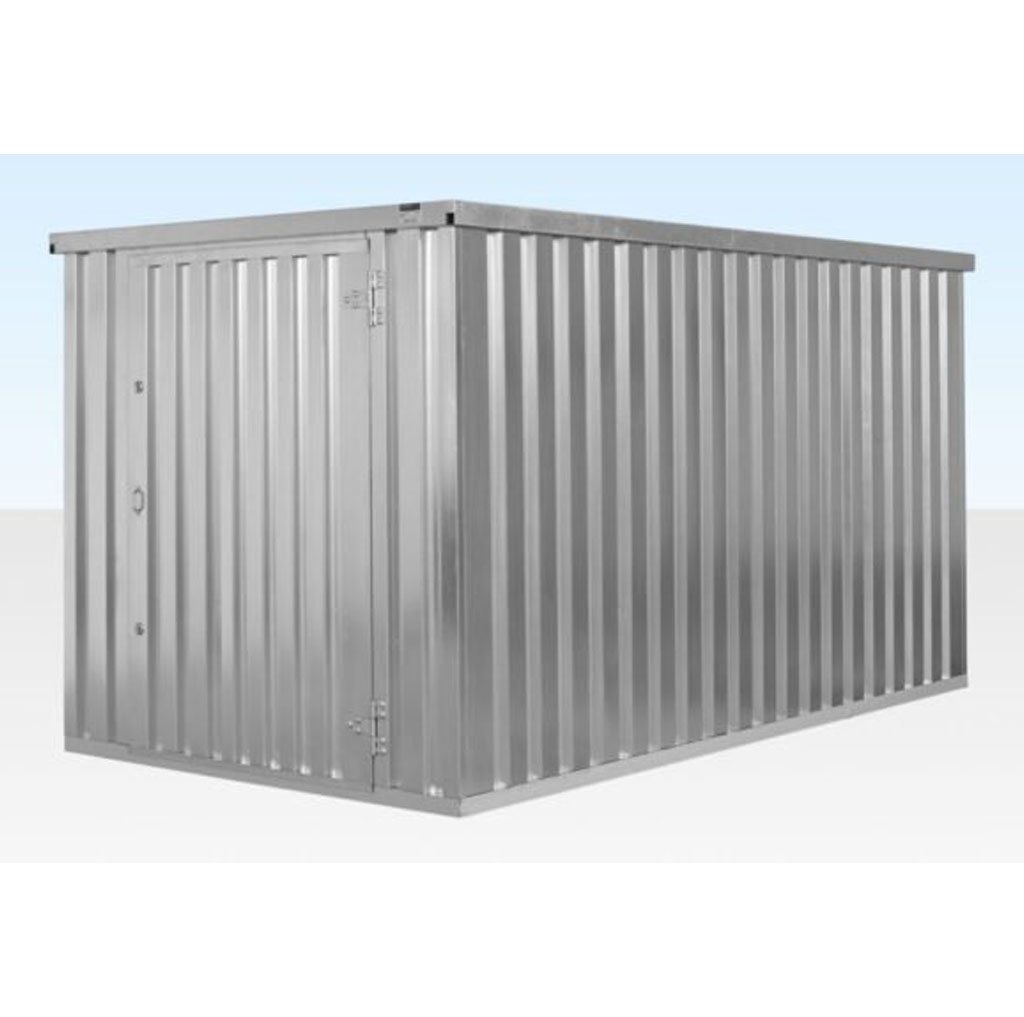
For a compact single bay, the 3m galvanised flat-pack store slots into the corner of a yard, while the 3m powder-coated flat-pack store trades some corrosion resistance for a cleaner look in a customer-facing spot. Step up to the 4m galvanised flat-pack store when one bay needs more room. Galvanised (a zinc coating that protects the steel even at scratches and cut edges) is the pick for exposed or coastal sites; powder-coated (a baked-on colored finish) suits front-of-building placements where appearance matters more than maximum durability.
Linking bays for more space
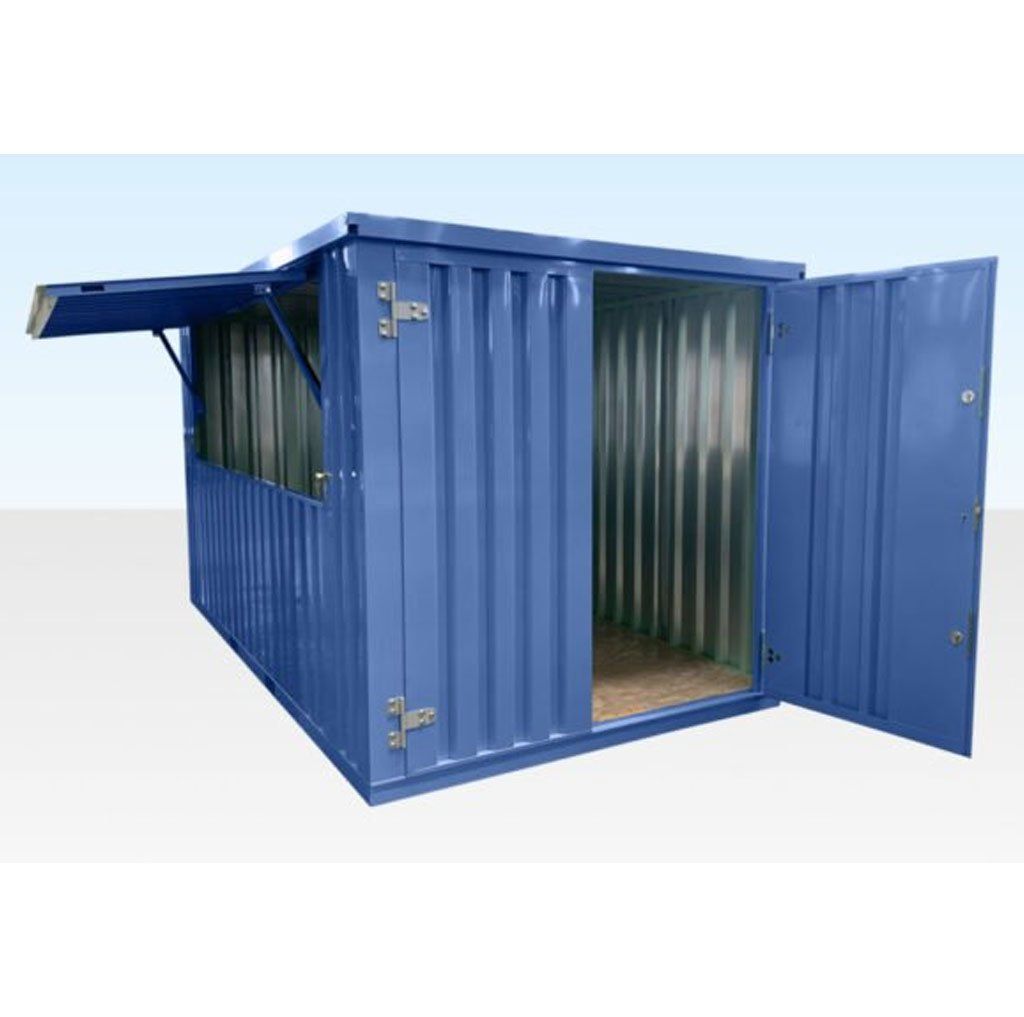
When a single bay runs short, link them rather than moving up to a container. The side-linked flat-pack bundle joins two stores shoulder to shoulder into one wider room, while the end-linked flat-pack bundle runs them end to end for a longer, narrower footprint. For a serviced or customer-facing point, the flat-pack kiosk uses the same bolt-together build. Linked bundles need their larger base laid out and levelled before the panels arrive, because the full run has to sit square.
Frequently asked questions
How is a flat-pack assembled?
Two people bolt a single-bay store together in a few hours with basic hand tools, with no crane and no welding. The panels fix to a base frame, the roof drops on, and a lockable door hangs at one end. Linked bundles take longer and a few more hands.
Is it as secure as a welded container?
No. A bolted panel store uses lighter-gauge steel and is less secure and less weathertight than a one-piece welded box. It locks and keeps dry goods safe in a fenced or supervised site, but for high-value stock left in an exposed yard a welded steel container is the stronger choice.
What base does it need?
A flat, firm, level base such as concrete, paving, or compacted hardstanding. The bolted frame relies on sitting square, so soft or uneven ground stops the doors closing cleanly. For a linked bundle, extend that level area across the full footprint before delivery.
Get a free quote
Tell us the site, the footprint you need, and any access limits, and we will price the kit plus delivery in one quote with no hidden fees, so what we quote is what you pay. Every unit is inspected and graded before delivery, and we reply within 1 business day. Our storage-solutions consulting helps you size the right store and plan the base, and our container delivery team handles the drop. Still weighing a kit against a steel box? Read flat-pack vs steel storage containers first, then send us your details for a free, itemized quote.
“The used container we bought was exactly as described — clean, structurally solid, no surprises on delivery. What I appreciated most was the communication; I always knew where my order stood.”
Containers suited for storage & facilities
Related services
- 01Storage Solutions ConsultingRight-size your on-site storage
- 02Container DeliveryTilt-bed delivery, coordinated door to door
Frequently asked questions
Do you offer container rentals?
We focus on container sales rather than short-term rentals. Tell us about your project and we'll recommend the best purchase option for the job and your budget.
Can you modify or customize a container?
Yes. We add personnel doors, windows, insulation, electrical, HVAC, shelving, and roll-up fronts to build offices, workshops, retail units, and cold-storage conversions.
How do I buy a shipping container?
Request a free quote online or give us a call. We confirm availability, pricing, and delivery to your location, then handle the paperwork and logistics for you.
Put containers to work in storage & facilities
Tell us about your project and we will send a free, no-obligation quote.