Container Swimming Pools: Costs, Install, and What to Know
A container swimming pool is a steel shipping container converted into an above-ground pool. Here is what one costs, how it installs, and the tradeoffs.
 Editorial TeamEditorial Team6 min read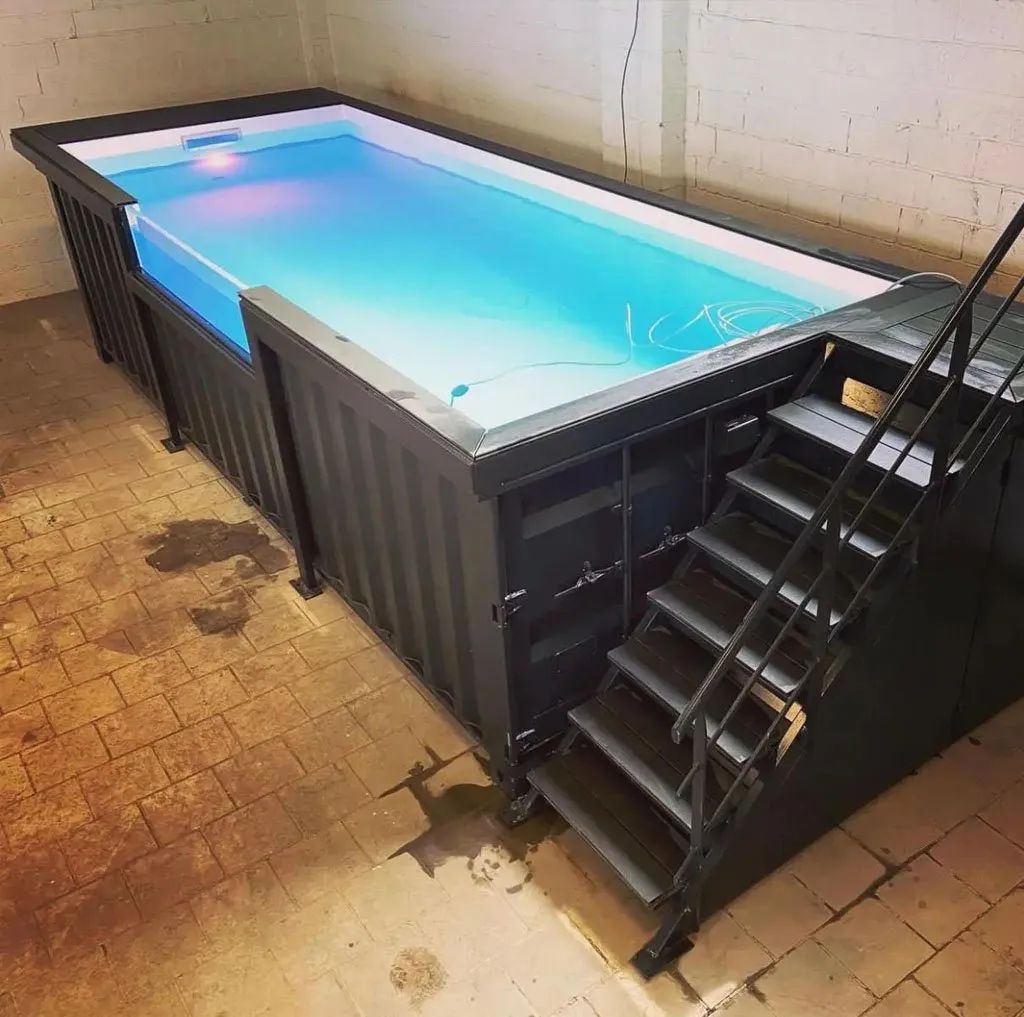
On this page
Container swimming pools, in plain terms
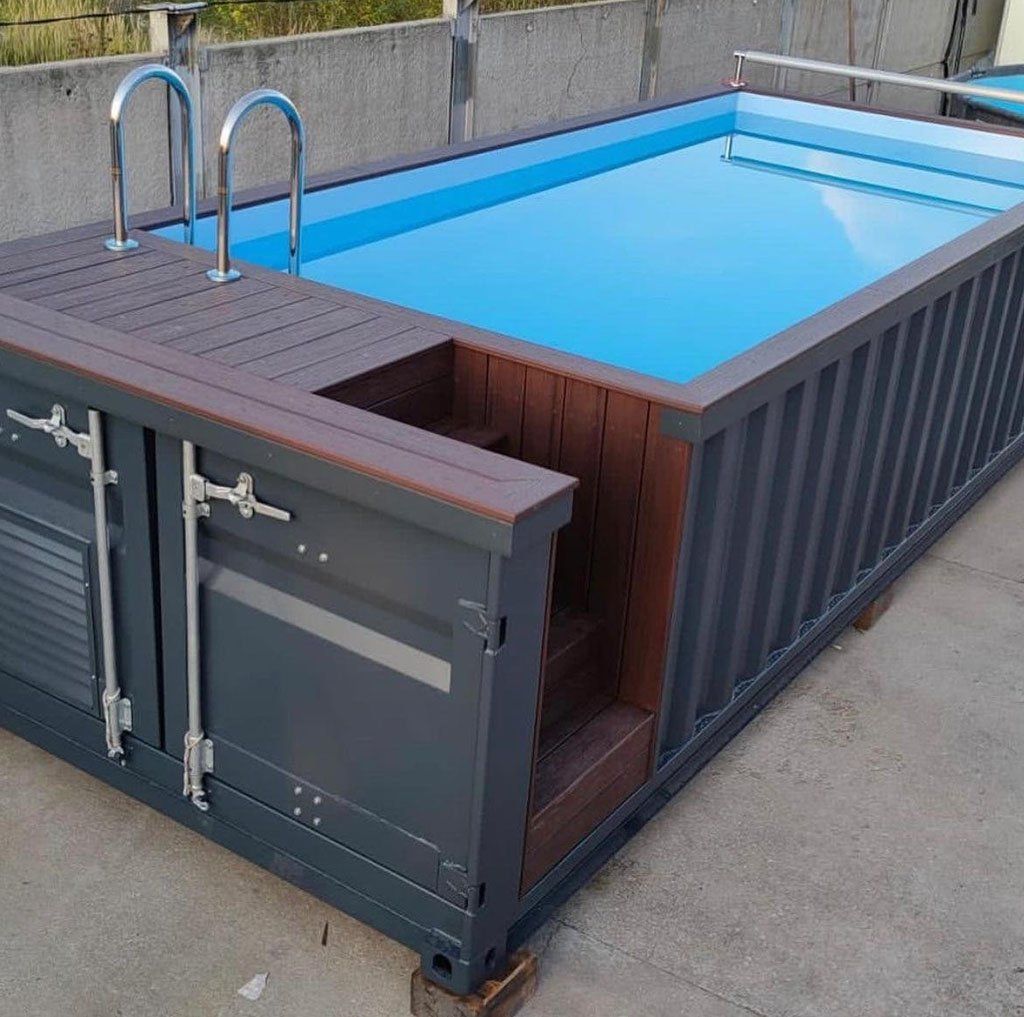
A container swimming pool is a steel shipping container that has been converted into an above-ground pool. The box is cut, reinforced, lined, and sealed to hold water, and it is usually fitted with a pump, a deck, and sometimes a viewing window. If you want a pool but do not want to dig a hole and wait out a long in-ground build, this is the shortcut a lot of homeowners and short-let owners are now looking at.
Quick answer: a container pool arrives mostly finished, sets on a level pad above the ground, and is ready to swim in days rather than a season. You give up some things in return. The depth and footprint are fixed by the container, it stays visible above ground, and in cold climates you still have to winterize it. Read on for sizes, what actually drives the price, how the install works, and how it stacks up against a traditional in-ground pool.
What a container pool actually is
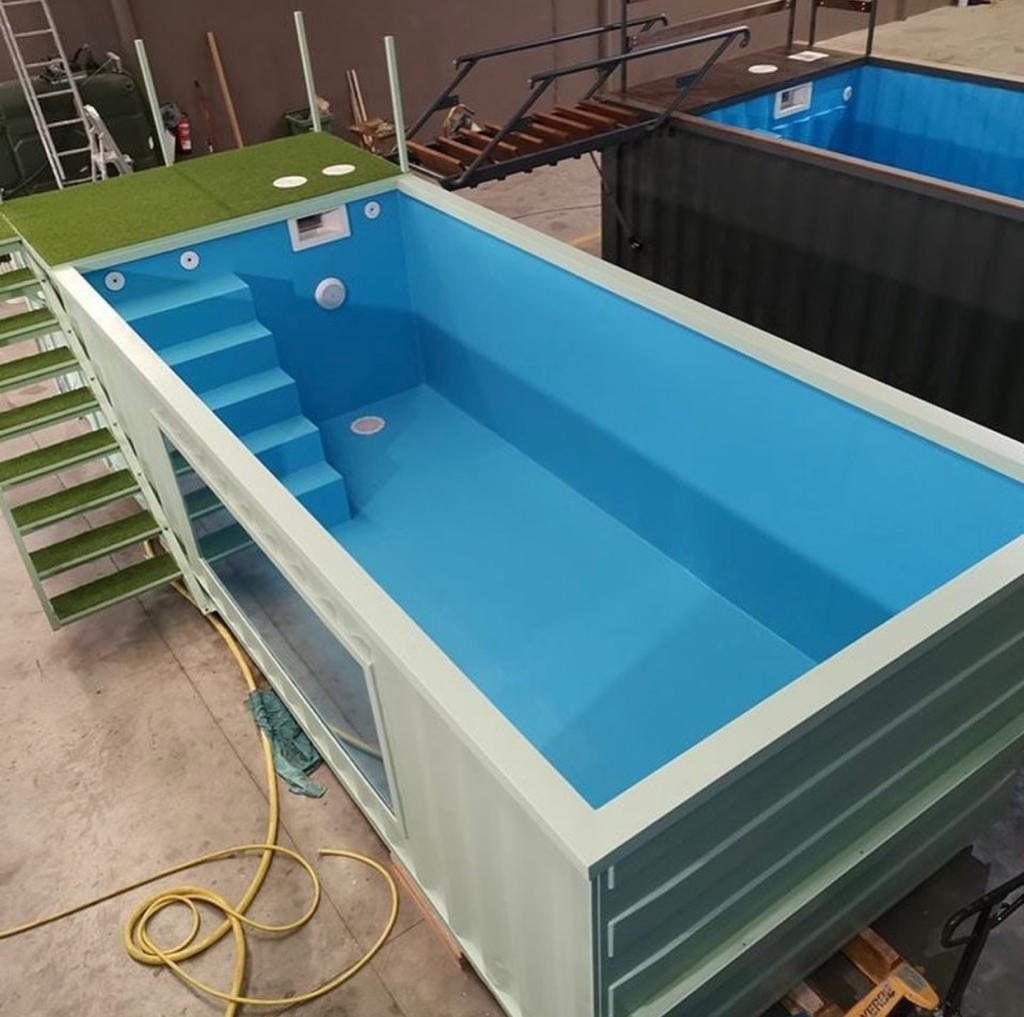
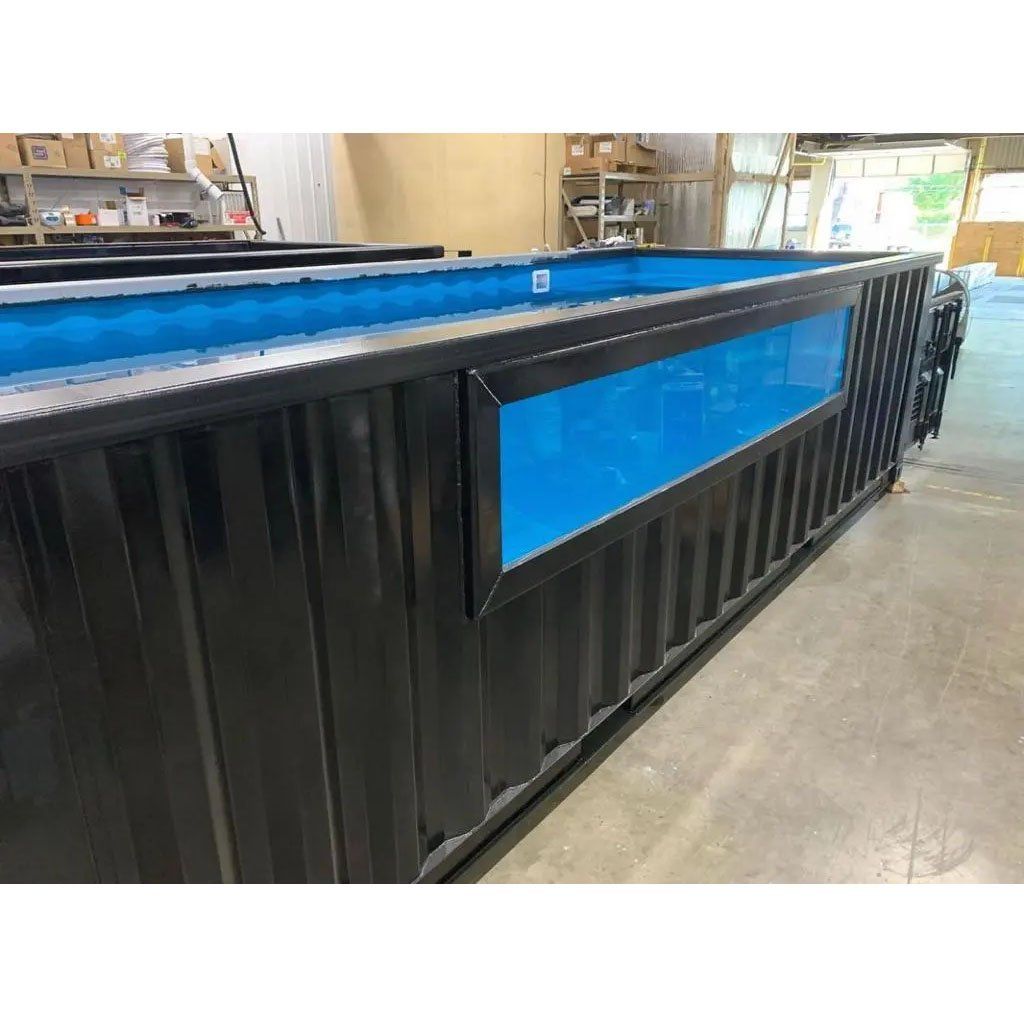
Start with the base unit: a standard shipping container is a welded steel box built to cross oceans, which is why it holds up well as a water vessel once it is reinforced. To become a pool, the walls are braced to take the outward pressure of the water, the interior is lined and sealed so it is watertight, and plumbing is added for a filtration pump that circulates and cleans the water. Most units add a set of steps or a ladder, a surrounding deck so you are not stepping onto bare steel, and many include an acrylic viewing window set into one side. The result is an above-ground pool with steel walls instead of the vinyl-and-frame walls you see on a soft-sided pool.
Sizes, and who each one fits
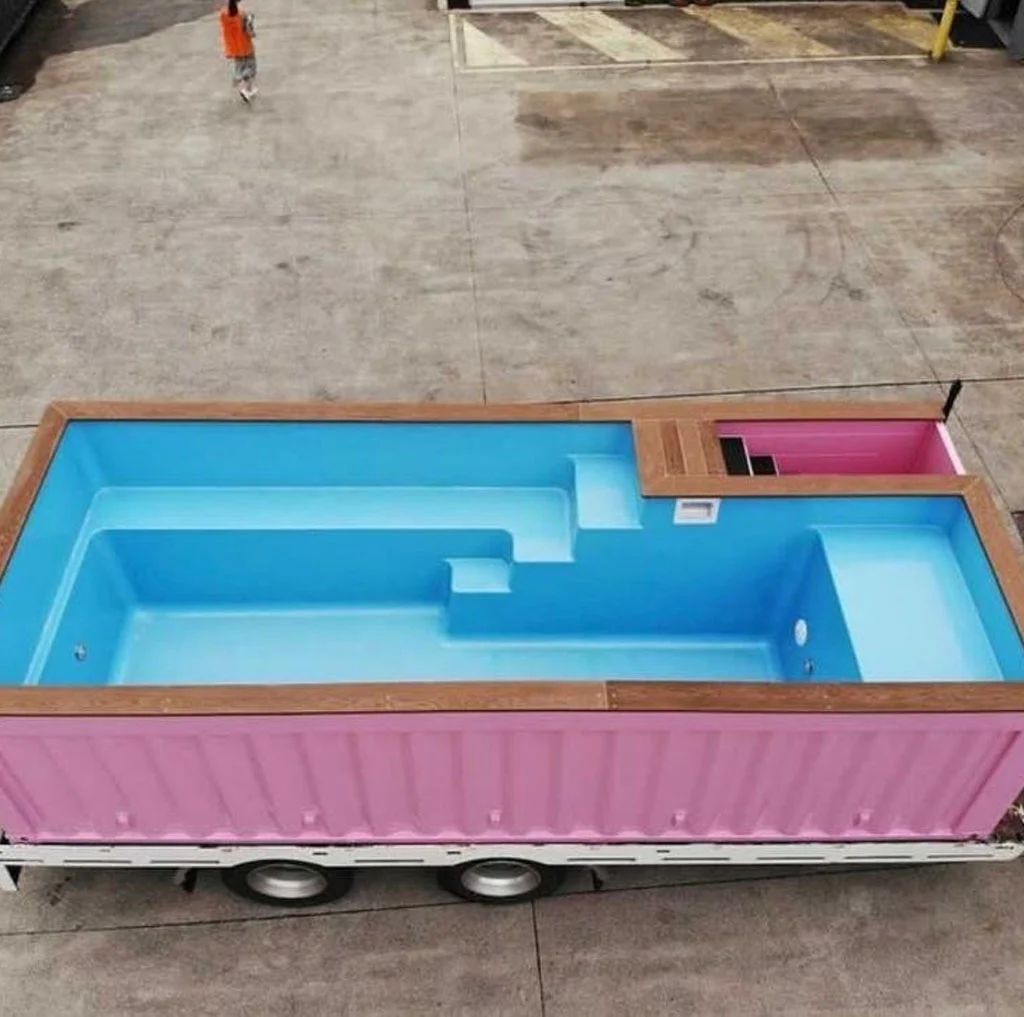
Container pools follow shipping-container lengths, so the choice is mostly 20ft, 30ft, or 40ft. A 20ft container pool (about 20ft long by 8ft wide) suits a small yard, a plunge pool to cool off in, or a short lap or current-swim setup. It is the easiest size to fit and to deliver. The tradeoff is room: it is not where a family of four spreads out.
A 30ft container pool is the mid-size pick: more swimming length than a 20ft without the access demands of the largest unit. A 40ft container pool gives the most length for laps or a family, but it needs the most room to deliver and set, and a longer, stronger pad underneath. Bigger pool, bigger site demands.
What drives the cost
Five things move the number, and each is a tradeoff rather than a simple add-on. Size is the first: a 40ft unit costs more than a 20ft and also raises delivery and site-prep costs. Finish and liner come next, where a higher-grade liner or an added acrylic viewing window buys looks and longevity but adds to the bill. Heating plus filtration is the third lever: a heater lets you swim a longer season but adds equipment and running cost, while a larger pump moves more water at the price of more energy use.
Delivery is the fourth, and it scales with distance and with how hard your site is to reach. Site prep is the fifth: a flat, firm spot keeps it low, while a sloped or soft lot needs a built-up pad or footings, which costs more before the pool ever arrives. We price the unit plus delivery in one free, itemized quote, so the size-and-distance part is clear up front and there are no hidden fees.
Install and siting
A container pool sits above ground on a level, compacted pad or on footings at the four corners. There is no excavation and no slab to pour and cure first, which is a big part of why it goes in fast. The catch is that the pad has to be right: a full pool of water is heavy, so soft or sloped ground needs proper compaction or footings to keep the unit level and the structure sound.
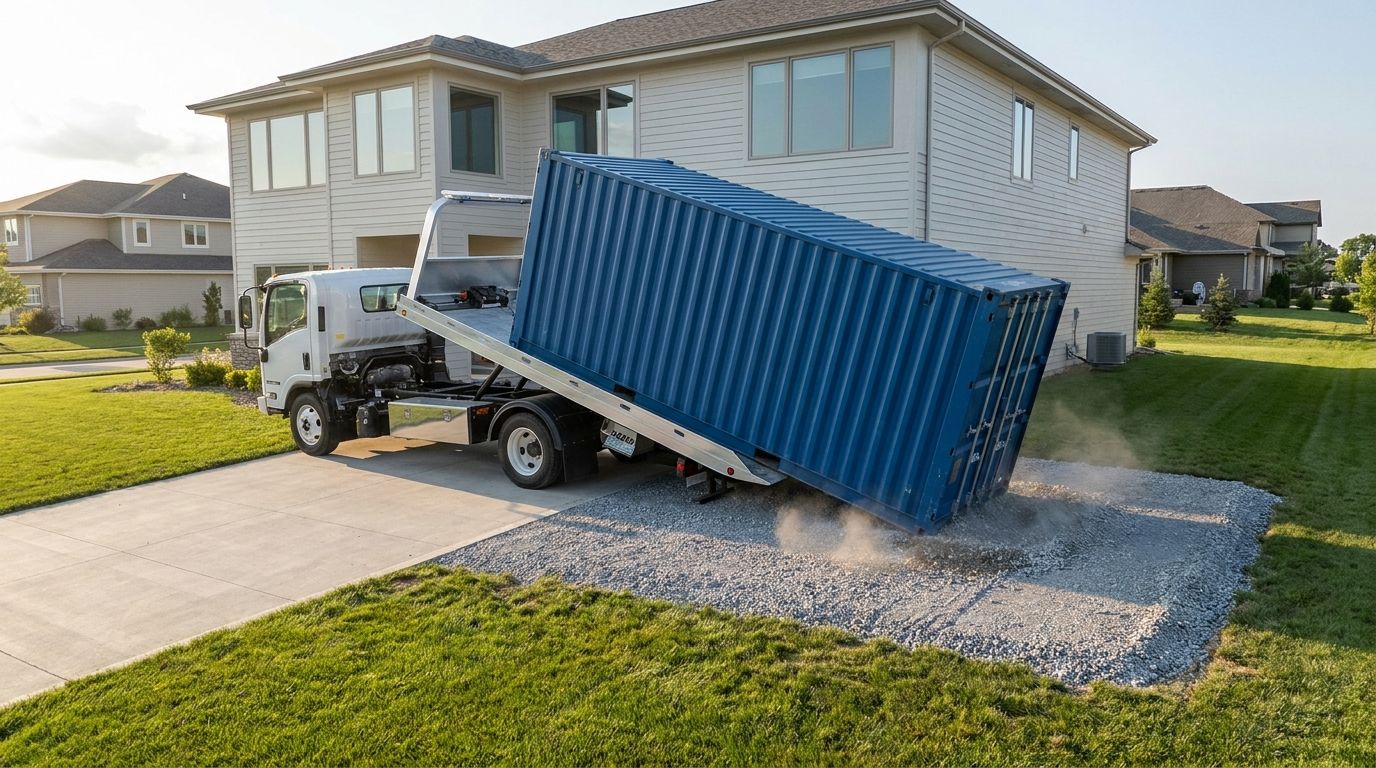
Most units are delivered on a tilt-bed (roll-off) truck, where the bed tilts and slides the container off at ground level, so no crane or forklift is needed in the typical case. Some heavier or fully finished units may need a crane to lift them into a tight spot, so we check site access and clearance before delivery rather than promising one method blind. Access is the thing to flag early: the truck needs the straight, obstacle-free run to position and unload, and low branches, narrow gates, and overhead lines are the usual obstacles.
Container pool vs a traditional in-ground pool
Against a traditional in-ground pool, a container pool wins on speed, on the lack of excavation, and on the fact that it is relocatable: because it is a steel box on a pad, you can in principle move it if you move. It is also a single delivered object rather than weeks of trades on site. Those are real advantages if you want a pool this season instead of next year.
The limits are just as real. The depth and footprint are fixed by the container, so you cannot freeform the shape the way you can with an in-ground build. It stays above ground and visible, which some yards and HOAs care about. In a cold climate you still have to winterize the water and equipment each year. And you will likely need permits for the water supply and the electrical work, plus possibly a placement permit, the same as most pools. Permit and zoning rules vary by city and HOA, so check your local code before you commit; this is general guidance, not legal advice.
Maintenance and running notes
Day to day, a container pool is maintained like any other above-ground pool. You run the filtration pump to keep the water moving, balance the chemistry so the water stays clear and safe, and skim debris off the surface. A cover cuts evaporation and keeps leaves out between swims. If you added a heater, that is the main running cost and the lever for how long your season lasts. The steel structure itself needs little beyond keeping an eye on the liner and seals over time. The honest tradeoff is that a pool of any kind is an ongoing chore and an ongoing utility bill, not a set-and-forget feature.
Frequently asked questions
How long does a container pool take to install?
Once the pad is ready and access is confirmed, the unit is delivered and set in a single visit, and a pool is typically swimmable within days rather than the weeks or months an in-ground build takes. The variable is site prep: if your lot needs a new compacted pad or footings, that work happens before delivery and adds to the timeline.
Can you swim in a container pool in winter?
With a heater you can stretch the season well into the cooler months, which is one reason short-let and venue owners like them. In a climate that freezes, you still need to winterize the water and equipment each year to protect the pump and plumbing, the same as any pool. That seasonal step is a real tradeoff in cold regions.
Do I need a permit for a container pool?
Usually yes, in some form. Most areas treat the water supply and the electrical work as permitted work, and some require a placement or pool barrier permit on top. Rules vary by city and HOA, so check your local code before you order. This is general guidance, not legal advice.
How is a container pool delivered?
In most cases on a tilt-bed (roll-off) truck that slides the unit off at ground level onto the prepared pad, with no crane or forklift. A heavier or fully finished unit may need a crane to reach a tight spot, so we check your access and clearance first. The post on preparing your property for a container delivery covers the access checks worth doing before the truck arrives.
Get a free quote
Tell us the size you are after, your address, and a note on yard access, and we will price the pool plus delivery in one free, itemized quote with no hidden fees. Every unit is inspected and graded before delivery, and we reply within 1 business day. To compare the models side by side, see our container swimming pools page and tell us which footprint fits your space.