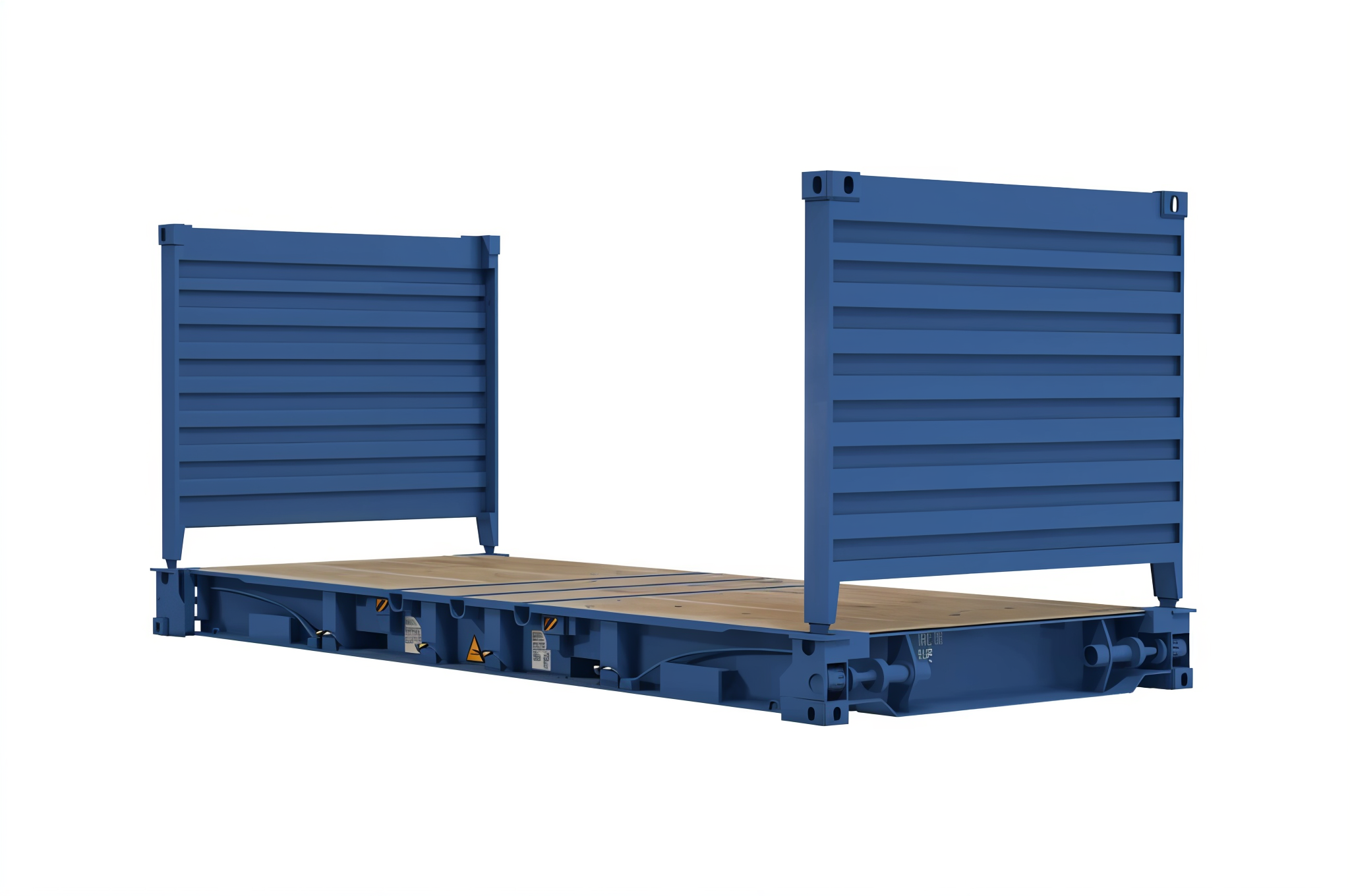
40ft Flat Rack Container
SKU SC-40FR-USED-VQC6 · Used · 40 × 8 × 8.5 ft
Used 40ft flat rack container with collapsible ends for oversized and heavy loads that won't fit a standard container.
$5,499.99
- Used 40ft flat rack
- Collapsible end walls
- Carries oversized, heavy loads
- Reinforced steel base
- Lashing and securing points
- Machinery and vehicle transport
- Nationwide delivery
- Inspected before delivery
- Transparent pricing
- 1-business-day quotes
A used 40ft flat rack container with a strong base and collapsible end walls, built for large and heavy loads that can't be loaded into a standard box, such as machinery, vehicles, and pipe.
Flat racks are available in 20ft and 40ft; new options may also be available.
Specifications
External 40ft long, 8ft wide. Reinforced steel base with collapsible ends, lashing and securing points for oversized cargo.
Frequently asked questions
What is a 40ft flat rack container best used for?
With just a base and two end walls, it carries long, wide, heavy, or oddly shaped loads a closed box cannot take, such as machinery, boats, pipe, and steelwork. The 40ft length suits longer oversized cargo and project transport.
How is a flat rack different from a standard container?
It has no roof and no side walls, only a reinforced floor with collapsible or fixed end walls, so cargo loads from the top or sides. That open design carries loads a standard container cannot enclose.
What size is it and what can it carry?
It is 40ft long and 8ft wide on a heavy-duty base built for concentrated point loads. Cargo can exceed the width and height limits of a closed box, within applicable road and transport rules.
What condition are these flat racks?
We supply new and used flat racks; used units are cargo-worthy with surface wear but a structurally sound base and end walls. Every unit is inspected and graded before delivery.
How is a 40ft flat rack delivered?
A tilt-bed (roll-off) truck slides it off at ground level, so no crane or forklift is usually needed to place it. A 40ft unit needs room to maneuver, so we check site access first; a heavy or wide load may need a crane.