
Container workshops and garages, built to work in
A steel container set up as a lockable workshop, garage, or hobby space, delivered to your site.

Built for the job
Lockable steel, weathertight
A welded steel box keeps tools, a vehicle, or a project secure and dry. The tradeoff: bare steel sweats and swings with the weather, so it needs insulation to work in year-round.
Vehicle or workshop access
Add a roll-up shutter or double door for a bike, a car, or a wide bench. Cutting an opening is fabrication, so it is quoted to the scope of the door you want.
Power and light when fitted
Sockets, lighting, and a consumer unit can be wired to your spec through the modifications service. None of it is standard on a bare box, so it is priced as added work.
High-cube headroom option
A high cube gives an extra foot of height for tall racking, a mezzanine, or an engine lift. It costs a little more than a standard container and weighs the same to deliver.
Set on your pad, no foundation
A tilt-bed truck sets the unit ground-level on firm, compacted ground, so there is no slab to pour. Soft or sloped sites need pads or leveling first to keep the doors square.
One itemized quote
The unit and delivery come in one free, itemized quote, and what we quote is what you pay. The fit-out is a separate scope, so the workshop build is quoted on top.
You need a secure, dry place to keep tools, work on a vehicle, run a trade, or follow a hobby, and a built garage means planning, a slab, and weeks of work. A shipping container gives you a lockable steel shell, set on your site and ready to fit out as a workshop or garage.
The problem with finding work space
Tools left in a shed walk off, and a project car under a tarp rusts. A rented unit means a monthly bill and a drive every time you need a wrench. What you want is a lockable, dry space on your own ground, without the cost and delay of a built garage.
How a container becomes a workshop or garage
A shipping container is a steel box built to cross oceans, which is why it holds up on your site for years. It arrives wind and watertight (WWT), meaning it keeps weather out, and it locks from the start. It can then be fitted with a man door, windows, insulation and lining, lighting and power, and a roll-up shutter or double door for a vehicle. None of that is standard on a bare box, so the fit-out is quoted on top of the unit. Our guide to setting up a shipping container workshop covers layout, power, and ventilation in order.
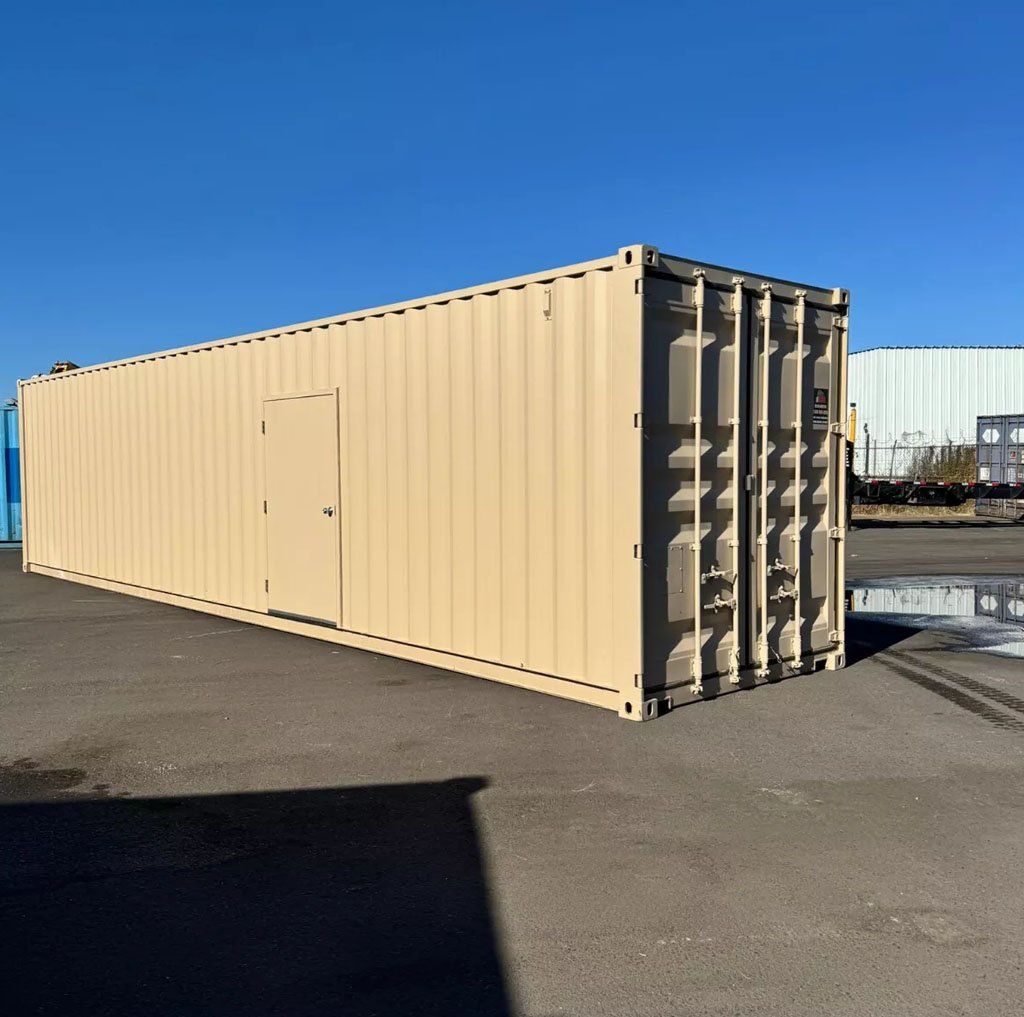
Some units start partway there. A 40ft container with a man door gives a full-length bay with a walk-in entrance. For racking or an engine lift, a high cube, a container 1 foot taller than a standard box, like the 20ft high cube container, adds headroom in a smaller footprint. We do the custom work in-house, from cutting and welding to electrical and finishing.
Where people put them to work
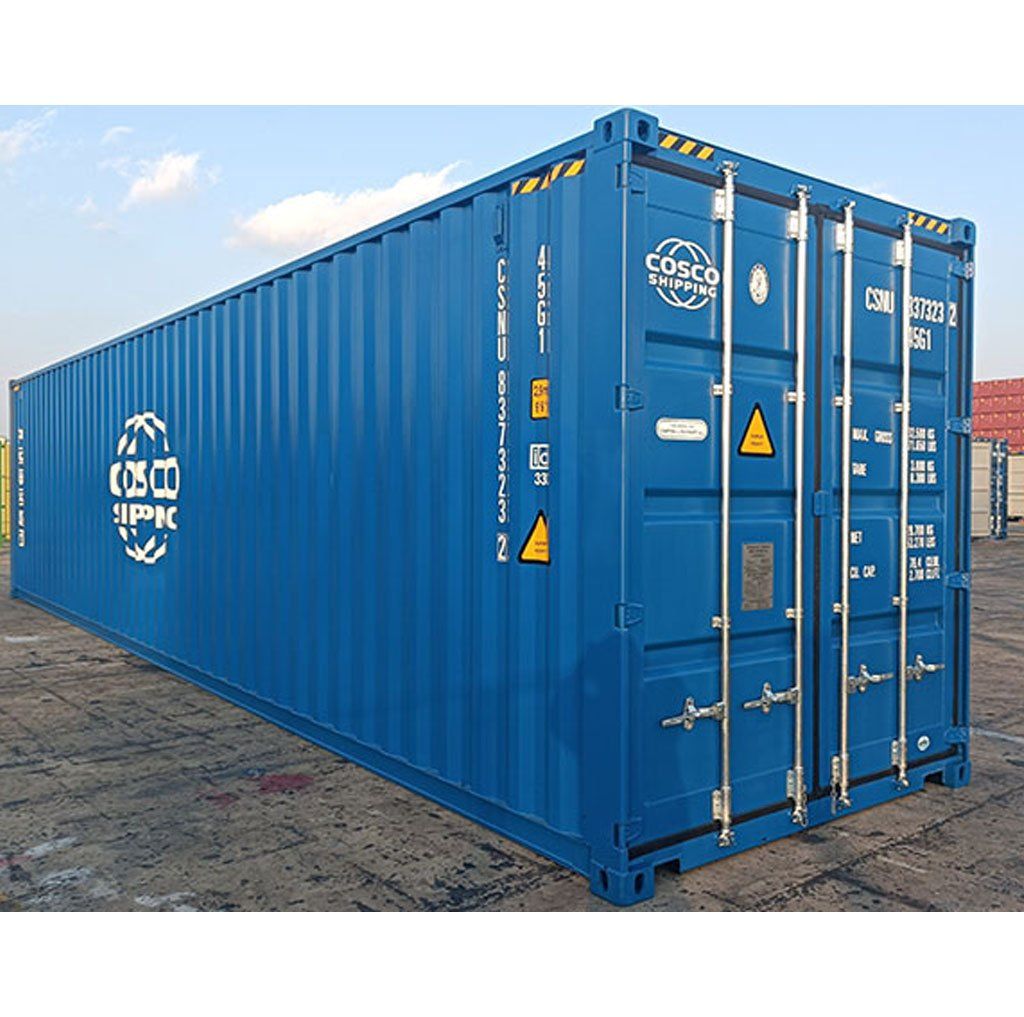
At home, it is a hobby workshop with a bench, a wall of tools, and a door you lock behind you. For a trade it is a base you secure overnight and load out of in the morning, and a 45ft high cube container gives the most floor for a van, a bench, and stock. With a roll-up door it works as a motorcycle or classic-car garage, though a long car needs a 40ft or 45ft box to open the doors and walk around it.
If you need more floor than one box gives, 2 containers set parallel with a roof kit spanning the gap make a covered shop bay between 2 lockable stores. Our guide to planning a shipping container shop with a roof covers spacing, delivery order, and anchoring.
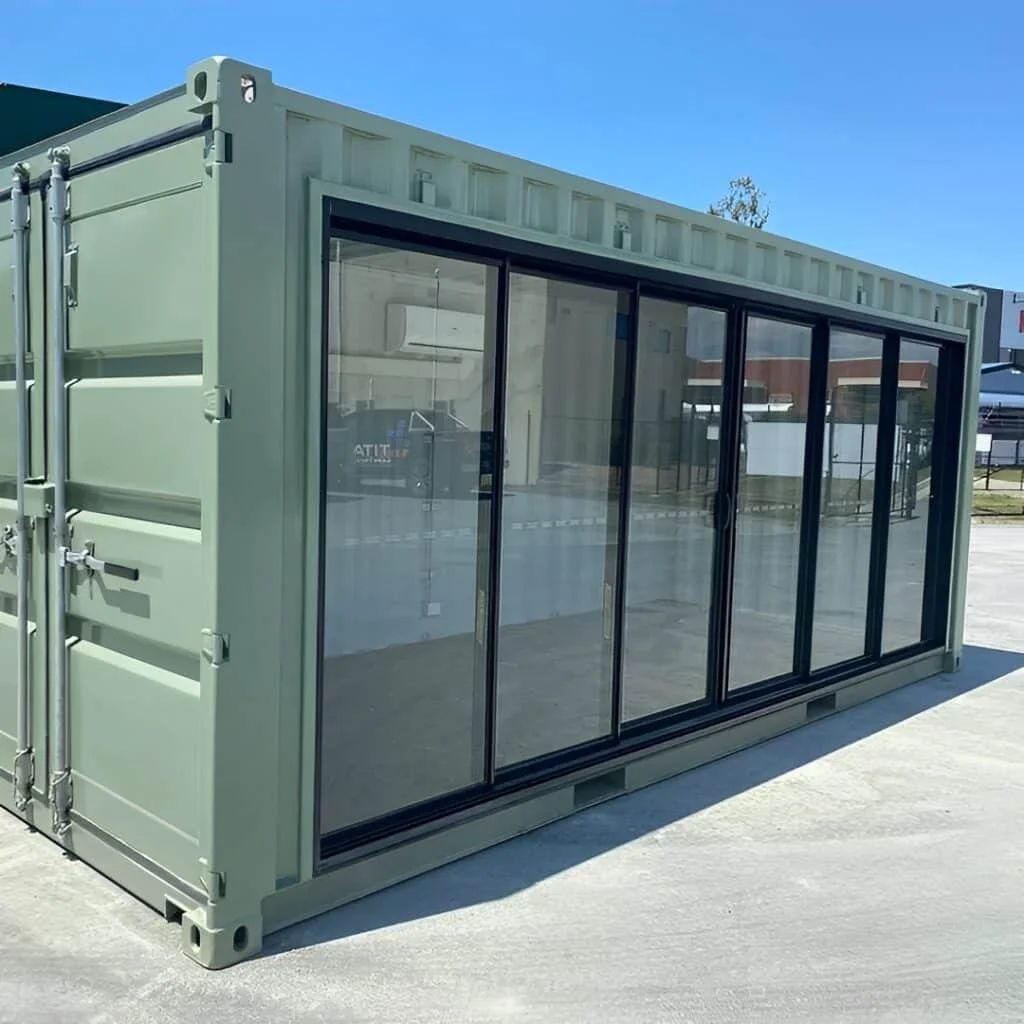
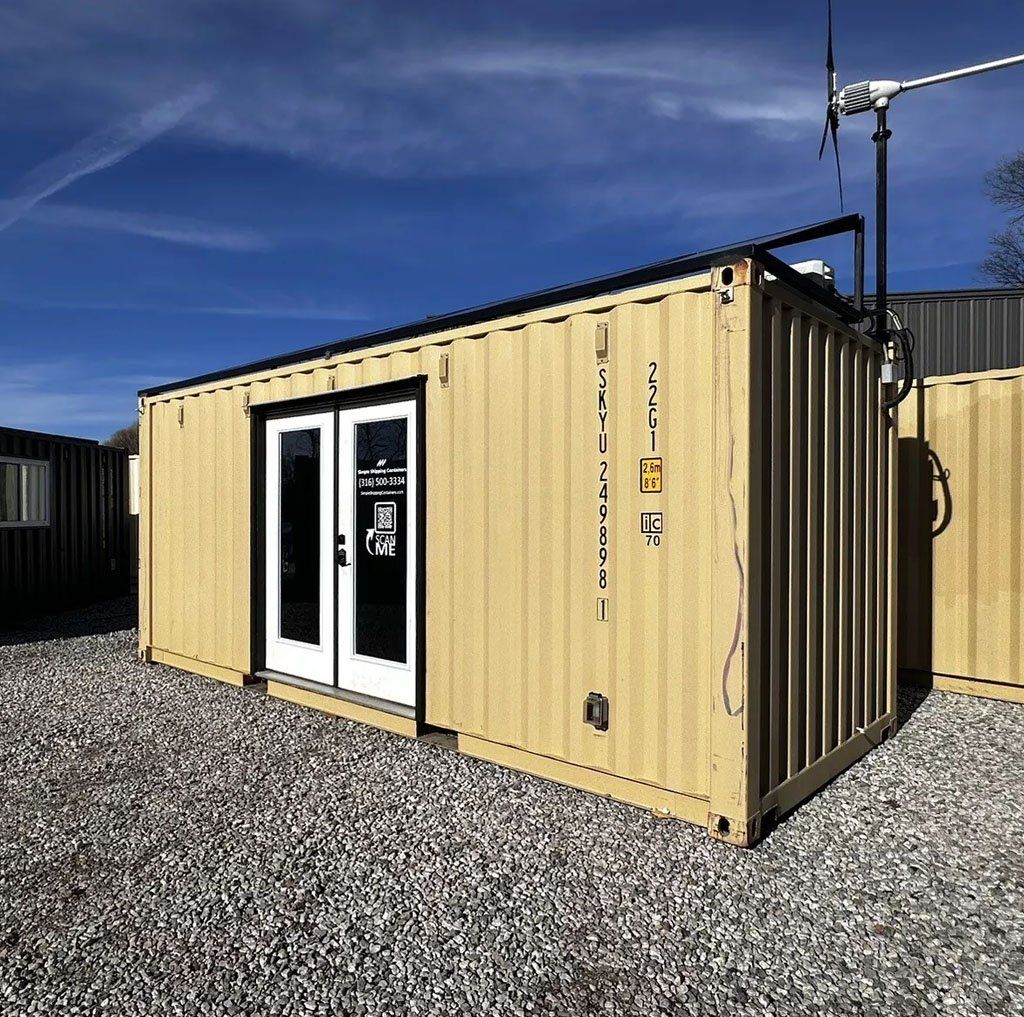
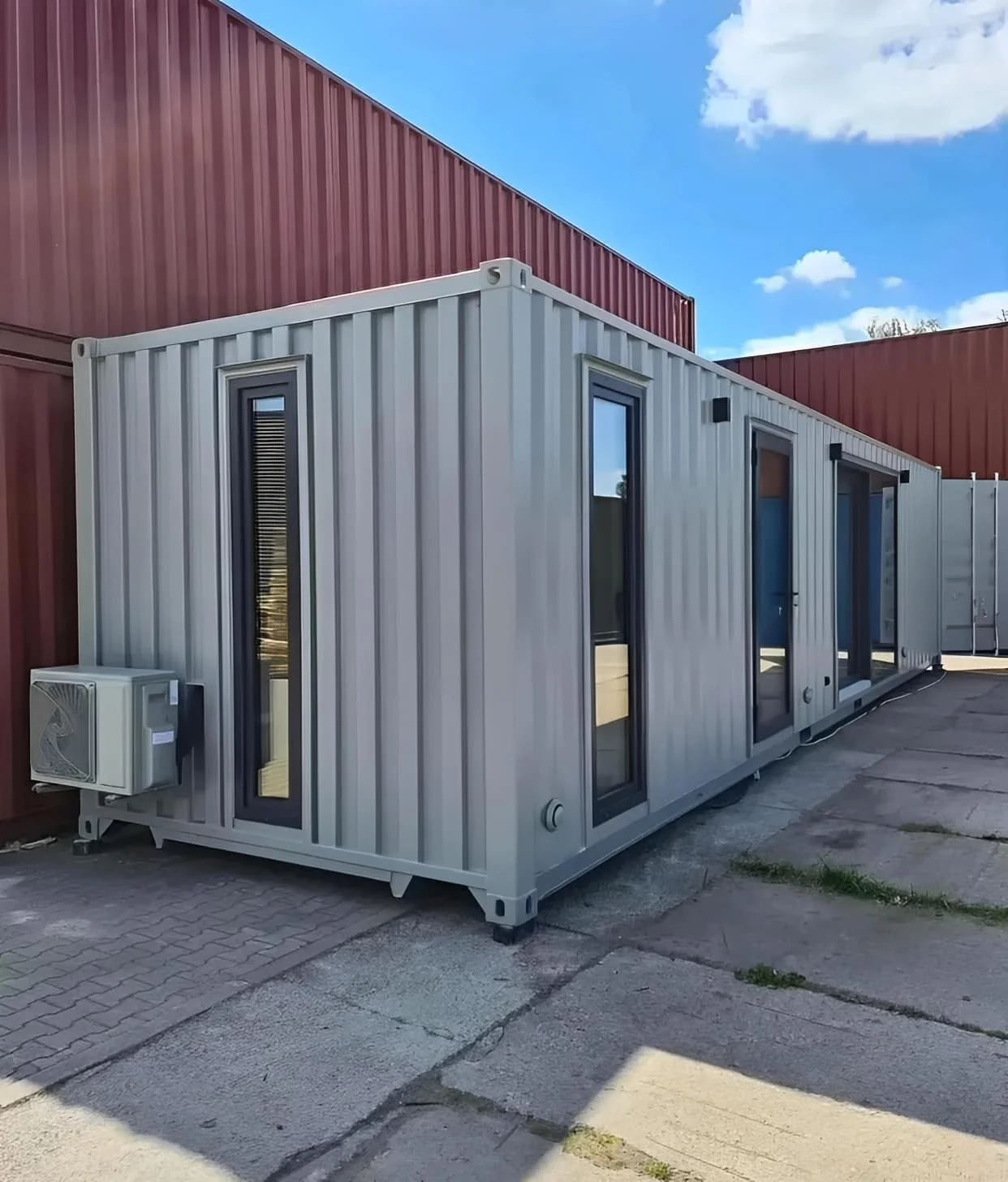
If the job is half workshop and half desk, a 20ft office container with a glass door and air conditioning pairs a clean, climate-controlled room with the storage bay, and our container offices solution covers that setup.
Frequently asked questions
Can I get power and lighting in the container?
Yes. Sockets, lighting, and a consumer unit can be wired to your spec through the modifications service, priced as a separate line because none of it comes on a bare box. Electrical work should meet local code, and sign-off varies by area, so treat this as general guidance and confirm locally.
How do I get a vehicle inside?
Cut in a roll-up shutter or double doors at one end. That is fabrication, quoted to the opening size and the reinforcing the cut needs. A 20ft box can take a motorcycle or compact car; a full-size or classic car usually needs a 40ft or 45ft container to leave room around it.
Do I need to insulate it?
For storage, no: a bare box is dry and secure. For a space you work in, yes. Uninsulated steel runs cold in winter, hot in summer, and sweats with condensation. Insulation and lining add cost and take a few inches of width, which is one reason people start with a high cube.
How is it delivered and set down?
A tilt-bed (roll-off) truck tilts its bed and slides the container off at ground level, with no crane or forklift for most units. The truck needs a straight, obstacle-free run to position and unload, plus firm, level ground. We check site access and clearance before delivery. A heavily modified unit may need a crane, so mention the build and the access when you ask for a quote.
Get a free quote
Tell us what goes in the space and what it needs, such as power, windows, insulation, or a vehicle door, plus a note on site access. Our custom modifications service specs and prices the fit-out, and our container delivery team handles the tilt-bed drop. Every unit is inspected and graded before delivery, and you get one free, itemized quote for the container and delivery with no hidden fees, so what we quote is what you pay. We reply within 1 business day.
Containers suited for workshops
Related services
- 01Custom ModificationsDoors, windows, HVAC, and full fit-outs
- 02Container DeliveryTilt-bed delivery, coordinated door to door
Put containers to work in workshops
Tell us about your project and we will send a free, no-obligation quote.